-
E-mail
weiscope@163.com
-
Phone
13538978162
-
Address
802, 8th Floor, Quanfeng Commercial Building, No. 8 Erheng Road, Yuancun, Tianhe District, Guangzhou City
Product Categories
Guangzhou Weiyu Optical Instrument Co., Ltd

Metallographic sampling and analysis
NegotiableUpdate on 02/15
- Model
- Nature of the Manufacturer
- Producers
- Product Category
- Place of Origin
Overview
The principle of cutting metallographic specimens: selecting representative metallographic specimens is the first step in metallographic research. Neglecting the importance of sampling often affects the success or failure of the test results
Product Details
Cutting of metallographic specimens
Metallographic examinationPrinciple of sample extraction: Select representative samplesMetallographic examinationThe sample is the first step in metallographic research, and neglecting the importance of sampling often affects the success or failure of the test results.
The part where the sample is taken must be able to characterize the characteristics of the material or component and the purpose of the inspection. ① Identify the reasons for the rupture of the mechanical componentsMetallographic examinationWhen analyzing, the sample should be taken at the location of the component fracture. In order to obtain more information, reference samples need to be taken from a location far away from the rupture source for comparative studies. ② For materials or components with different processes or heat treatments, the cutting location of the sample should also be changed accordingly. ③ Research and analyze castingsMicrostructureIt is necessary to observe from the surface to the center of the casting simultaneously. Based on the differences in the organization of each part, the casting can be understoodsegregationDegree. Small components can directly cut a cross-section perpendicular to the mold wall, while large components should cut several samples from the surface to the center on the cross-section perpendicular to the mold wall. ④ Sampling of rolled profiles or forgings should consider the presence or absence of the surface layerdecarbonizationFolding, etcdefectAs well as the identification of non-metallic inclusions, samples need to be taken horizontally and vertically. Horizontal specimens mainly study the distribution of surface defects and non-metallic inclusions. For long profiles, specimens should be taken at both ends separately to compare the segregation of inclusions;Longitudinal specimens mainly study the shape of inclusions,Identify the type of inclusions and observe themcrystal grainThe degree of grain length is used to estimate the degree of cold deformation during the reverse deformation process. ⑤ Parts that have undergone various heat treatments,microscopic structureIt is relatively uniform, so only one section of the sample can be taken, while considering the surface condition, such asdecarbonizationCarburizing, surface coating, oxidation, etc.
Embedding of metallographic specimens

Using the embedding function of the embedding machine to make metallographic specimens suitable for handheld polishing:

Suitable for small items that are not plastic surgery or difficult to handleMetallographic examinationSample testingThermosetting plasticsPressing, such as wire, fine pipe, thin plate, hammering fragments, etc. It is not easy to grip during polishing. Use the inlay method to set standard sized test blocks, and then perform cutting, polishing, etc. The commonly used inlay methods include low melting point alloy inlay method and plastic inlay method.
laboratoryMetallographic examinationThe sample preparation process is roughly as follows:
Accurate inspection and analysis of the microstructure of metals must possess excellent propertiesMetallographic examinationSample. The prepared sample should be able to observe the true structure, without abrasion marks, pitting, and water marks, and ensure that the inclusions, graphite, etc. in the metal structure do not fall off. Otherwise, it will seriously affect the accuracy of microscopic analysis.Metallographic examinationThe preparation of samples involves several steps, including sampling, grinding, polishing, and tissue visualization (etching).
Selecting appropriate and representative samples is necessaryMetallographic examinationThe extremely important step of microscopic analysis includes selecting the sampling site, inspection surface, determining the cutting method, sample size, etc.
Grinding
There are two steps: coarse grinding and fine grinding. After removing the sample, first perform rough grinding. If it is a steel material sample, it can be roughly ground flat with a grinding wheel first. If it is a very soft material (such as aluminum, copper, and other non-ferrous metals), it can be filed flat with a file. When grinding on a grinding wheel, the sample should be held tightly to ensure even force distribution, without excessive pressure, and should be cooled with water at all times to prevent changes in metal structure caused by heat. In addition, in general, the perimeter of the sample should be rounded with a grinding wheel or file to avoid scratching the sandpaper and polishing fabric during polishing. However, for those who need to observe the surface tissue (such as the carburized layer,decarbonizationFor samples with layers, the edges cannot be rounded, and it is best to embed such samples.
Fine grinding is the process of eliminating the grinding marks generated during rough grinding, in preparation for polishing the surface of the sample. After rinsing and drying the roughly ground sample with clean water, immediatelyGrinding surfaceIn order from coarse to fineMetallographic examinationPolish on sandpaper. The commonly used sandpaper sizes are01、02、03、04name4Seeds with smaller sizes have coarser abrasive grains, while those with larger sizes have finer grains. When grinding, the sandpaper should be laid flat on a thick glass plate. Hold the sandpaper with your left hand and the sample with your right hand, so that the grinding surface is facing down and in contact with the sandpaper. Under slight pressure, push the sample forward and grind it evenly to ensure stability. Otherwise, it will make the grinding mark too deep and cause deformation of the sample grinding surface. When returning the sample, it should not come into contact with sandpaper“One way, one-way”Repeat repeatedly until the old scratches on the grinding surface are removed and the new scratches are uniform and consistent. When switching to the next finer sandpaper, the debris and sand particles on the sample should be cleaned and rotated90°Angle, make the new and old scratches vertical.
Metallographic examinationThe polishing of the sample should not only make the surface smooth and flat, but more importantly, minimize surface damage as much as possible. Each polishing process must remove the deformation layer caused by the previous process (at least reducing the deformation layer generated by the previous process to the depth of the deformation layer produced by this process), rather than just removing the grinding marks of the previous process; At the same time, the process itself should minimize damage as much as possible in order to proceed to the next process. The depth of the deformation layer generated in the last polishing process should be very shallow, and it should be ensured that it can be removed in the next polishing process.
When grinding cast iron specimens, in order to preventgraphiteIf there is detachment or trailing phenomenon, a thin layer of graphite or soap can be applied as a lubricant on sandpaper. When grinding soft non-ferrous metal samples, in order to prevent abrasive particles from embedding into the soft metal and reduce scratches on the grinding surface, a layer of machine oil can be applied to the sandpapergasolineSoap water solution or glycerol water solution is used as a lubricant.
Metallographic examinationThe sample can also be mechanically ground to improve grinding efficiency. Mechanical grinding is the process of grinding particles of different sizeswaterproof abrasive paperInstalled on each grinding disc of the pre grinder, the sample is ground on the rotating grinding disc while flushing waterGrinding surfaceThe automatic polishing machine equipped with a microcomputer can program control the polishing process, and the entire polishing process can be completed in a few minutes.
polishing

After rough grinding, fine grinding, and polishing by a polishing machine, the surface of the sample to be observed is made to look like a mirror:

The purpose is to removeMetallographic examinationGrinding surfaceThe scratches left by fine grinding make it a smooth and seamless mirror surface.Metallographic examinationThe polishing of samples can be divided into three categories: mechanical polishing, electrolytic polishing, and chemical polishing. Mechanical polishing is simple and easy to implement, with a wide range of applications.
Mechanical polishing is carried out on a dedicated polishing machine, which is mainly composed of an electric motor and a polishing disc(Ф200~300mm)Composition, polishing disc speed is200~600r/minabove. Lay fine canvas, woolen fabric, silk, etc. on the polishing disc. Continuously drip polishing solution onto the polishing disc during polishing. Polishing fluid is usually usedAl2O3、MgOperhapsCr2O3Fine powder (particle size approximately)0.3~1μm)A suspension in water. Mechanical polishing relies on extremely fine polishing powder andGrinding surfaceThe relative grinding and hydraulic action are generated to eliminate the wear marks. When operating, take the sampleGrinding surfaceUniformly press on the rotating polishing disc and continuously perform radial reciprocating motion from the edge to the center of the disc. The polishing time is generally3~5minAfter polishing, the sampleGrinding surfaceIt should be bright and traceless, and graphite or inclusions should not be thrown off or have dragging marks. At this point, rinse the sample with clean water first, and thenAnhydrous alcoholClean the polished surface and finally dry it with a hair dryer.
Organizational display:
Due to the differences in alloy composition and microstructure in metals, there are variations in their corrosion ability. After corrosion, certain levels of corrosion occur between different structures, at grain boundaries, and within grainscontrastThe metal structure can be displayed. frequently-usedMicrostructureThe display methods include:(1)Chemical etching method;(2)Electrolytic etching method;(3)Special display methods for metallographic structures, among which chemical etching is the most commonly used.
If the polished sample is directly observed under a microscope, only a bright light can be seen, except for some non-metallic inclusions (such asMnSExcept for graphite, various components and their morphological characteristics cannot be distinguished, and etching agents must be used to etch the surface of the sample“etching”Only then can we see clearlymicroscopic structureThe real situation.

Microstructure image of metallographic specimen after digital imaging under microscope:

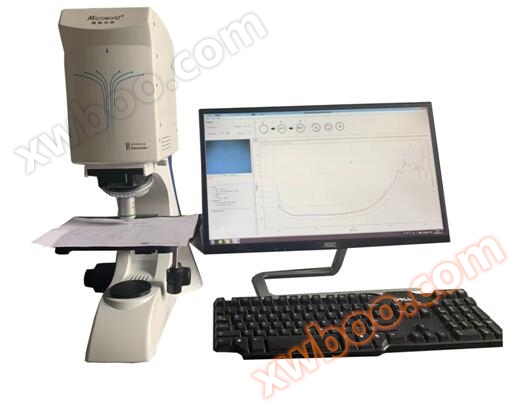
Our company provides a complete set of metallographic sample observation plans and on-site demonstrations of metallographic sample analysis. For details, please refer toContact Us
|
Serial Number |
name call |
Image Example |
unit |
Select reference |
|
1 |
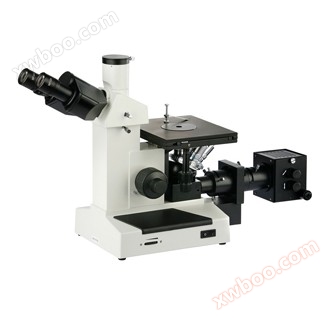
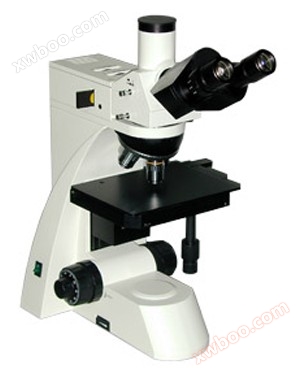
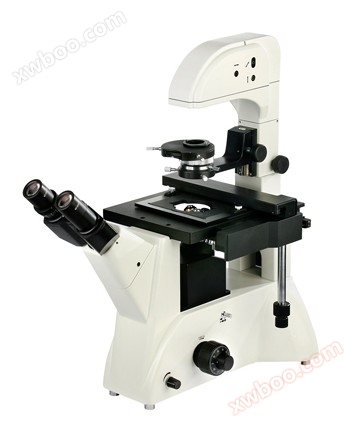
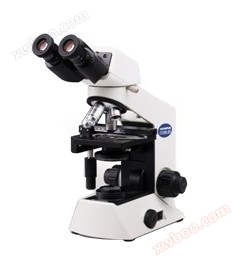
metallurgical microscope |
|
tower |
1. Inverted metallography/Upright metallographic examination 2. Infinite distance/Finite distance optical system 3. Magnification selection, highest1000x More metallographic microscopes |
|
2 |
Digital imaging system |
|
individual |
1.300ten thousand/500ten thousand/1000ten thousand/2000megapixel 2.equipWIMAGEAdvanced Microscopic Imaging Software 3.Optional metallographic analysis software,400Comparison of national standards More digital imaging systems |
|
3 |
Grinding and polishing machine |
|
tower |
1.double disk/Single disk 2.horizontal type/SPAR 3.hand movement/semi-automatic/automatic
|
|
4 |
Metallographic cutting machine |
|
tower |
1.hand movement/automatic cutting 2.Select cutting wheel specifications based on sample size |
|
5 |
MOUNTING |
|
|
Wrap irregular small specimens with hot melt plastic for easy sample grinding and polishing 1.hand movement/automatic |
|
6 |
Polishing consumables |
Polishing velvet, coarse sandpaper, fine sandpaper, polishing solution, corrosive solution |
cover |
Essential consumables for sample preparation |


Microstructure image of metallographic specimen after digital imaging under microscope:

Material: 20 steel
Process situation: Annealing treatment
Magnification: 400x
Organizational description: The white grain shape is ferrite, the gray black block area is fine pearlite, and the black fine strip shape is the grain boundary.

Material: 35 steel
Magnification: 200x
Process situation: 940 degree normalizing
Organizational description: Black represents fine-grained pearlite, while white represents ferrite. Most of the ferrite precipitates along the austenite grain boundaries, and some precipitates in the form of strips or needles within the austenite grains, presenting a Weibull structure with a hardness of 198HP


Material: 45 steel
Magnification: 100x-500x
Process situation: Heat to 840 degrees Celsius, hold for 1 hour, quickly cool to 600 degrees Celsius, hold for another hour, air cool
Organizational description: Pearlite and white network ferrite, with a grain size of grade 8
The normalization of 45 steel is to heat the steel to 30-50 degrees above Ac3, keep it warm, and then naturally cool it in the air. The main difference between it and complete annealing is that the cooling rate is faster, with the aim of normalizing the structure of the steel,
And increase and decrease the amount of pearlite, while reducing the amount of ferrite
If 45 steel is used for ordinary structural parts, normalizing can be used as the final heat treatment. After normalizing, the microstructure after casting or forging can be improved, the austenite grains can be refined, and the microstructure can be homogenized
Forming a fine and uniform ferrite and pearlite structure, with a grain size of grade 8, it can also be seen from the figure that the interlayer spacing of pearlite reaches a very fine Chengdu, thereby improving the strength, hardness, and toughness of the steel.

Material: 50 steel
Magnification: 500x
Process situation: Hot rolled steel plate, heated to 860 degrees Celsius for insulation and then air-cooled
Organizational description: The microstructure consists of gray black fine lamellar pearlite and 20% -30% white ferrite, distributed along grain boundaries, with a grain size of 7-8 grades and fine grains
After normalizing at 860 degrees, the hot-rolled steel plate eliminates the coarse grains in the hot-rolled state, and the proportion of ferrite in the area also increases. Therefore, the normalized state has better shaping and toughness than the hot-rolled state
The normalization of steel is a heat treatment process that heats the steel to the temperature of all austenite (30-50 degrees above Ac3), and after insulation and air cooling, obtains fine pearlite. This is the most economical and simple heat treatment, with the aim of
Refining the grain size and achieving uniform microstructure can be used as a preparatory heat treatment before quenching. For some ordinary structural parts, normalizing can also be used as the final heat treatment