-
E-mail
386030259@qq.com
-
Phone
13673617114
-
Address
Zhenxing Road, Mazhai Industrial Park, Erqi District, Zhengzhou City
Product Categories
- Sludge treatment equipment
- Household waste pyrolysis equipment
- Biomass fuel molding machine
- Biomass pyrolysis equipment
- Industrial solid waste treatment equipment
- Sludge pyrolysis equipment
- Biomass gasification combustion machine
- Household waste treatment equipment
- Biomass pyrolysis burner
- Medical waste disposal equipment
- Industrial solid waste pyrolysis equipment
Zhengzhou Xindi Machinery Equipment Co., Ltd

New medical waste treatment equipment
NegotiableUpdate on 04/15
- Model
- Nature of the Manufacturer
- Producers
- Product Category
- Place of Origin
Overview
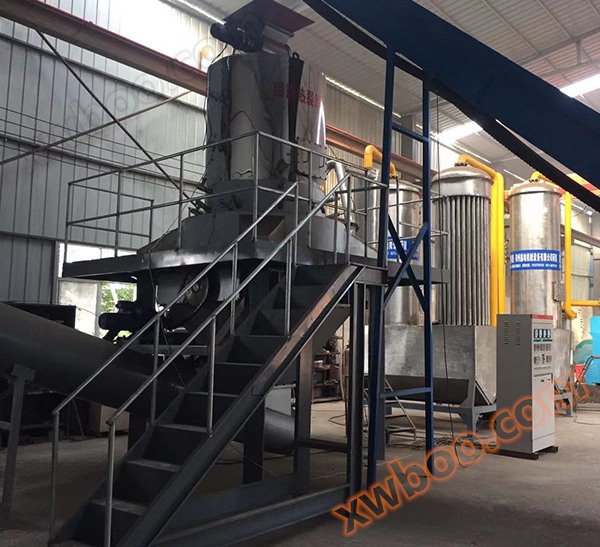
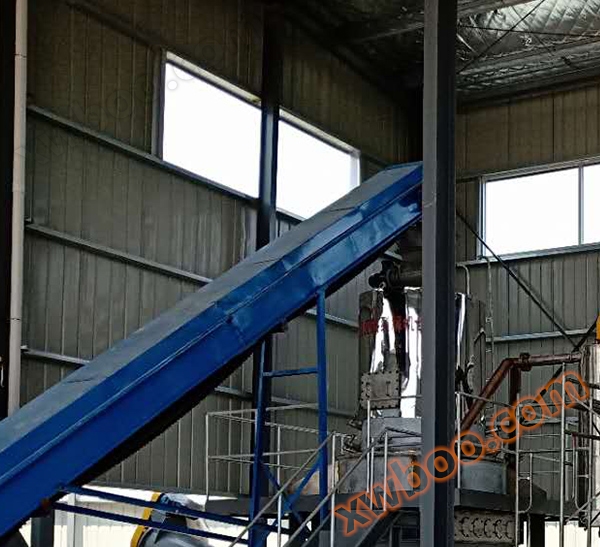
The overall process of the medical waste treatment equipment system is as follows: 1. High temperature disinfection, sterilization, and crushing in the early stage; 2. The specific operation process for the pre-treatment of medical waste in the later stage of biomass decomposition to obtain economic value is as follows: feeding into the turnover box → sterilization treatment → discharging → crushing treatment → transmission and collection → automatic cleaning of the turnover box → reuse of medical waste post-treatment equipment (biomass decomposition). The process directly transports the medical waste that has undergone high-temperature steaming to the low-temperature atmospheric pressure biomass decomposition processor
Product Details
Medical waste disposal equipmentSystem overall process:
1. High temperature sterilization and crushing in the early stage;
2. Obtaining economic value through biomass decomposition in the later stage
Specific operational process for pre-treatment of medical waste:
Feeding of turnover box → Sterilization treatment → Discharge → Crushing treatment → Transport and collection → Automatic cleaning of turnover box → Reuse
Medical waste post-processing equipment (biomass decomposition) process
The medical waste that has undergone high-temperature cooking is directly transported to a low-temperature and atmospheric pressure biomass decomposition processor for catalytic heating. Oil vapor is distilled, and the oil and gas pass through a condenser. The liquefiable part is condensed into mixed oil, while the non liquefiable part is treated by a gas purification system and burned at the bottom of the processor through a gas system. This not only saves fuel energy but also does not pollute the environment.
The smoke generated after combustion enters the spray tower and mixes with the alkali solution pumped by the water pump (the pool is mixed with alkali solution). At this time, the alkaline substances in the alkali solution undergo acid-base neutralization reaction with the acidic substances in the smoke gas, achieving the goal of removing the acidic substances in the smoke gas.
After acid-base neutralization, the residual alkali solution in the flue gas is removed by the packing in the adsorption tower, and then flows back to the water tank. The clean flue gas is discharged to complete the desulfurization, dust removal and purification treatment of the flue gas; The residue after cracking is transported to the carbon black slag collection tank through a sealed cage, which is environmentally friendly and pollution-free.

Any organic waste polymer, whether it is "meat", "vegetable" or "artificial", is synthesized from basic organic molecules, but their synthesis conditions and environments are not the same. According to the basic synthesis reaction laws of organic substances, there should be inverse conditions for synthesis reactions. If such inverse conditions can be effectively found, then organic macromolecules should be able to be cleaved. Therefore, how to find the reverse conditions and establish a reverse engineering system is the key to achieving the ability to send organic waste materials back home (pyrolysis reduction). After years of research and development, a reverse engineering system for generating such inverse conditions has been discovered. This reverse engineering system realizes the recycling of resource-based materials: retaining the resource value of waste materials, returning them to their physical state before they were formed into waste materials, and then reusing and reusing these resource-based materials. This should be a higher level for humans to connect and achieve material recycling.