-
E-mail
electronmachine@163.com
-
Phone
13761079671
-
Address
Room 707, Building 1, No. 111 Luxiang Road, Shanghai
Product Categories
Shanghai Jingdu Electronic Technology Co., Ltd


Online concentration analyzer, potassium hydroxide device, KOH concentration analyzer
NegotiableUpdate on 11/19
- Model
- Nature of the Manufacturer
- Producers
- Product Category
- Place of Origin
Overview
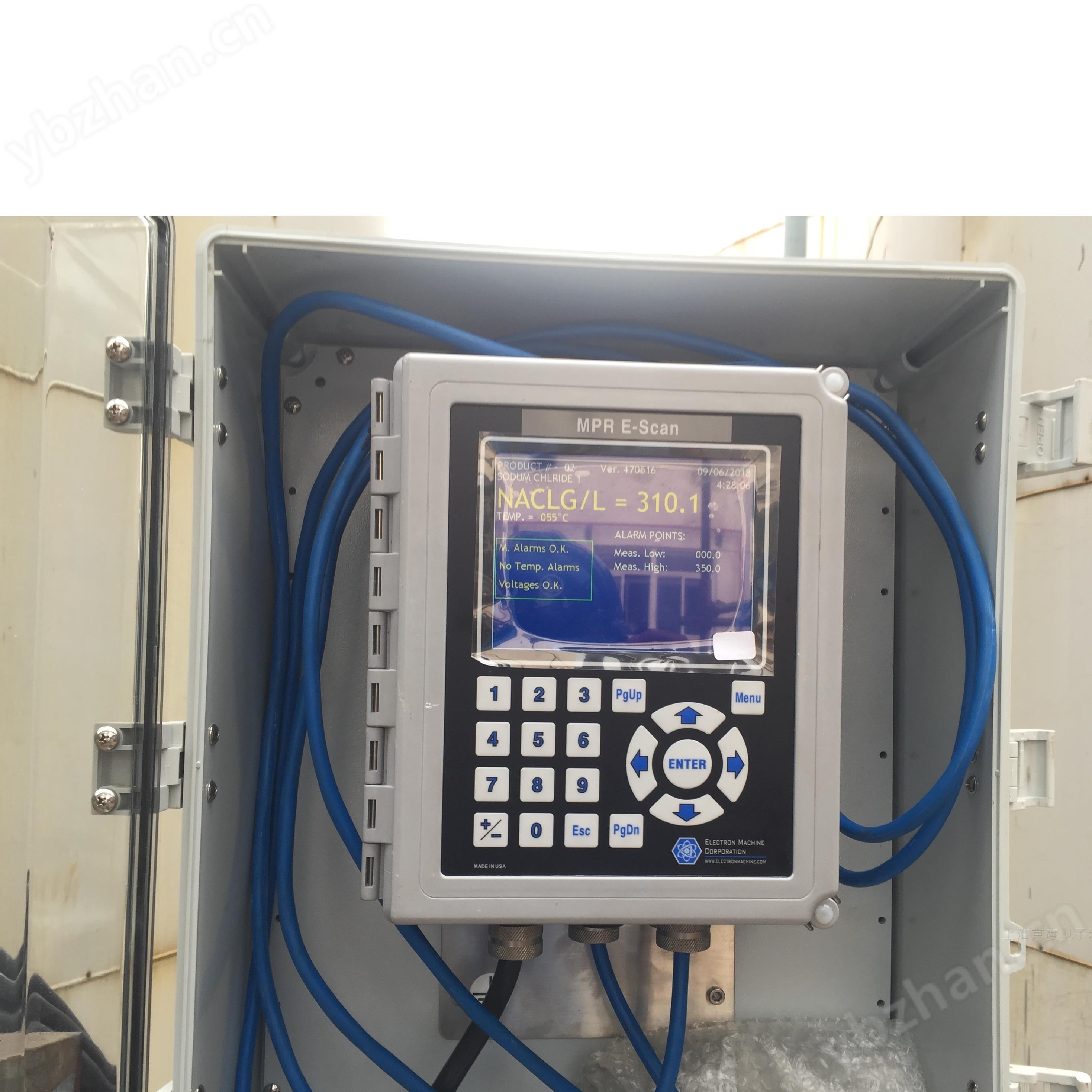
MPR E-Scan online concentration analyzer potassium hydroxide device KOH concentration analyzer is an online saltwater concentration analyzer driven by a microcomputer processor. Due to its split design, the instrument CPU and main circuit board are separated from the optical part, making the system more resistant to high temperature and vibration, better stability, more accurate testing, and longer effective service life. It can display the concentration value of the product in real time and transmit it to the system for easy system integration and control.
Product Details
The MPR E-Scan online potassium hydroxide analyzer can be applied to monitor and control the concentration of brine in potassium hydroxide plants. The following is its related introduction:
The 30% potassium hydroxide alkaline solution produced by KOH evaporation electrolysis is partially used for evaporation to produce 48% KOH, and a portion of 48% KOH is used to produce electronic grade 48% KOH. The preparation of 48% KOH solution adopts the three effect falling film evaporation process, which uses negative pressure operation and evaporation temperature of 100 ℃~150 ℃. The 30% KOH solution from the electrolytic cell is mixed with the circulating KOH solution through automatic flow regulation and enters from the top of the three effect evaporator. The KOH solution undergoes falling film evaporation in the evaporator because the feeding temperature is higher than the boiling temperature, and a part of the liquid evaporates, producing water vapor. Water vapor flows downwards along the heat exchange tubes of the evaporator, while liquid flows downwards in a film like manner along the inner walls of the tubes. At the same time, water continuously evaporates from the film, and the liquid KOH gradually becomes concentrated, reaching a concentration of 35%. The concentrated KOH solution enters the three effect circulation pump, with a portion of the KOH solution circulating into the top inlet of the evaporator and another portion entering the second effect evaporator through a liquid level control regulating valve (dual parameter adjustment) from the top for concentration, reaching a concentration of 42%. Then, the 42% liquid KOH from the outlet of the second effect evaporator is transported to the top of the first effect evaporator through the second effect pump and enters the effect body. The KOH solution in the first effect evaporator is concentrated to 48%, and the KOH solution enters the first effect circulation pump. Part of the 48% KOH solution is circulated in the first effect body, while the other 48% KOH solution enters the electronic grade potassium hydroxide production device to produce electronic grade 48% KOH. The remaining 48% KOH solution is cooled by two series connected coolers and heated into the KOH solution at the top of the second and first effect evaporators. The 48% KOH solution discharged from the cooler is sent to the product storage tank in the tank area.
After the electronic grade 48% potassium hydroxide is evaporated from the KOH evaporation process, a portion of the 48% alkaline solution is concentrated to 55% through triple effect falling film evaporation. 55% KOH enters the crystallizer, which is cooled with chilled water. The outlet solution of the crystallizer is kept at around 20 ℃ and discharged to the centrifuge to separate the crystallized crystals from the solution. The crystals enter the low sodium tank, and the solution enters the mother liquor tank. Add a certain amount of product steam condensate or 30% KOH into the low sodium tank, and mix the crystal to dissolve into 48% KOH solution after stirring, which will be sold as electronic grade potassium hydroxide. Add a certain amount of pure water to the mother liquor tank, mix the alkaline solution to 48%, and transport it to the tank area for sale as general industrial grade potassium hydroxide.
Similar Product Recommend