-
E-mail
1534513049@qq.com
-
Phone
15566891672
-
Address
No. 38, West Section of Century Road, Pulandian District, Dalian City, Liaoning Province
Product Categories
Dalian Yiste Technology Co., Ltd
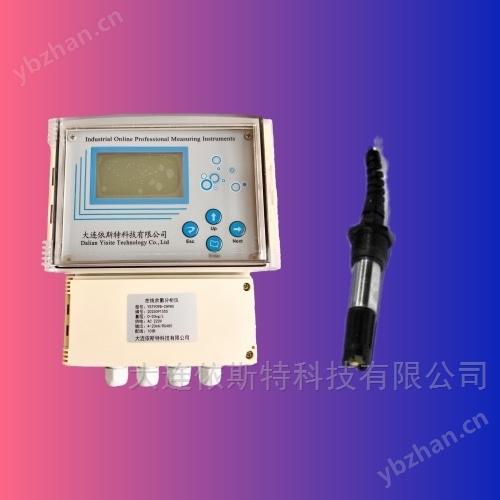
Online residual chlorine analyzer for water plants
NegotiableUpdate on 11/20
- Model
- Nature of the Manufacturer
- Producers
- Product Category
- Place of Origin
Overview
The YST909B-CH980 equipment launched by Dalian Yister is a core device for real-time monitoring of residual chlorine content in water bodies. It can continuously collect data and provide feedback results, providing key support for disinfection control in water treatment processes. This equipment is a representative product of our independently developed online residual chlorine analyzer for water plants, widely used in various water related scenarios.
Product Details
Dalian Yister YST909B-CH980 model
Residual chlorine is a key indicator after water disinfection, which directly affects water quality safety and the effectiveness of preventing secondary pollution in water bodies. The YST909B-CH980 equipment launched by Dalian Yister, as the core equipment for real-time monitoring of residual chlorine content in water bodies, can continuously collect data and provide feedback results, providing key support for the disinfection control of water treatment processes. This equipment is our independently developed productOnline residual chlorine analyzer for water plantsRepresentative products widely used in various water related scenarios.
1、 Product Introduction
Our YST909B-CH980 equipment, based on specific detection principles such as colorimetric or electrode methods, can operate continuously on water treatment sites. It can automatically complete processes such as water sample collection, reagent addition (applicable to some working conditions), reaction detection, data calculation and output, without the need for frequent manual operations. The device can display the current residual chlorine concentration in water in real time and synchronize the data to the control system or monitoring platform through a signal transmission module. When the residual chlorine content exceeds the set range, it can also trigger an alarm function to help staff adjust the disinfection process in a timely manner and provide stable support for water quality control.
2、 Advantages and Characteristics
High degree of automationOur YST909B-CH980 equipment can operate continuously for 24 hours, automatically completing the entire monitoring process without the need for manual sampling and testing, significantly reducing labor costs and operational deviations, and improving monitoring efficiency.
Strong environmental adaptabilityThis device can adapt to different water quality conditions in water treatment scenarios (such as high turbidity, water bodies containing certain pollutants) and working environments (such as outdoor low temperature, humidity, or high temperature environments), and can still operate stably under complex working conditions.
Convenient data transmissionSupport integration with control systems such as PLC, SCADA, or cloud monitoring platforms. Data can be uploaded, stored, and queried in real-time, making it convenient for management personnel to remotely monitor water quality dynamics and achieve intelligent control of the disinfection process.
Controllable operation and maintenance costsThe partially configured YST909B-CH980 equipment adopts a design of no reagent or low reagent consumption, reducing the cost of reagent procurement and waste liquid treatment; At the same time, it has self diagnostic function, which can promptly prompt faults (such as pipeline blockage, component abnormalities), reducing maintenance difficulty.
3、 Technical parameters
parameter category |
core content |
measurement range |
Covering 0.01mg/L-20mg/L (different range configurations can be selected according to scene requirements) |
Power supply requirements |
Commonly used as AC 220V ± 10%, 50Hz/60Hz (some portable configurations support DC power supply) |
output signal |
Standard analog signal (4-20mA), digital signal (RS485/RS232), supporting alarm contact output |
Installation method |
Pipeline installation (directly connected to the water treatment pipeline) and wall mounted installation (fixed to the wall of the monitoring room) can be used |
working environment |
The temperature is generally between 0 ℃ and 50 ℃, and the relative humidity is ≤ 90% (without condensation) |
response time |
From the water sample entering the device to the output of the detection result, it usually takes ≤ 60 seconds (slightly different detection principle configurations) |
Protection level |
Outdoor installation configurations typically have a protection level of IP65 or higher, while indoor installation configurations typically have an IP54 or higher protection level |
Market selling price |
The market guidance price for this device is 5500.0 yuan, and the actual price may vary due to different parameter configurations |
4、 Selection criteria
Match water quality characteristicsSelect the specific configuration of the YST909B-CH980 equipment based on the water quality situation of the application scenario. For example, in wastewater treatment scenarios such as sewage plants and chemical wastewater treatment, if the water quality composition is complex, a configuration with strong anti-interference ability can be chosen; Water treatment plants and water purification plants have relatively clean water quality and can choose conventional configurations.
Clearly define monitoring requirementsIf linkage control with disinfection equipment (such as chlorine dispensers) is required, a configuration that supports closed-loop control function should be selected; If used for remote supervision, it is necessary to confirm whether the device is compatible with the communication protocols of existing data platforms (such as MQTT, Modbus).
Consider operation and maintenance conditionsFor scenarios such as rural water management and remote river monitoring, if the technical level of operation and maintenance personnel is limited, priority should be given to configurations that are maintenance free and have clear fault prompts; In scenarios such as chemical engineering and hospital wastewater, attention should be paid to the corrosion resistance of equipment pipeline materials (such as PTFE, 316L stainless steel).
Adapt to installation environmentOutdoor installation requires the selection of high protection level configurations with low-temperature antifreeze or high-temperature heat dissipation functions; In scenarios where the flow rate of the pipeline is unstable, a stabilizing device should be used to ensure a constant flow rate of the detected water sample.
5、 Application industry
sewage treatment plantInstall our YST909B-CH980 equipment at the effluent end of disinfection units (such as chlorine dioxide disinfection and sodium hypochlorite disinfection) to monitor the residual chlorine content in the effluent and ensure that the discharged residual chlorine meets the "Pollutant Discharge Standards for Urban Sewage Treatment Plants" to avoid affecting the receiving water body.
Water treatment plant/water purification plantDeploy this equipment at the outlet of the clean water tank and in front of the pipeline network to ensure that the residual chlorine in the factory water meets the standard, while ensuring that there is still sufficient residual chlorine in the water during transportation to inhibit bacterial growth and prevent secondary pollution.
Municipal water supply networkInstall YST909B-CH980 equipment at intermediate pressure stations and end water monitoring points in the pipeline network to monitor the decay of residual chlorine in the pipeline network in real time, adjust the amount of chlorine replenishment along the line in a timely manner, and ensure the safety of residents' terminal water use.
Environmentally Friendly Water TreatmentUsed for water quality monitoring of centralized sewage treatment facilities and ecological restoration projects in industrial parks, to control the effectiveness of disinfection processes and prevent secondary harm to the surrounding environment caused by treated water quality.
Thermal heatingMonitor the residual chlorine content in the makeup or circulating water of the heating system, control the residual chlorine reasonably, inhibit the growth and corrosion of microorganisms in the pipeline, and extend the service life of the heating pipeline.
Hospital wastewater treatmentHospital wastewater contains pathogens, and it is necessary to strictly control the residual chlorine after disinfection (such as residual chlorine after pretreatment and residual chlorine before final discharge). Our equipment can ensure disinfection effectiveness and prevent the spread of pathogens.
Chemical wastewater treatmentFor the production wastewater of chemical enterprises (such as phenol and heavy metal containing wastewater), after disinfection treatment, residual chlorine is monitored using YST909B-CH980 equipment to prevent the reaction of residual chlorine with organic matter in the wastewater and the generation of toxic substances, while ensuring that the discharge meets the standards.
River water quality monitoringInstall this equipment at the water replenishment outlet and landscape river circulation system after river treatment to monitor residual chlorine in the water, assist in determining whether disinfection is in place, and maintain stable water quality in the river.
Smart rural water managementUsed for centralized water supply projects in rural areas (such as village water plants and reservoirs), real-time monitoring of residual chlorine in water supply ensures that rural residents' water use meets hygiene standards and improves the efficiency of rural water management.
6、 Technology Trends
Our Dalian Yister will focus on the following directions in the technological upgrade of the YST909B-CH980 equipment:
Multi parameter integrationIn the future, we will break through the single residual chlorine parameter monitoring, integrate water quality parameters such as pH value, turbidity, dissolved oxygen, etc., achieve "one device monitoring multiple indicators", reduce the number of equipment installations and land occupation, and lower overall investment costs.
Deep integration of the Internet of ThingsCombining wireless communication technologies such as 5G and LoRa to enhance the stability of remote data transmission and control of devices; At the same time, through the big data analysis of the cloud platform, predict the change trend of residual chlorine, adjust the disinfection strategy in advance, and achieve "predictive control".
Low energy consumption and greeningUsing low-power chips, energy-saving pump valves and other components to reduce equipment operating energy consumption; At the same time, promote reagent free detection technologies (such as optical method improvement), reduce the use of chemical reagents and waste liquid generation, and comply with environmental protection requirements.
Intelligent operation and maintenanceImplementing device self calibration, automatic fault diagnosis and warning through AI algorithms, reducing the frequency of manual operation and maintenance; Simultaneously supporting remote firmware upgrades, device functionality can be updated without on-site disassembly, enhancing the lifecycle value of the device.
7、 User reviews
Water plant usersYour YST909B-CH980 equipment runs very stably, with 24-hour real-time monitoring of residual chlorine in the factory water. The data can be directly transmitted to the central control room, eliminating the need for manual sampling and testing. Not only does it save manpower, but it can also detect fluctuations in residual chlorine in a timely manner, avoiding water quality problems in the factory water. ”
Hospital wastewater treatment usersThe composition of hospital wastewater is special. Previously, manual detection of residual chlorine was always inaccurate. After replacing your YST909B-CH980 equipment, the anti-interference ability has been significantly improved, and the residual chlorine data is very stable, which can ensure that the wastewater disinfection meets the discharge standards without worrying about environmental inspection issues. ”
Smart rural water usersThere are few maintenance personnel in rural water plants, and simple equipment operation is very important. Your YST909B-CH980 equipment is easy to use and has fault alarm prompts. Even remotely, data can be viewed through the platform, solving the problem of insufficient manpower for rural water monitoring. ”
Chemical wastewater usersChemical wastewater has strong corrosiveness, and the previous equipment pipelines were prone to damage. Now we are using your YST909B-CH980 equipment, which is made of corrosion-resistant materials, has low maintenance frequency, accurate residual chlorine monitoring, and can meet the strict monitoring requirements after disinfection of chemical wastewater. ”
8、 Application Cases
Case 1: Residual Chlorine Monitoring Project in a Municipal Government Pipeline Network
backgroundThe municipal water supply network in this city has a wide coverage area, and the residual chlorine in the peripheral water is severely attenuated, posing a risk of secondary pollution.
Application methodWe have installed a total of 20 YST909B-CH980 devices at the intermediate pressure stations in the pipeline network and the end water monitoring points in residential areas. The device data is wirelessly transmitted to the municipal water cloud platform through LoRa.
effectThe platform displays real-time residual chlorine data at each monitoring point. When the residual chlorine in the peripheral water is below 0.05mg/L, it automatically prompts the pressurization station to replenish chlorine; After implementation, the compliance rate of residual chlorine in peripheral water increased from 75% to 98%, and residents' satisfaction with water use significantly improved.
Case 2: A hospital wastewater treatment project
backgroundHospital wastewater contains a large amount of pathogens, and it is necessary to ensure that the residual chlorine after disinfection meets the "Discharge Standards for Water Pollutants in Medical Institutions" to avoid the discharge of pathogens.
Application methodInstall our YST909B-CH980 equipment at the outlet of the hospital wastewater disinfection tank, which is linked to the chlorination machine. When the residual chlorine is below 3mg/L, the chlorination amount will be automatically increased; When the concentration exceeds 5mg/L, reduce the amount of chlorine added.
effectThe residual chlorine remains stable within the standard range of 3-5mg/L, and the disinfection effect of wastewater meets the standard; At the same time, it avoids secondary pollution caused by excessive chlorine addition and reduces the waste of chlorine reagents.
Case 3: A rural centralized water supply project
backgroundThe rural area adopts centralized water supply from village and town water plants. Previously, it relied on manual testing of residual chlorine once a week, which could not detect water quality problems in a timely manner.
Application methodInstall our YST909B-CH980 equipment at the outlet of the clean water tank in the water plant, synchronize data to the county water management platform, and set up a local display screen in the water plant duty room.
effect: Realize real-time monitoring of residual chlorine. After a rainstorm, the equipment found that the residual chlorine dropped suddenly, and the staff adjusted the disinfection process in time to avoid unqualified water flowing into farmers; Rural residents' water hygiene and safety are effectively guaranteed.
We always focus on user needs and continuously optimize the performance of the YST909B-CH980 equipment. This equipment is also the core of our precise residual chlorine monitoring solution for various water related scenarios. Compared with traditional monitoring methods, it can better meet the efficient management and control needs of the modern water treatment industry, further highlighting theOnline residual chlorine analyzer for water plantsAn important role in ensuring water quality safety.
Part of the content is generated by AI and is for reference only. Please contact our sales personnel if needed.