-
E-mail
867218790@163.com
-
Phone
15810615463
-
Address
Mapo Xiangyue Sijisan District, Shunyi District, Beijing
Product Categories
Beijing Jingke Zhichuang Technology Development Co., Ltd

PEA-100 Material Space Charge Experimenter
NegotiableUpdate on 11/20
- Model
- Nature of the Manufacturer
- Producers
- Product Category
- Place of Origin
Overview
Application: Space charge measurement using acoustic technology has become a common method for studying the dielectric properties of solid materials. The pulse electro acoustic (PEA) method has been used in various industrial applications. For example, it is used for the evaluation of ion conductive materials, high-voltage insulation materials, and the study and analysis of internal charge, electric field, and potential distribution of materials. It can detect charge distribution in real time and convert it into space charge distribution, which is used for insulators, electrostatic resins, organic photoconductors, ion migration, etc. Currently, it is an important experimental equipment for universities and material production units.
Product Details
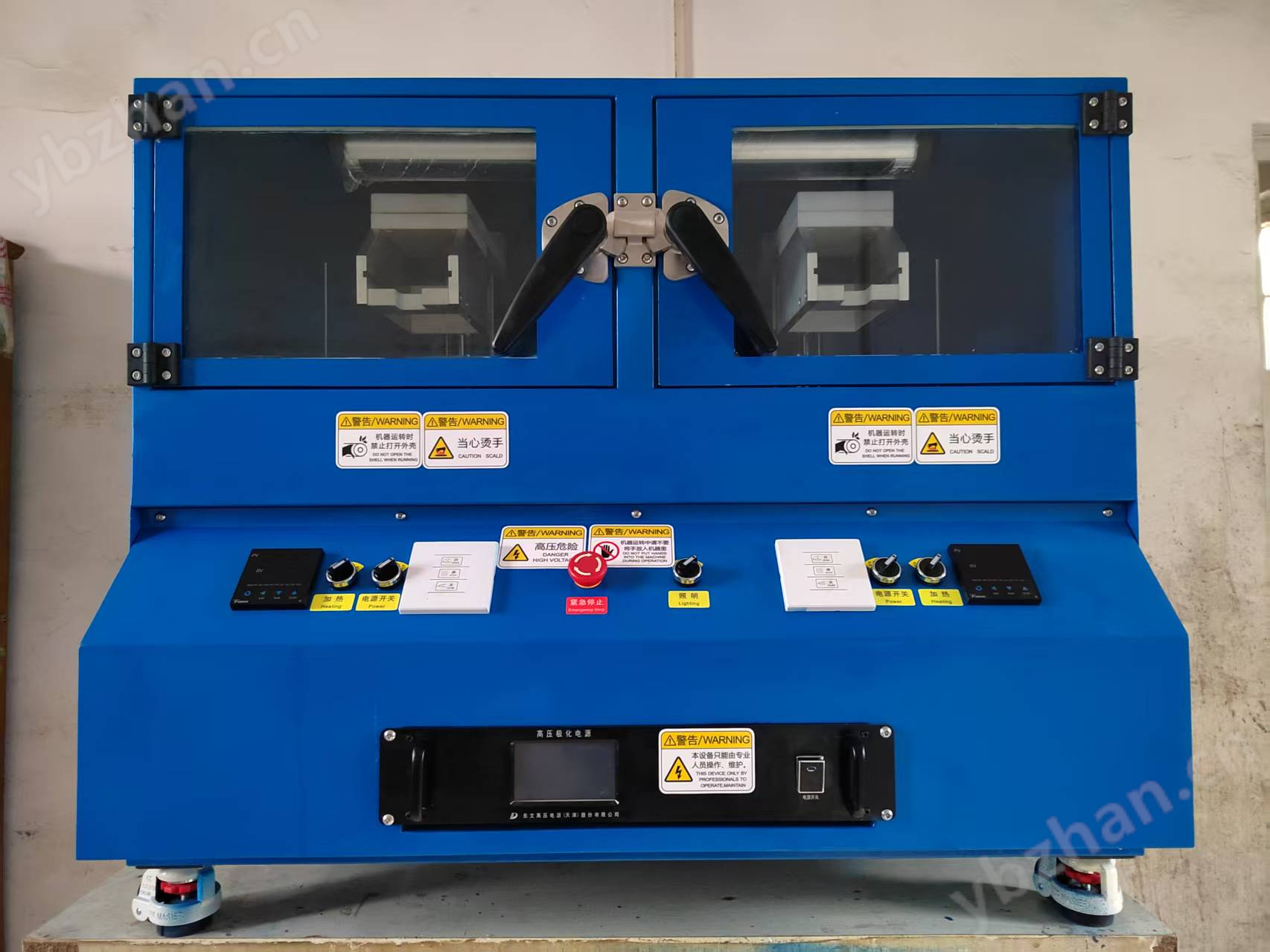
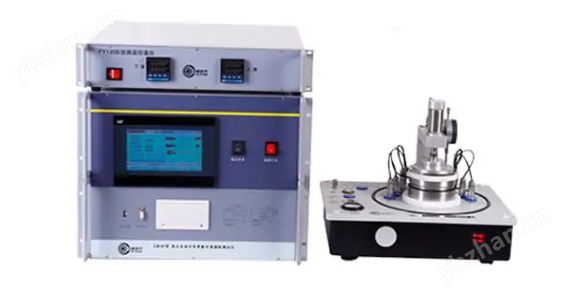
PEA-100Type Material Space Charge Experimenter

PEASpace charge experimental apparatus
Application: Space charge measurement using acoustic technology has become a common method for studying the dielectric properties of solid materials. Pulsed electroacoustic(The PEA method has been used in various industrial applications. For example, it is used for the evaluation of ion conductive materials, high-voltage insulation materials, and the study and analysis of internal charge, electric field, and potential distribution of materials. It can detect charge distribution in real time and convert it into space charge distribution, which is used for insulators, electrostatic resins, organic photoconductors, ion migration, etc. Currently, it is an important experimental equipment for universities and material production units.
Complies with:JB/T 12927-2016Electroacoustic pulses of space charge distribution in solid insulating materials
PEASpace charge experimental apparatus
The research on dielectric materials is of great significance. The electroacoustic pulse method developed by our company for flat plate specimens isThe PEA method space charge measurement system can easily test the charge distribution in media and insulators. Very suitable for research and production.
PEASpace charge experimental apparatus
System Features
non-destructive
Strong ability to avoid electrical noise. Due to the avoidance of electrical noise, measurements can be taken at high voltage.
The software can automatically repeat measurements.
The reproducibility is very good.
Easy to operate and handle. Simply place the sample between two electrodes.
1Verification sample
The verification of space charge testing equipment is the validation of the validity of the test results of the space charge testing system. This standard recommends using a thickness ofOrganic glass (PMMA) with a thickness of 0.5 mm or 1.0 mm can be used as equipment calibration samples, but the dispersion and attenuation of sound waves propagating in PMMA are low, and commercial PMMA can be used. PMMA should be verified at room temperature and there should be no significant accumulation of space charge under the application of an electric field. Before verification, use a thickness gauge to determine the thickness of the sample and ensure the cleanliness of the sample surface.
noteThe recommended testing temperature and electric field strength for PMMA are room temperature (303 K), with an electric field strength not exceeding 5 MV/m.
2、 Sample placement
In order to effectively propagate pressure waves at the interface between the sample and the electrode, a layer of silicone oil should be applied to the contact surface between the sample and the electrode before placing the sample. Its main function is to fill the small gaps between the contact surfaces, prevent trace air from affecting the penetration of pressure waves, and reduce the acoustic impedance difference between the sample and the electrode, thereby reducing the reflection loss of pressure wave energy at the contact interface.
A non-conductive sheet should be placed between the sample and the upper electrode to improve the acoustic impedance matching between the sample and the upper electrode, as shown in the appendixA, Its resistivity is not greater than 500 Q · m, and its thickness is 0.5 mm~1 mm.
As shown in the figureAs shown in Figure 1, using the fixture in the testing system, apply appropriate pressure to the electrode system. The pressure on the electrode contact surface should not exceed 0.2 MPa to ensure that the sample is in close contact with the electrode and does not undergo significant deformation.
PEASpace charge experimental apparatus
Product Specifications
1) PEA measurement unit (independent amplifier) # 50-101-50A places the "sensor component" indoors and the "amplifier component" indoors.
1-1) Sensor components
test method Pulse electroacoustic method
Sample material dielectric material
sample size Width: 20-50mm,
Thickness0.05-1.0mm,
Resolution of board or film At room temperature, it is divided into25〜30μm
high voltage10 kV or lower
environment Sample temperature reaches 85 ℃
output voltage50,100,200,400,600 V
output frequency400Hz
pulse width10ns(FWHM)
input powerAC100V 1A
voltage range+/- 10kV
response speed1kHz
Analysis software: Calibration of charge density, deconvolution, electric field/Potential
Oscilloscope: bandwidth600MHz channel 2ch sampling rate 5GS/s memory
Similar Product Recommend