-
E-mail
791912429@qq.com
-
Phone
18657576420,18957572800
-
Address
No. 8 Ziyang Road, Diankou Town, Zhuji City, Zhejiang Province
Product Categories
Zhejiang Zeiss Pipeline Technology Co., Ltd

PPR aluminum-plastic alloy pipe
NegotiableUpdate on 03/15
- Model
- Nature of the Manufacturer
- Producers
- Product Category
- Place of Origin
Overview
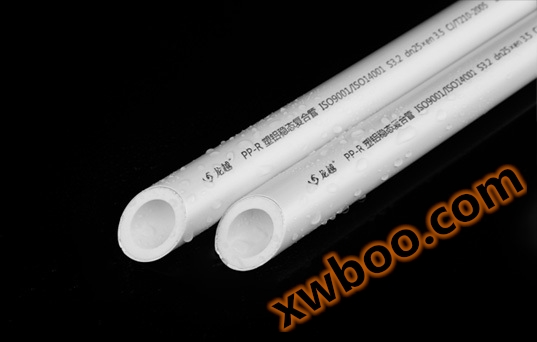
PPR aluminum-plastic alloy pipe is a type of aluminum-plastic composite pipe made of high-strength specialized alloy aluminum strip butt welded (argon arc welded) aluminum tube as the substrate, with both the inner and outer composite materials made of PPR imported raw materials. The aluminum tube and PPR are bonded together with high-performance hot melt adhesive and formed by step-by-step co extrusion composite. The ASTM F1335 standard in the United States refers to aluminum-plastic composite pipes as "metal pipes with plastic protective layers".
Product Details
- Product Description
- Product Application
- Installation steps
- Suppression steps
Product Name:PPR aluminum-plastic alloy pipe
Specification and model: Φ 16- Φ 32
Product color: White
Raw material selection: Xiaoxing material
Operating temperature: 0 ℃ -95 ℃
Usage pressure: 16-25 kilograms
Installation method: Hot melt installation (special mold head)
Product Introduction
PPRAluminum plastic alloy pipeIt is a high-strength specialized alloy aluminum strip butt welded (argon arc welded) aluminum tube as the substrate, with both the inner and outer composite materials made of PPR imported raw materialsAluminum-plastic composite pipeThe aluminum tube is bonded to PPR with high-performance hot melt adhesive and is formed by step-by-step co extrusion composite. The ASTM F1335 standard in the United States refers to aluminum-plastic composite pipes as "metal pipes with plastic protective layers".
Product Features
1. New welding technology: The composite pipes produced by our company use argon arc welding (laser welding) technology instead of traditional lap ultrasonic welding technology at the aluminum strip connection, which improves the strength of the aluminum strip connection and improves the pressure bearing performance of the product. The pressure bearing capacity is better than most products on the market, making it more suitable for use in high-pressure environments.
2. Higher quality standards: Our company produces composite pipes with aluminum strip thickness and inner and outer PPR thickness higher than industry standards to ensure higher strength and better quality, greatly improving the product's performance and service life.
3. Better rigidity: After the thickening of the aluminum strip layer and the inner and outer PPR layers, the rigidity of the pipe also increases, making it less prone to deformation and able to meet the requirements of exposed installation in various environments
4. New installation welding technology: The welding tool used in this product adopts a self-developed specialized welding equipment, which has obtained relevant national patents. This tool can completely eliminate direct contact between aluminum tubes and water during hot melt connection, solving the fatal defect of direct melt aluminum-plastic PP-R and fully ensuring the service life of the product.
5. Good oxygen resistance: The aluminum tube layer can completely isolate the penetration of oxygen and has 100% oxygen resistance. It can maintain a low oxygen environment in the heating system for a long time, effectively extending the service life of metal components such as boilers, radiators, water collectors, valves, etc., and reducing the user's usage and maintenance costs.
6. Good light shielding: With the natural light shielding properties of aluminum tubes, aluminum-plastic PP-R has excellent light resistance. To effectively resist the growth of algae and bacteria when the pipes are installed openly, thereby ensuring the hygiene and safety of water use.
scope of application
1. The preferred pipe material for various radiators and hot water heating pipelines.
2. The preferred pipeline for heating and water supply of independent household boilers (gas, natural gas, electric heating).
3. The preferred pipeline for household bathing hot water pipes, such as home solar energy, electric water heaters, and geothermal water.
4. Suitable for low-pressure fluid transportation in civil applications such as hot and cold water, direct drinking water, and air conditioning. It can also be used for low-pressure fluid transportation in industries such as hospital oxygen and beverages, food, chemical, agricultural, and industrial settings.
Installation steps
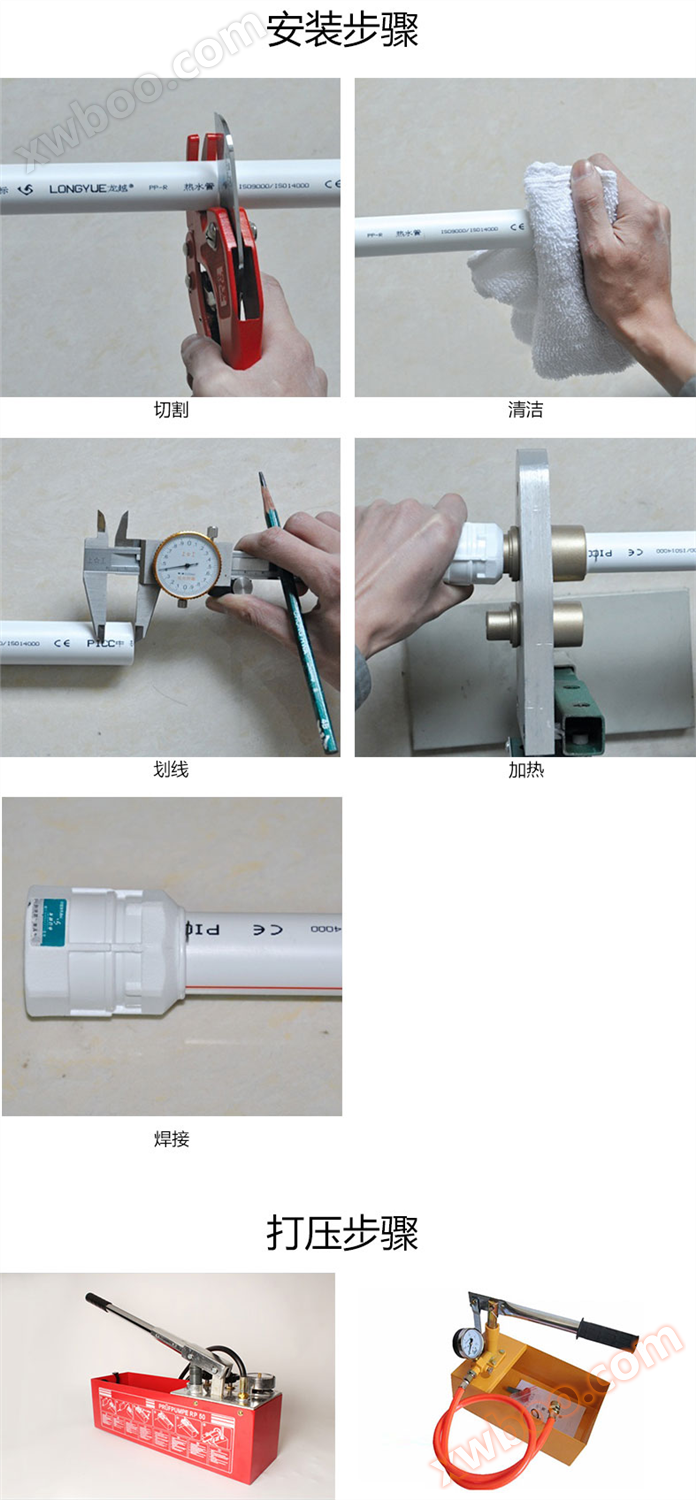
1. Cutting: When cutting pipes, the end face must be perpendicular to the pipe axis. Pipe cutting generally uses pipe cutters or pipe cutting machines, and sharp steel saws can be used if necessary, but the cut surface of the pipe should be free of burrs and edges.
2. Cleaning: Use a clean cloth to clean the welding parts of pipes and fittings (recommended to wipe with alcohol), and the connecting end faces of pipes and fittings must be clean, dry, and free of oil stains.
3. Marking: Mark the pipe according to the welding depth specified in Table 1:
4. Heating: After the hot melt machine heats up, insert the pipe and fittings into the hot melt mold head without rotation. Stop when the pipe reaches the marking position:
5. Welding: After reaching the heating time, the pipe and fittings are pulled out without rotation, and the pipe is inserted into the fitting socket without rotation, and left to cool for a certain period of time.
Note:
Hot melt connection should be used between water supply polypropylene pipes and pipe fittings of the same material, and special hot melt tools should be used for installation. Emphasis should be placed on concealed walls, and pipes within the floor surface must be connected using hot melt instead of threaded or flanged connections.
The connection between water supply polypropylene pipes and metal fittings should use polypropylene fittings with metal inserts as a transition. The fittings should be hot-melt connected to plastic pipes and threaded to metal fittings or sanitary ware hardware accessories. In addition, when connecting valves, faucets, and metal fittings, elbows and tees should be equipped with fixed supports and firmly fixed on the wall.
Suppression steps
1. The test pressure shall be 1.5 times the working pressure of the pipeline system, but not less than 0.6Mpa
2. For PP-R pipeline systems, water pipe testing is generally required to be conducted 24 hours after the installation of pipeline connections
3. Before the water pipe pressure test, safe and effective fixing and protection measures should be taken for the pipeline, but the joints should be exposed
4. Water pressure test steps
(1) Seal the end of the pressure test pipeline, slowly inject water, and simultaneously remove the gas inside the pipeline
(2) After filling with water, conduct a water tightness check
(3) It is advisable to use a manual pump to slowly increase the pressure, and the pressure increase time should not be less than 10 minutes
(4) Raise the test pressure, stop applying pressure, stabilize for 1 hour, and observe if there is any water leakage at the joint
(5) Stabilize the pressure for one hour, add pressure to the test pressure value, and the pressure drop within 15 minutes should not exceed 0.05Mpa, which is qualified