-
E-mail
791912429@qq.com
-
Phone
18657576420,18957572800
-
Address
No. 8 Ziyang Road, Diankou Town, Zhuji City, Zhejiang Province
Product Categories
Zhejiang Zeiss Pipeline Technology Co., Ltd
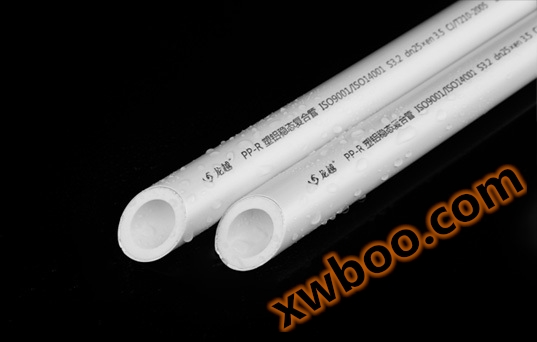
PPR nano antibacterial pipeline
NegotiableUpdate on 03/15
- Model
- Nature of the Manufacturer
- Producers
- Product Category
- Place of Origin
Overview
Under humid conditions, the antibacterial layer on the inner wall of PPR antibacterial tubes, IONPURE, will slowly release a small amount of silver ions. On the one hand, due to the negative charge on the surface of bacteria, silver ions with positive charge will be adsorbed on the surface of bacteria, thereby disrupting their electrolyte balance and causing bacterial death due to cell damage; On the other hand, due to the entry of silver ions into the interior of bacteria, they react and combine with bacterial enzymes, inhibiting bacterial activity and reproduction, achieving the effect of sterilization.
Product Details
- Product Description
- Product Application
- Installation steps
- Suppression steps
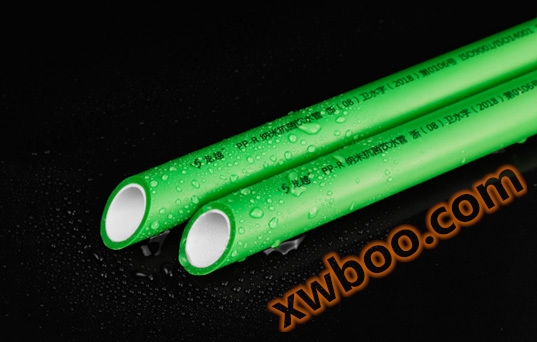
Product Name: Random copolymer polypropylene PPR+nano antibacterial layer
Specification and model: Φ 20- Φ 63
Product color: White/Green
Raw material selection: Korean Xiaoxing+antibacterial material
Operating temperature: 0 ℃ -60 ℃ (insulation materials are required for outdoor or low-temperature areas)
Usage pressure: 16-25 kilograms
Installation method: Hot melt connection (pressure test must be conducted after hot melt installation to prevent hidden dangers)
Product Introduction
Under humid conditions, the antibacterial layer on the inner wall of PPR antibacterial tubes, IONPURE, will slowly release a small amount of silver ions. On the one hand, due to the negative charge on the surface of bacteria, silver ions with positive charge will be adsorbed on the surface of bacteria, thereby disrupting their electrolyte balance and causing bacterial death due to cell damage; On the other hand, due to the entry of silver ions into the interior of bacteria, they react and combine with bacterial enzymes, inhibiting bacterial activity and reproduction, achieving the effect of sterilization.PPR nano antibacterial tube
The system has bactericidal and bacteriostatic effects, which can effectively prevent the growth of bacteria, eliminate common bacteria in water bodies, and ensure the cleanliness of water inside the pipeline. It is an environmentally friendly new type of plastic pipeline.
Product Features
1. Broad spectrum and efficient antibacterial 99%: Strong antibacterial effect, tested by national authoritative institutions, Longyue PPR antibacterial tube has an antibacterial rate of over 99.9% against Escherichia coli and Staphylococcus aureus, far exceeding the requirements of QB/T 2591-2003 standard antibacterial level 1, making it the preferred choice for household water pipes.2. Long term and efficient sterilization and mold prevention: Using inorganic nano silver antibacterial components with long-term slow-release properties, Longyue PPR antibacterial pipes can maintain excellent antibacterial and mold prevention performance throughout the entire service life of the pipeline, ensuring health through long-term use.3. Stable internal and external characteristics: Using material composite modification and precision co extrusion technology, the quality is consistent both inside and outside, maintaining both appearance and stable temperature and pressure resistance
Longyue PPR water pipe
Excellent characteristics.
4. Long service life: Good toughness, strong heat resistance and creep resistance. When used under normal pressure and temperature, the service life can reach 50 years.
Precautions
1. PP-R pipes have lower hardness and lower rigidity than metal pipes, and should be protected during transportation and construction to avoid mechanical damage caused by inappropriate external forces. After concealed installation, the position of the pipeline should be marked to prevent secondary decoration from damaging the pipeline.
2. PP-R pipes have a certain degree of low-temperature brittleness below 5 ℃. Be careful during winter construction and use sharp cutting tools to slowly cut the pipes. The installed pipelines should not be subjected to heavy pressure or knocking, and if necessary, protective covers should be placed on areas that are susceptible to external forces.
3. PP-R pipes are prone to aging and degradation under long-term exposure to ultraviolet radiation, and must be wrapped with a dark protective layer when installed outdoors or in direct sunlight.
4. Except for using mechanical connection methods such as threaded inserts or flanges to connect PP-R pipes with metal pipes or water dispensers, all others should be connected by hot melt to integrate the pipes without any leakage points.
5. The coefficient of linear expansion of PP-R pipes is relatively high (0.15mm/m ℃), and technical measures must be taken to prevent pipeline expansion and deformation when laying pipes openly or indirectly.
6. After pipeline installation, pressure testing must be conducted before sealing (direct burial) and covering the decorative layer (non direct burial concealed laying). The pressure test of the cold water pipe shall be 1.5 times the working pressure of the system, but not less than 1MPa; The test pressure for hot water pipes shall be twice the working pressure, but not less than 1.5MPa. Technical regulations for pressure testing time and methods.
scope of application
1. High end residential area direct drinking water system pipeline network.
2. Transportation system for beverages, purified water, and mineral water.
3. Pipeline transportation systems in hospitals, schools, and water plants.
4. Drinking water systems for villas, hotels, and residential areas.
5. Pipeline transportation systems for food, medicine, and processing plants.
6. High standard water quality pipeline transportation system.
Installation steps
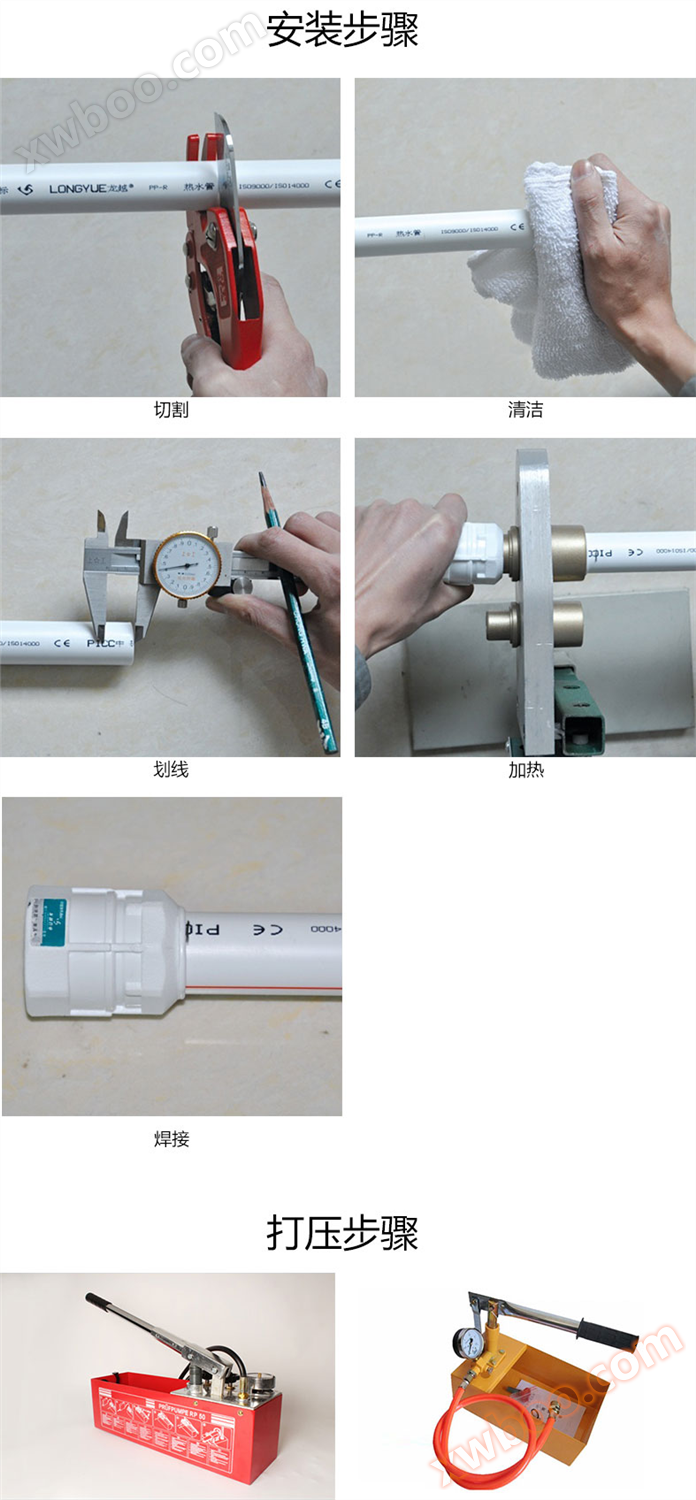
1. Cutting: When cutting pipes, the end face must be perpendicular to the pipe axis. Pipe cutting generally uses pipe cutters or pipe cutting machines, and sharp steel saws can be used if necessary, but the cut surface of the pipe should be free of burrs and edges.
2. Cleaning: Use a clean cloth to clean the welding parts of pipes and fittings (recommended to wipe with alcohol), and the connecting end faces of pipes and fittings must be clean, dry, and free of oil stains.
3. Marking: Mark the pipe according to the welding depth specified in Table 1:
4. Heating: After the hot melt machine heats up, insert the pipe and fittings into the hot melt mold head without rotation. Stop when the pipe reaches the marking position:
5. Welding: After reaching the heating time, the pipe and fittings are pulled out without rotation, and the pipe is inserted into the fitting socket without rotation, and left to cool for a certain period of time.
Note:
Hot melt connection should be used between water supply polypropylene pipes and pipe fittings of the same material, and special hot melt tools should be used for installation. Emphasis should be placed on concealed walls, and pipes within the floor surface must be connected using hot melt instead of threaded or flanged connections.
The connection between water supply polypropylene pipes and metal fittings should use polypropylene fittings with metal inserts as a transition. The fittings should be hot-melt connected to plastic pipes and threaded to metal fittings or sanitary ware hardware accessories. In addition, when connecting valves, faucets, and metal fittings, elbows and tees should be equipped with fixed supports and firmly fixed on the wall.
Suppression steps
1. The test pressure shall be 1.5 times the working pressure of the pipeline system, but not less than 0.6Mpa
2. For PP-R pipeline systems, water pipe testing is generally required to be conducted 24 hours after the installation of pipeline connections
3. Before the water pipe pressure test, safe and effective fixing and protection measures should be taken for the pipeline, but the joints should be exposed
4. Water pressure test steps
(1) Seal the end of the pressure test pipeline, slowly inject water, and simultaneously remove the gas inside the pipeline
(2) After filling with water, conduct a water tightness check