-
E-mail
vera@sthgwatertreatment.com
- Phone
-
Address
19th Floor, Building A, Smart International Center, Intersection of Fengcheng 10th Road and Wenjing Road, Xi'an Economic Development Zone, Shaanxi Province
Product Categories
Xi'an Xinshengtai Water Treatment Environmental Protection Technology Co., Ltd
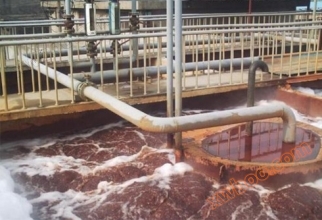
Printing and dyeing washing wastewater treatment equipment
NegotiableUpdate on 03/25
- Model
- Nature of the Manufacturer
- Producers
- Product Category
- Place of Origin
Overview
Wastewater discharged from printing and dyeing, woolen dyeing and finishing, and silk factories mainly processing cotton, hemp, chemical fibers and their blended products, and silk. The amount and quality of printing and dyeing wastewater vary depending on the type of fiber and processing technology. Among them, the amount of wastewater from printing and dyeing factories is relatively large, with 100-200 tons of water consumed for every 1 ton of textile processed, of which 80% -90% is discharged as wastewater. Printing and dyeing wastewater has the characteristics of large water volume, high organic pollutant content, high alkalinity, and large water quality changes. It is one of the difficult industrial wastewater to treat. The wastewater contains dyes, pulp, additives, oil agents, acid and alkali, fiber impurities, sand substances, inorganic salts, etc.
Product Details
Wastewater discharged from printing and dyeing, woolen dyeing and finishing, and silk factories mainly processing cotton, hemp, chemical fibers and their blended products, and silk. The amount and quality of printing and dyeing wastewater vary depending on the type of fiber and processing technology. Among them, the amount of wastewater from printing and dyeing factories is relatively large, with 100-200 tons of water consumed for every 1 ton of textile processed, of which 80% -90% is discharged as wastewater. Printing and dyeing wastewater has the characteristics of large water volume, high organic pollutant content, high alkalinity, and large water quality changes. It is one of the difficult industrial wastewater to treat. The wastewater contains dyes, pulp, additives, oil agents, acid and alkali, fiber impurities, sand substances, inorganic salts, etc.
The main treatment process is "pretreatment+neutralization+hydrolysis acidification+contact oxidation+advanced oxidation/membrane treatment", which can meet the comprehensive sewage discharge standards or industry discharge standards after treatment. The system is mainly composed of concrete tanks.


