-
E-mail
0317-8080802
-
Phone
15076474477
-
Address
Botou Chenxin Machinery Equipment Manufacturing Co., Ltd
Product Categories
Botou Chenxin Machinery Equipment Manufacturing Co., Ltd

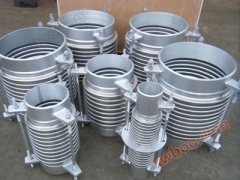
Ripple compensator is also commonly known as expansion joint or expansion joint The waves that make up its main body of work ..
NegotiableUpdate on 03/14
- Model
- Nature of the Manufacturer
- Producers
- Product Category
- Place of Origin
Overview
Ripple compensator belongs to a type of compensation component
Product Details

Ripple compensator is a type of compensation component. By utilizing the effective expansion and contraction deformation of its working body corrugated tube, it can absorb the dimensional changes caused by thermal expansion and contraction of pipelines, conduits, containers, etc., or compensate for the axial, lateral, and angular displacement of pipelines, conduits, containers, etc. It can also be used for noise reduction and vibration reduction. Widely used in modern industry.
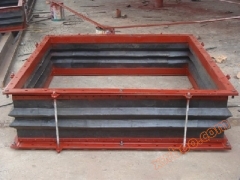
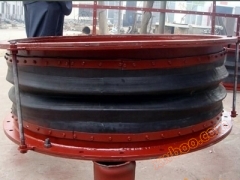
Ripple compensator, also commonly known as expansion joint or expansion joint. It is composed of corrugated pipes (a type of elastic element) and accessories such as end pipes, brackets, flanges, and conduits that make up its working body. Mainly used in various pipelines, it can compensate for thermal displacement, mechanical deformation, and absorb various mechanical vibrations of pipelines, reducing pipeline deformation stress and improving pipeline service life. The connection methods of corrugated compensators are divided into flange connection and welding. Directly buried pipeline compensators are generally welded (except for trench installation).
A bellows compensator is a compensation device used to absorb dimensional changes in pipelines, conduits, or containers caused by thermal expansion and contraction by utilizing the effective expansion and contraction deformation of the elastic elements of the bellows compensator. It belongs to a type of compensation element. Can absorb axial, lateral, and angular displacements.
detection
Due to the different compensation forms of different types of corrugated compensators, there are mainly axial, transverse, angular, and combined compensation methods. For corrugated compensators with multiple displacements simultaneously, it is necessary to synthesize their various displacements and calculate the total equivalent axial displacement. Detection is based on the total equivalent axial displacement. That is to say, the detection of the nominal displacement of the corrugated compensator is the detection of the total equivalent axial displacement.
The nominal displacement of a universal corrugated pipe is actually the ability of the corrugated pipe to deform under the given nominal displacement. For expansion joints (compensators) and compensators made of corrugated pipes, they are usually referred to as compensation quantities, which reflect the ability of the corrugated pipe to absorb system displacement and represent the maximum compensation capacity of the product under certain conditions. During normal operation, corrugated pipes need to absorb system displacement and generate displacement deformation, while also ensuring a certain number of normal and safe working displacement cycles. Therefore, in the design of corrugated pipes, a certain number of ripples are designed based on the displacement that each wave can withstand. When each wave is uniformly subjected to displacement load without local overload, the corrugated pipe can work normally. When the design is reasonable, it can ensure a certain number of design work displacement cycles. In the JB/T 6169-92 "Metal Bellows" standard, provisions have been made for the testing of this performance.
Similar Product Recommend