-
E-mail
heshengcn@163.com
-
Phone
13918154637
-
Address
201b, Building B, Fufeng Technology Industrial Park, No. 1200 Fenghua Road, Hongqiao Business District, Shanghai
Product Categories
Shanghai Hesheng Instrument Technology Co., Ltd


Shanghai Differential Scanning Calorimeter (Hesheng)
NegotiableUpdate on 11/20
- Model
- Nature of the Manufacturer
- Producers
- Product Category
- Place of Origin
Overview
Hesheng Instrument provides you with the manufacturer, price, model, brand, quotation and other parameter information of Shanghai differential scanning calorimeter. The company has a professional service team to provide you with * technical support and is your trusted partner.
Product Details
Product Introduction:
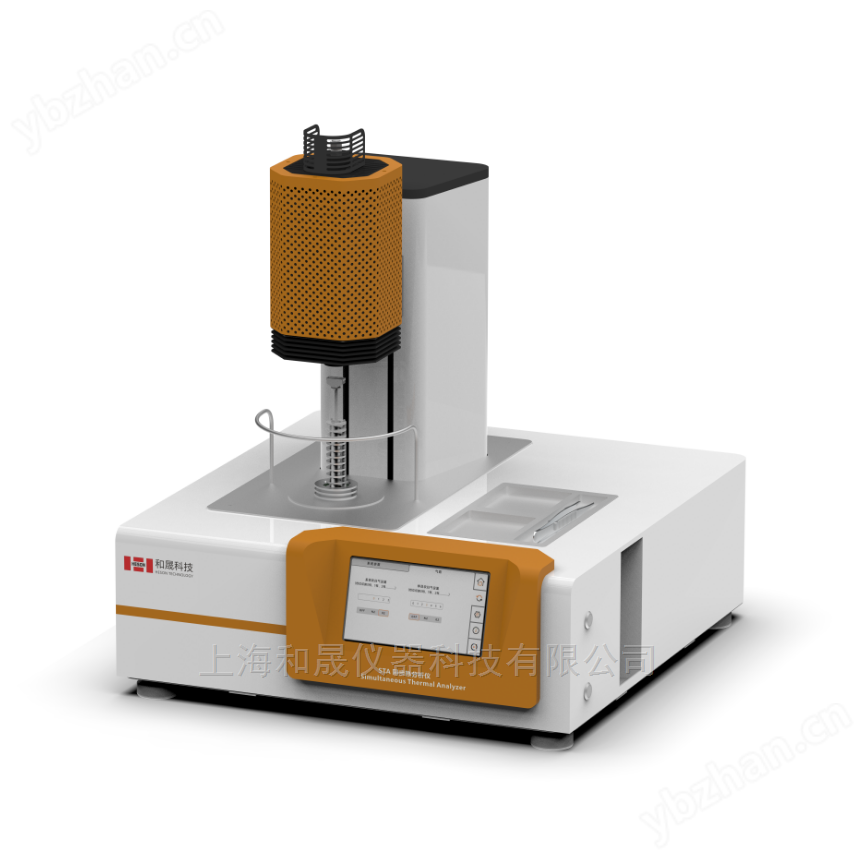
Differential scanning calorimeter is a thermal analysis instrument that measures the relationship between the heat flux difference and temperature parameters between the reference end and the sample end. It is mainly used to measure various characteristic parameters during the heating or cooling process of substances, such as glass transition temperature Tg, oxidation induction period OIT, melting temperature, crystallization temperature, specific heat capacity, and enthalpy.
Main features:
1. A brand new furnace structure ensures resolution and baseline stability of resolution
2. Digital gas mass flow meter, controlling the flow rate of purging gas, with data directly recorded in the database
3. The instrument can adopt bidirectional control (host control, software control), with a friendly interface and easy operation
Technical Specifications:
| model | HS-DSC-101 |
| display mode | 24 bit color, 7-inch LCD touch screen display |
| DSC range | 0~±600mW |
| temperature range | Room temperature~600 ℃ |
| Temperature Resolution | 0.01℃ |
| temperature fluctuation | ±0.01℃ |
| heating rate | 0.1~100℃/min |
| Temperature repeatability | ±0.1℃ |
| temperature accuracy | ±0.1℃ |
| DSC resolution | 0.001mW |
| DSC resolution | 0.001mW |
| program control | Four stage temperature and constant temperature control can be achieved, and special parameters can be customized |
| Curve scanning | Heating scan&cooling scan |
| Atmosphere control device | Two way automatic switching (instrument automatic switching) |
| gas flow rate | 0-300mL/min (other ranges can be customized) |
| gas pressure | gas pressure |
| data interface | Standard USB interface |
| Parameter standards | Equipped with standard substances (indium, tin, lead), users can calibrate the temperature themselves |
| Instrument thermocouple | Three sets of thermocouples, one set for testing sample temperature, one set for testing instrument internal environment temperature, and one set for furnace body overheating self checking sensor |
| working power supply | AC220V/50Hz |
The differential scanning calorimeter can perform the following test items:

Typical DSC test curve:

What is the glass transition temperature?
Glass transition is an inherent property of amorphous polymer materials (i.e. amorphous polymers), which is a macroscopic manifestation of the transformation of polymer motion forms. It directly affects the material's performance and processability, and has therefore been a major focus of polymer physics research for a long time.
The vast majority of polymer materials can typically exist in the following three physical states (or mechanical states):Glass state, high elasticity state (rubber state), and viscous flow stateAnd the glass transition isHigh elastic state and glassy stateFrom a molecular structure perspective, the glass transition temperature is a relaxation phenomenon of the amorphous part of a polymer from a frozen state to a thawed state.
Taking DSC as an example, as the temperature gradually increases and passes through the glass transition temperature of the polymer, the baseline on the DSC curve shifts towards the endothermic direction (see figure). The point A in the figure is the starting point of deviation from the baseline. Extend the baseline before and after the transformation, and the vertical distance between the two lines is the step difference Δ J. At Δ J/2, point C can be found. Take a tangent from point C and intersect with the previous baseline at point B. The temperature value corresponding to point B is the glass transition temperature Tg.

Common crystalline plastics include polyethylene PE, polypropylene PP, polyoxymethylene POM, polyamide PA6, polyamide PA66, PET, PBT, etc
Amorphous plastics include: polycarbonate ABS、 Transparent benzene, vinyl chloride, etc. (such as plastic watch cases, TV cases, etc.)
What is the oxidation induction period?
The oxidation induction period (OIT) is a measure of the time it takes for a sample to undergo an automatic catalytic oxidation reaction under high temperature (200 degrees Celsius) oxygen conditions. It is an indicator for evaluating the material's ability to resist thermal degradation during molding, storage, welding, and use. The oxidation induction period (OIT) method is a method that uses differential thermal analysis (DTA) to test the degree of accelerated aging of plastics in high-temperature oxygen based on the exothermic reaction of plastic molecular chain breakage. The principle is to place the plastic sample and an inert reference material (such as alumina) in a differential thermal analyzer, and rapidly replace the inert gas (such as nitrogen) in the sample chamber with oxygen at a certain temperature. Test the changes in DTA curve (differential thermal spectrum) caused by sample oxidation and obtain the oxidation induction period (time) OIT (min) to evaluate the thermal aging resistance of plastics.
What is crystallization?
Reference: GBT 19466.3-2004 Plastic Differential Scanning Calorimetry (DSC) Part 3 Determination of Melting and Crystallization Temperature and Enthalpy
The transition stage from the amorphous liquid state of a polymer to the crystalline or semi crystalline solid state. [For exothermic peak]
What is melting?
*The transition stage of crystalline or semi crystalline polymers from solid to liquid with different viscosities. [For the endothermic peak]
What cold crystallization?
The crystallization phenomenon that occurs during the heating process of general amorphous materials is called "cold crystallization". [For exothermic peak]
The cause of the cold crystallization peak is as follows: the appearance of the cold crystallization peak depends on the cooling rate and the crystallization ability of the material. Materials with strong crystallization ability are difficult to observe the cold crystallization peak.
Application examples of Hesheng differential scanning calorimeter in some research institutes of universities
| 1 | Research on the preparation process of cross-linked hydroxypropyl starch | Jilin University |
| 2 | Preparation of spiral polyacetylene by circularly polarized light induced asymmetric polymerization reaction | University of Science and Technology of China |
| 3 | Analysis of Different lotion Polymerization Processes and Their Effects on Polymer Properties | Wuhan University of Technology |
| 4 | Experimental study on atomization characteristics of ADN based propellant and simulation study on the working process of ADN based thruster | Beijing Jiaotong University |
| 5 | Research on the Thermal Electrical Characteristics of 18650 Power Cells and Module Thermal Management Technology | Guangdong University of Technology |
| 6 | Penetration and defects of resin for wind turbine blades prepared by vacuum assisted resin infusion method | Qiqihar university |
| 7 | Controllability and crystallization kinetics of hot air flow consolidated fiber mesh bead structure | Donghua University |
| 8 | Study on the effect of redox and pH dual responsive mesoporous silica nano drug delivery system on A549 cells | Jinzhou Medical University |
| 9 | Preparation of Polymer Electrolytes with Enhanced Ionic Conductivity and Their Application in Lithium Oxygen Batteries | Chengdu University of Technology |
| 10 | Study on the preparation process and physical properties of purple sweet potato resistant starch | Jilin Academy of Agricultural Sciences |
| 11 | Preparation and Properties of Graphene Oxide/Polyurea Composite Materials | Jinan University |
| 12 | Application and physiological function research of soybean oil-based glycerol diester edible oil | South China University of Technology |
| 13 | Research on the microstructure and properties of AZ31B magnesium alloy/5052 aluminum alloy dissimilar materials in friction stir welding | Hubei University of Technology |
| 14 | Research on Room Temperature Curing and High Temperature Resistant Organic Silicon Coating for Titanium Alloy | General Institute of Mechanical Science Research |
| 15 | Preparation and Structural Size Control of Polymer Composite Array Materials | Xihua Normal University |
| 16 | Development of high toughness powder coating for household appliances | China Academy of Electrical Sciences Co., Ltd |
| 17 | The effect of different extraction temperatures on the physicochemical properties of silver carp skin gelatin | Hefei Polytechnic University |
| 18 | Preparation and Application Research of Structure/Size Controllable Porous Polymer Templates | Southwest University of Science and Technology |
| 19 | The influence of surface modification on the properties of injection molded bonded NdFeB magnets | Mining and Metallurgical Technology Group Co., Ltd |
| 20 | Research on Long Basalt Fiber Reinforced Flame Retardant Polypropylene | Zhejiang University |
| 21 | Preparation of PP/CaCO3 composite material and its application in strengthening the flexural performance of concrete | Inner Mongolia Vocational and Technical College of Transportation |
| 22 | The influence of extrusion and aging treatment on the microstructure and mechanical properties of building aluminum profiles | Hubei Vocational and Technical College of Light Industry |
| 23 | Application of natural extracts in antioxidant modification of polyolefins | Shandong University of Science and Technology |
Partial use of our differential scanning calorimeter customer SCI paper
1、Natural compounds from Punica granatum peel as multiple stabilizers for polyethylene
2、Electro-Thermochromic Luminescent Fibers Controlled by Self-Crystallinity Phase Change for Advanced Smart Textiles
3、Carbon fiber/polyetherketoneketone composites. Part I: An ideal and uniform composition via solution‐based processing
4、Isolation and characterization of acid-soluble collagen and pepsin-soluble collagen from the skin of hybrid sturgeon
5、Physicochemical properties of soybean-based diacylglycerol before and after dry fractionation.
6、Water-in-oil emulsions enriched with alpha-linolenic acid in diacylglycerol form: Stability, formation mechanism and in vitro digestion analysis
7、Effects of treatment methods on the formation of resistant starch in purple sweet potato
8、High Lithium Ion Flux of Integrated Organic Electrode/Solid Polymer Electrolyte from In Situ Polymerization
9、Preheat Compression Molding for Polyetherketoneketone: Effect of Molecular Mobility
10、Characterization and experimental investigation of aluminum nitride-based composite phase change materials for battery thermal management
11、Experimental investigation of the flame retardant and form-stable composite phase change materials for a power battery thermal management system
12、Experimental investigation on immersion liquid cooled battery thermal management system with phase change epoxy sealant
13、Experimental Investigation on Thermal Management of Electric Vehicle Battery Module with Paraffin/Expanded Graphite Composite Phase Change Material
Similar Product Recommend