-
E-mail
xaslck@163.com
-
Phone
18802933690,18829593940
-
Address
Xi'an High tech Zone New Industrial Park
Product Categories
Xi'an Sanlian Measurement and Control Technology Co., Ltd


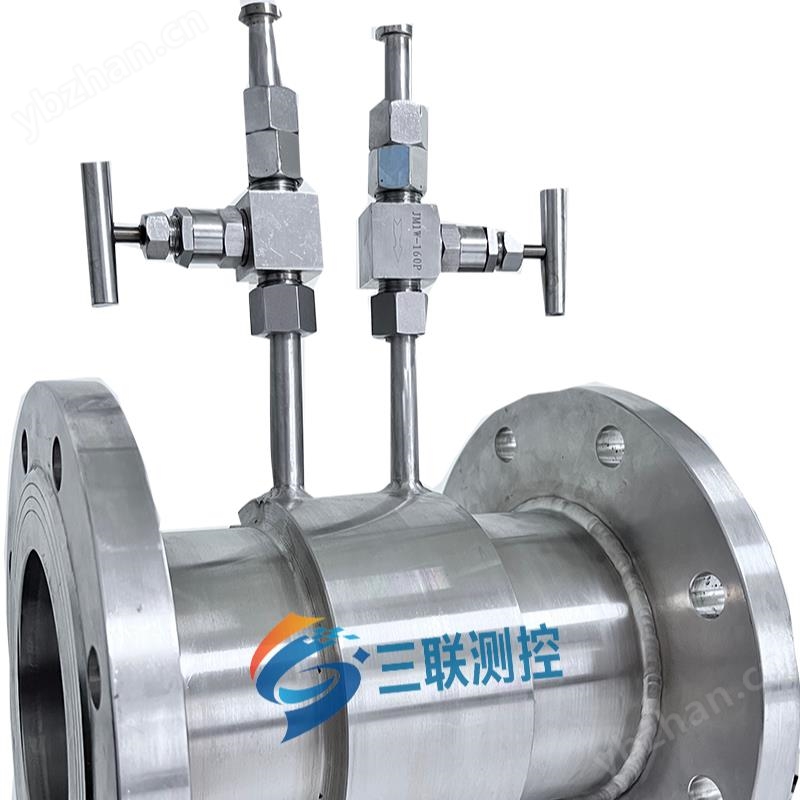
Standard orifice plate flowmeter
NegotiableUpdate on 11/19
- Model
- Nature of the Manufacturer
- Producers
- Product Category
- Place of Origin
Overview
The standard orifice plate flowmeter has a long historical background and complete experimental data. Simple structure, no movable parts, stable and reliable use, high precision. Has rich experience in design, manufacturing, and application. High degree of standardization, good linearity, and no need for real flow calibration. The orifice flowmeter has reliable experimental data and comprehensive (ISO5167-2003) and national standards (GB2624-2006). It has inherent huge markets both domestically and internationally, with familiar users and comprehensive data; Follow standard calculation and processing, flexible and convenient use
Product Details
Overview
The differential pressure orifice flowmeter has a long historical background and complete experimental data. Simple structure, no movable parts, stable and reliable use, high precision. Has rich experience in design, manufacturing, and application. High degree of standardization, good linearity, and no need for real flow calibration. The orifice flowmeter has reliable experimental data and comprehensive (ISO5167-2003) and national standards (GB2624-2006). It has inherent huge markets both domestically and internationally, with familiar users and comprehensive data; Follow standard calculation and processing, and use flexibly and conveniently; At present, the most widely used flow meter in domestic flow measurement is still the differential pressure flowmeter, which is estimated to account for 75% -85% of the total usage of flow meters according to relevant data. It is widely used in industries such as steam boilers, petroleum, chemical, steel, electricity, water conservancy, papermaking, pharmaceuticals, food, and chemical fibers.
Two measurement principles
When the fluid filled in the pipeline flows through the flow orifice plate inside the pipeline, the flow velocity will form a local contraction at the throttling point of the flow orifice plate, thereby accelerating the flow velocity and reducing the static pressure. Therefore, a pressure drop or pressure difference is generated before and after the standard orifice plate. The larger the flow rate of the medium, the greater the pressure difference generated before and after the flow orifice plate. Therefore, the size of the fluid flow can be measured by measuring the pressure difference. This measurement method is based on the principles of flow continuity equation (law of conservation of mass) and Bernoulli equation (law of conservation of energy).

3、 Characteristics
1. Rich experimental research and data accumulation, supported by national standards.
2. Wide range of differential pressure usage.
3. The pipeline diameter has a wide range of applications.
4. High measurement accuracy and wide range.
5. Suitable for various working conditions such as high temperature, high pressure, and ultra-low temperature.
6. Suitable for various materials.
7. On site digital display, compatible with remote signal transmission.
8. It has a wide range of applicable media and can measure the flow rate of various liquids, gases, and vapors.
9. Simple manufacturing and easy installation.
10. The pressure loss is approximately half of the differential pressure.
4、 Main technical parameters
Nominal diameter: 25mm ≤ DN ≤ 2400mm
Nominal pressure: PN ≤ 42Mpa
Working temperature: -50 ℃ ≤ t ≤ 550 ℃
Aperture ratio: 0.10 ≤ β ≤ 0.75
Reynolds number range: 5000 ≤ ReD when 0.10 ≤ β ≤ 0.56
When 0.45 ≤ β ≤ 0.75, 10000 ≤ ReD
Accuracy: Level 1.0, Level 1.5, Level 2.0
Connection methods: welding, flange connection