-
E-mail
office@taiholl.com
- Phone
-
Address
Group 4, Dangjia Village, Xuzhuang Town, Dali County, Weinan City, Shaanxi Province
Product Categories
Shaanxi Taihuier Instrument Manufacturing Co., Ltd
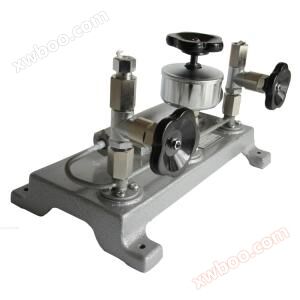
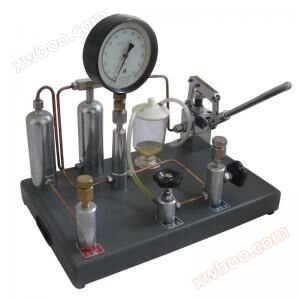
THLL115 pressure gauge calibrator
NegotiableUpdate on 08/04
- Model
- Nature of the Manufacturer
- Producers
- Product Category
- Place of Origin
Overview
The pressure gauge calibrator, also known as the pressure gauge calibrator or pressure gauge calibration pump, works by increasing the pressure of the piston rod movement to achieve the purpose of pressurization.
Product Details
summary:
1:Pressure gauge calibratorAlso known as a pressure gauge calibrator or pressure gauge calibration pump, the principle of a pressure gauge calibrator is to increase the pressure through the movement of the piston rod, thereby achieving the purpose of pressurization.
2: The pressure gauge calibrator is used to test the pressure source of general pressure gauges, with a test pressure of up to 80MPA and a test vacuum degree of up to -0.08MPA.
3: In laboratories or metrology rooms, precision pressure gauges (with a high accuracy of up to 0.25 level) are generally used to test ordinary pressure gauges (with an accuracy of 1.6 or 2.5).
4: The interface of the pressure gauge is generally M20 × 1.5 external thread, while the interface of the pressure gauge calibrator is M20 × 1.5 internal thread
specifications
model |
specifications |
pressure medium |
THLL115 |
-0.082-6MPa |
transformer |
THLL116 |
0-60MPa |
transformer |
THLL117 |
0-80MPa |
transformer |
Installation:
1. The calibrator should be placed on a workbench that is easy to operate and must be kept level.
The working environment temperature of the calibrator is+20 ± 10 ℃, and the surrounding air must not contain corrosive gases.
3. The calibrator shall not be subjected to vibration; Rubber pads need to be placed on the workbench.
Before use, first clean the calibrator pipeline with gasoline, and then fill the oil cup with pressure medium. Check if the oil circuit is unobstructed by rotating the handwheel of the hand cranked screw pump; If there are no issues, you can install the precision pressure gauge and the calibrated pressure gauge.
use:
Operation steps:
When inspecting the pressure gauge:
(1) Open the oil cup valve and turn the left hand wheel to fill the cylinder of the hand pump with oil.
(2) Close the oil cup valve, open the valve, then turn the handwheel to the right to compress the oil and apply the oil pressure to the pressure gauge. The inspection can be carried out based on the indicated values of the two gauges.
When checking the vacuum gauge:
(1) Clear the pressure medium inside the calibrator.
(2) Close the valve, open the oil cup valve, and screw all the screws of the hand pump into the cylinder.
(3) Close the valve, open the valve, unscrew the hand pump screw, and create a vacuum; If the vacuum degree is not reached after one rotation, the valve should be closed again, the valve should be opened, the screw of the hand pump should be screwed in to the bottom, then the valve should be closed, the valve should be opened, and the screw of the hand pump should be screwed out. Repeat this process several times until the desired vacuum degree is reached.
Purpose:
A so-called pressure gauge calibrator that can be used for the calibration of pressure measuring instruments, as well as for the calibration of non pressure measuring instruments that have a certain functional relationship with pressure values, and can also be used for pressure vessel pressure experiments. This pressure gauge calibrator combines pressure generation and pressure control, and when equipped with a standard of appropriate accuracy, can perform corresponding precision debugging, verification, inspection, calibration, and testing on the tested object. Its application fields are very extensive.
Pressure gauge calibrator is an ideal pressure source for on-site or laboratory calibration of vacuum, conventional pressure, high and ultra-high pressure transmitters, pressure switches, pressure gauges, and other pressure instruments, meters, etc.
Similar Product Recommend