-
E-mail
181235891@qq.com
-
Phone
15522773951
-
Address
4th Floor, Building H4, Changyuan Road International Enterprise Community, Wuqing Development Zone, Tianjin City
Product Categories
Tianjin Zhongwei Electronic Technology Co., Ltd
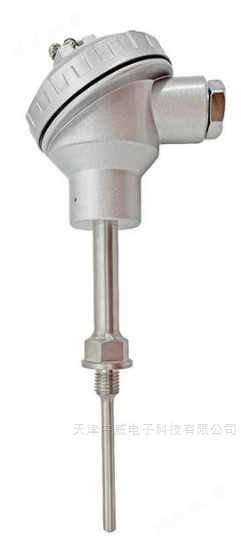

Thermocouple temperature transmitter
NegotiableUpdate on 11/20
- Model
- Nature of the Manufacturer
- Producers
- Product Category
- Place of Origin
Overview
Thermocouple is a commonly used temperature measuring element in temperature measuring instruments. It directly measures temperature and converts the temperature signal into a thermoelectric potential signal, which is then converted into the temperature of the measured medium through electrical instruments (secondary instruments).
Product Details
Thermocouples are generally composed of main parts such as hot electrodes, insulation sleeves, protective tubes, and junction boxes. The appearance of various thermocouples is often very different due to needs, but their basic structures are roughly the same. They are usually used in conjunction with display instruments, recording instruments, and electronic regulators. The main principle is based on two metal leads that produce different voltage responses with temperature changes. The leads are welded together to form a node, and as the temperature changes from the node to the end of the lead, a voltage is generated at the node. Therefore, different types of thermocouples can be used to measure different temperature ranges and accuracies. If two different metal conductors A and B are connected in a closed circuit and the temperatures t and t0 at the two nodes are different, an electric potential will be generated in the circuit, which is known as the thermoelectric effect. The potential in the circuit is called thermoelectric potential (referred to as thermoelectric potential), and the main reason for the generation of thermoelectric potential is that the electron densities nA and nB inside the two metals A and B are different. When A and B form a node, electron diffusion occurs due to the difference in electron density on both sides of the node, causing one side to lose electron positive charge and the other side to gain electron negative charge, ultimately resulting in the formation of temperature induced electromotive force on both sides of the node. This electromotive force is formed by the contact of different metals, and the contact potential formed by each node in the circuit together constitutes the thermoelectric potential of the thermocouple. If the temperature t0 is known and fixed, and the hot end of the thermocouple is placed in the temperature to be measured, that is, t is equal to the temperature to be measured, then the measurement of the temperature to be measured t can be achieved by measuring the thermoelectric potential of the thermocouple. This is the basic principle of thermocouple temperature measurement