-
E-mail
Tzzrc1992@163.com
-
Phone
18226662876
-
Address
Tianchang Economic Development Zone, Anhui Province
Product Categories
Anhui Tianzhun Instrument Co., Ltd

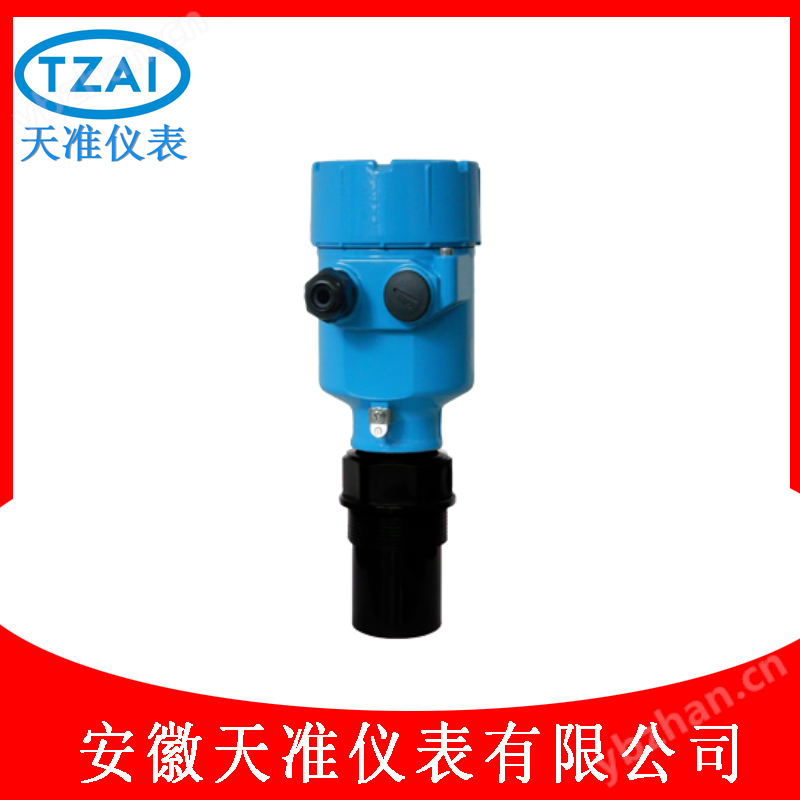
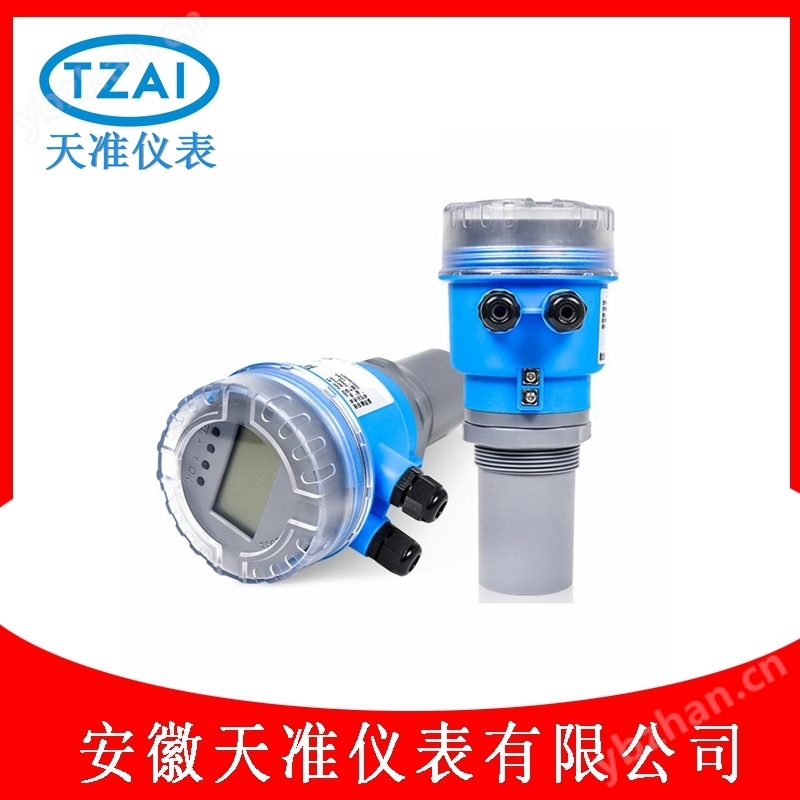

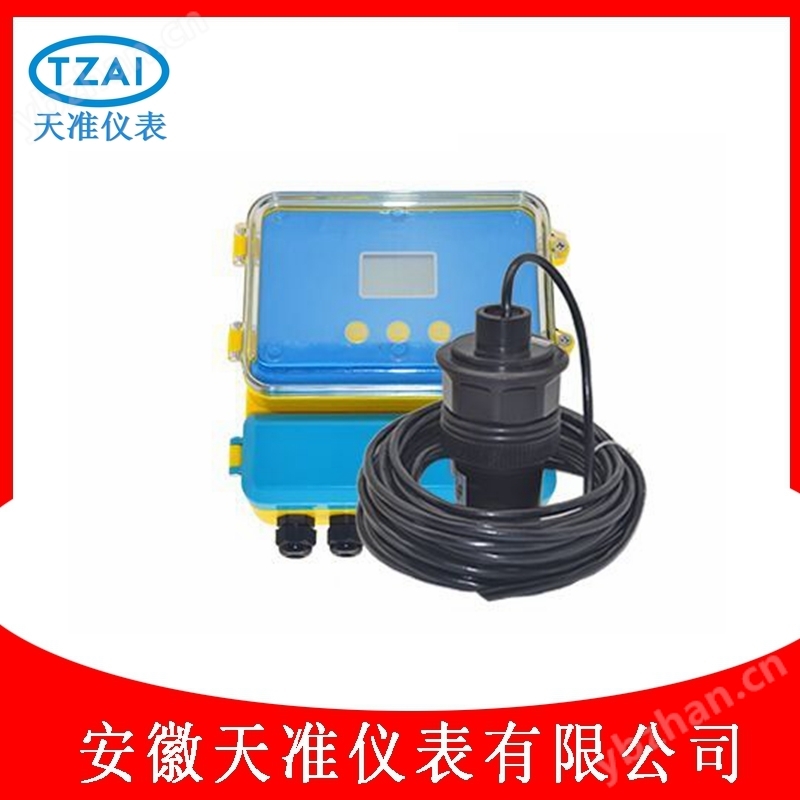
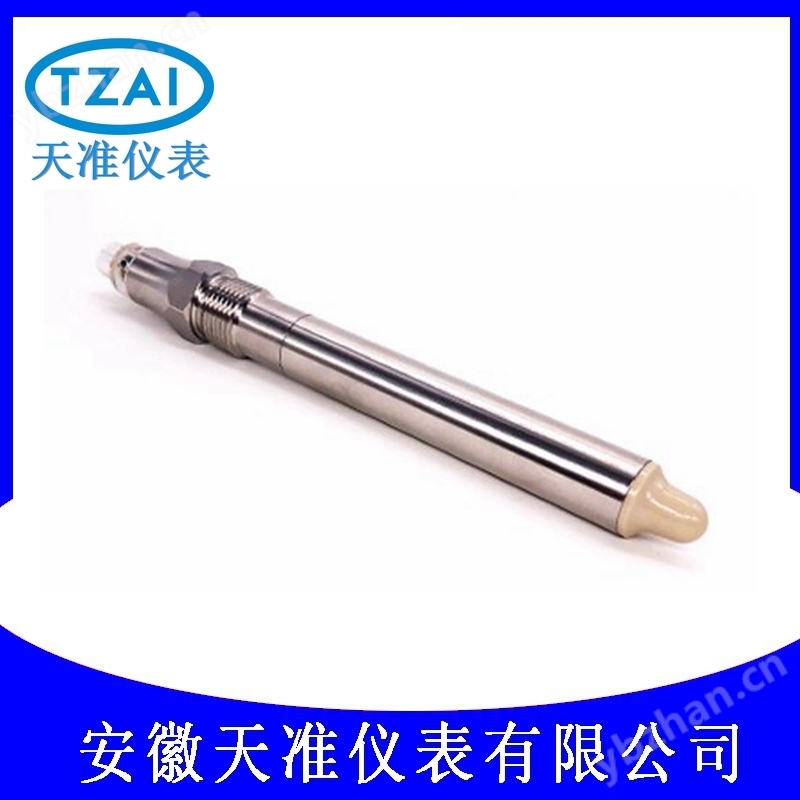
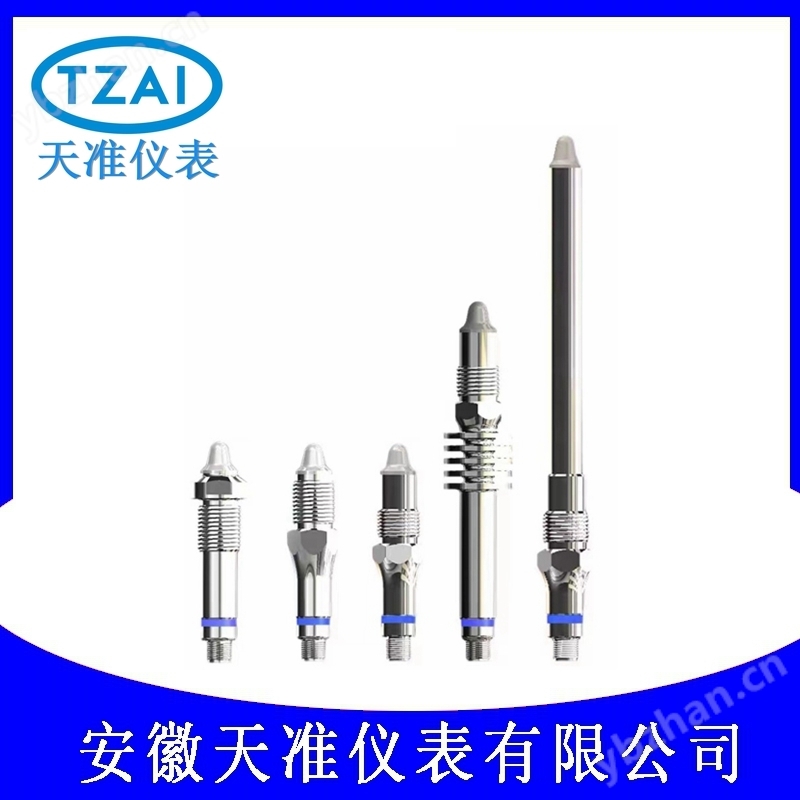
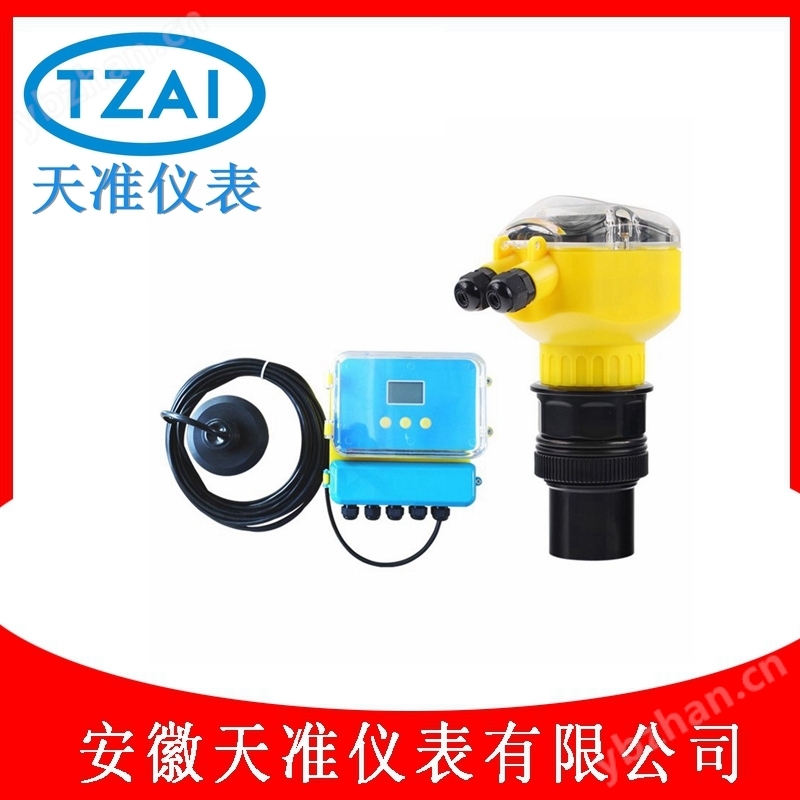
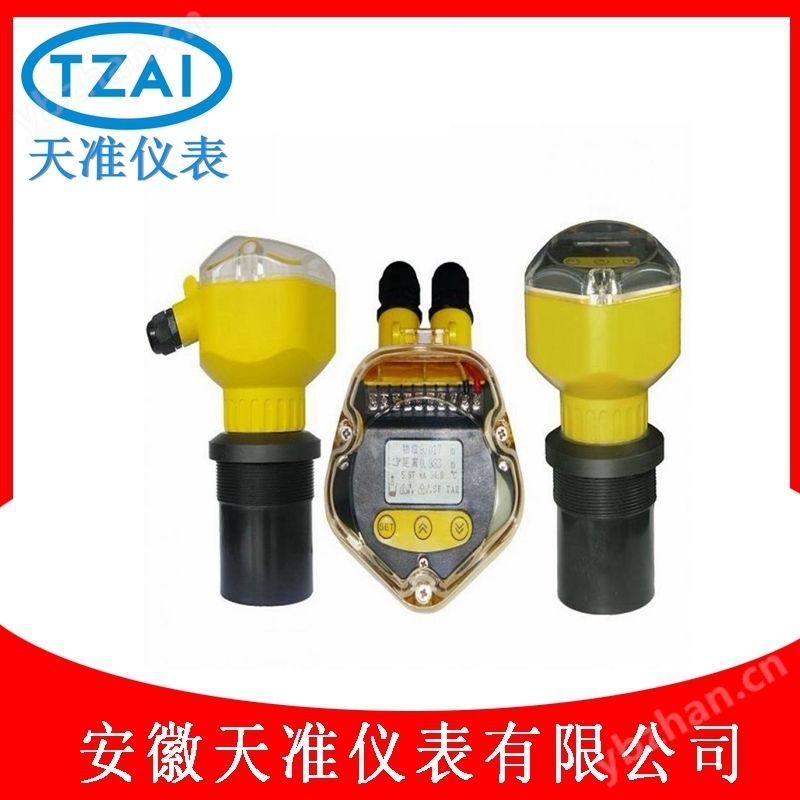
Tianzhun integrated threaded installation ultrasonic level gauge
NegotiableUpdate on 11/20
- Model
- Nature of the Manufacturer
- Producers
- Product Category
- Place of Origin
Overview
Tianzhun integrated threaded installation ultrasonic level gauge is a digital level instrument controlled by a microprocessor. In measurement, ultrasonic pulses are emitted by sensors (transducers), and the sound waves are reflected by the liquid surface and received by the same sensor. They are converted into electrical signals by piezoelectric crystals, and the distance from the sensor to the measured liquid surface is calculated based on the time between the emission and reception of the sound waves. Due to the use of non-contact measurement, the measured medium is almost unrestricted and can be widely used for measuring the height of various liquid and solid materials.
Product Details
Product Introduction
Tianzhun integrated threaded installation ultrasonic level gaugeIt is a monitoring instrument for measuring liquid height, tank height, and material position. The instrument itself can be usedSecond line systemthree-wire systemOr the four wire system technology, the two wire system is: power supply and signal output are shared; The three wire system is: the power supply circuit and the signal output circuit are independent. When using DC 24V power supply, a 3-core cable can be used, and the negative end of the power supply and the negative end of the signal output share the same core wire; The four wire system is: when using AC 220V power supply, or when using DC 24V power supply and requiring isolation between the power supply circuit and the signal output circuit, a 4-core cable should be used. DC or AC power supply, with 4-20mADC and high/low switch output.
Range: 0-60 meters, multiple forms to choose from, suitable for all kindscorrosiveIn chemical applications, high precision, remote signal output, PLC system monitoring.
The ultrasonic level gauge consists of three parts:Ultrasonic transducer(Probe), driving circuit (module), electronic LCD display module.
working principle
Tianzhun integrated threaded installation ultrasonic level gaugeThe working principle is based onUltrasonic transducerThe high-frequency pulse sound wave emitted by the probe encounters the surface of the measured object (material) and is reflected back. The reflected echo is received by the transducer and converted into an electrical signal The propagation time of sound waves is directly proportional to the distance they travel to the surface of an object The relationship between sound wave transmission distance S, sound velocity C, and sound transmission time T can be expressed by the formula: S=C × T/2
Due to the certain width of the emitted ultrasonic pulses, the reflected waves in a small area close to the transducer overlap with the emitted waves, making it difficult to identify and measure their distance values. This area is called the measurement blind spot. The size of blind spots andUltrasonic level gaugeThe model is related.
The probe emits ultrasonic waves, which are reflected when encountering a medium with a significantly different density from air. The reflected waves are then received by the probe, and the distance from the probe to the liquid (object) surface is proportional to the time the ultrasonic waves pass through
Distance [m]=Time x Sound Speed/2 [m]
speed of soundThe temperature compensation formula is: ambient sound velocity=331.5+0.6 x temperature
site conditions
In any of the following situations, please note:
Liquid/solid with foam
There is strong voltage, strong current, and strong electromagnetic interference around, so try to avoid high voltage, high current, and strong electromagnetic interference as much as possible
Strong winds and direct sunlight
Strong vibration
Highly volatile liquids and on-site environments with a large amount of water vapor
Easy to crystallize liquid
When encountering the above on-site environment, one should carefully choose to use it. The accuracy of the measured values may decrease, and the data may be unstable. Generally, it is not recommended to use ultrasonic level gauges for measurement.
Product Features
Automatic power adjustment, gain control, temperature compensation.
Physically sealed probe, IP68 protection level, no water ingress, improves service life.
Special echo processing technology, available for troubleshooting in case of on-site malfunctions, and easy to maintain.
The suppression function with interference echo ensures the authenticity of measurement data and has strong anti-interference ability.
Multiple output forms: programmable relay output, high-precision 4-20mA current output, Rs-485, RS-232 digital communication output, wireless GPRS output, etc.
Low price, small size, light weight, suitable for non-contact level measurement of liquids and bulk solids in industries such as food, chemical, and semiconductor. It can also be used for remote level monitoring and pump control.
Installation principle
The installation of ultrasonic level gauge must consider the ultrasonic level gaugeblind spotProblem. When the liquid level enters the blind zone, the ultrasonic level gauge cannot measure the liquid level. Therefore, when determining the range of the ultrasonic level gauge, a margin of 50 centimeters must be left, and the probe must be installed about 50 centimeters above the highest liquid level. This is the only way to ensure accurate monitoring of the liquid level and ensure the safety of the ultrasonic level gauge.
In practical use, due to inadequate installation considerations, the liquid level gauge was submerged in water, resulting in damage to the gauge. Therefore, the highest liquid level value of the measured liquid must be considered.
During mechanical installation, attention should be paid to: the installation should be perpendicular to the surface of the test object to avoid measuring objects with foam properties, and the installation should not be less than the blind zone distance from the surface of the measurement object (blind zone: each product will have a standard, which will be known with the product). The beam should avoid blocking objects and not meet the tank mouth and container wall. When detecting large solids, the probe should be adjusted to reduce the measurement error.
Application field
Water and sewage treatment: pump room, collection well, biochemical reaction tank, sedimentation tank, etc .
Electricity, mining: mortar pool, coal slurry pool, water treatment, etc.
Performance Characteristics
Has strong anti-interference ability. The upper and lower limit nodes and online output adjustment can be set arbitrarily, with on-site display. Analog quantity, switch quantity, and RS485 output can be selected for convenient interface with related facilities.
Adopting polypropylene waterproof shell. The shell is compact and quite sturdy, with excellent chemical resistance. It has almost no destructive effect on inorganic compounds, regardless of acid, alkali, or salt solutions, except for strongly oxidizing materials. It is insoluble in almost all solvents at room temperature and can be used on media such as alkanes, hydrocarbons, alcohols, phenols, aldehydes, and ketones.
Non toxic. It can be used for the installation and maintenance of equipment in the pharmaceutical and food industries.
Technical Specifications
range |
0-60 meters |
structure |
Integrated and split type |
measurement accuracy |
0.5%-1.0% |
resolution |
3mm or 0.1% (whichever is larger) |
display |
Chinese and English LCD display |
analog output |
4-20mA/510 Ω load |
power supply |
Standard 24VDC, KEXUAN 220V or 12V |
ambient temperature |
Instrument: -20-60 ℃ Probe: -20-80 ℃ |
communication |
Optional RS485/RS232 |
Protection level |
Instrument IP66, probe IP68 |
fault problem
There are two main situations where the fault indicator light stays on, and the solutions are as follows for reference:
When the ultrasonic wave continues to reach zero liquid level, the top light lights up and the output current is 22mA. Moreover, when the liquid level is restored after a period of time, the fault cannot be automatically resolved and needs to be turned off and restarted to return to normal, causing unnecessary trouble or even loss to the customer.
The occurrence of this malfunction is a problem with the selection of installation accessories. Due to the fact that the ultrasonic level gauge emits at 0 degrees worldwide, its advantages have also been introduced above. Another distinctive feature of it is that ultrasonic waves are emitted not only from the flat head, but also from the threads. If the zero position persists, and metal brackets are used for installation. The ultrasonic level gauge will recognize that the signal strength of the support part is greater than the signal strength received by the flat head. The metal bracket is located at a blind spot distance from the emitted wave. So the ultrasound is in a protected state, the fault light is always on, and the output is 22mA. The solution is to use a non-metallic bracket. Because after using non-metallic brackets, the emitted waves at the threads can penetrate, and the echo signal at the zero point liquid level will definitely be greater than the echo signal at the threads.
After debugging and reprogramming, the top fault light remained on and the output current was 22mA. After actual verification, it was found that this fault occurred during the programming and debugging process and did not follow the instructions. The program is disrupted and in a state of self-protection. The customer was debugging and programming the ultrasonic liquid level timer, but was unable to wait for the indicator light to flash normally, or the programming method steps were completely incorrect, resulting in unstable programming and debugging. If the programming and debugging are not carried out as required multiple times, the ultrasonic level gauge will refuse to work and protect itself. The solution to this malfunction is to first reset the ultrasonic level gauge as required, and then reprogram it. If programmed multiple times without resetting, the above faults will occur.
Similar Product Recommend