-
Phone
18057212798
-
Address
Qiligang Second Industrial Zone, Yueqing City, Zhejiang Province 325605
Product Categories
Hongqi Instrument Co., Ltd
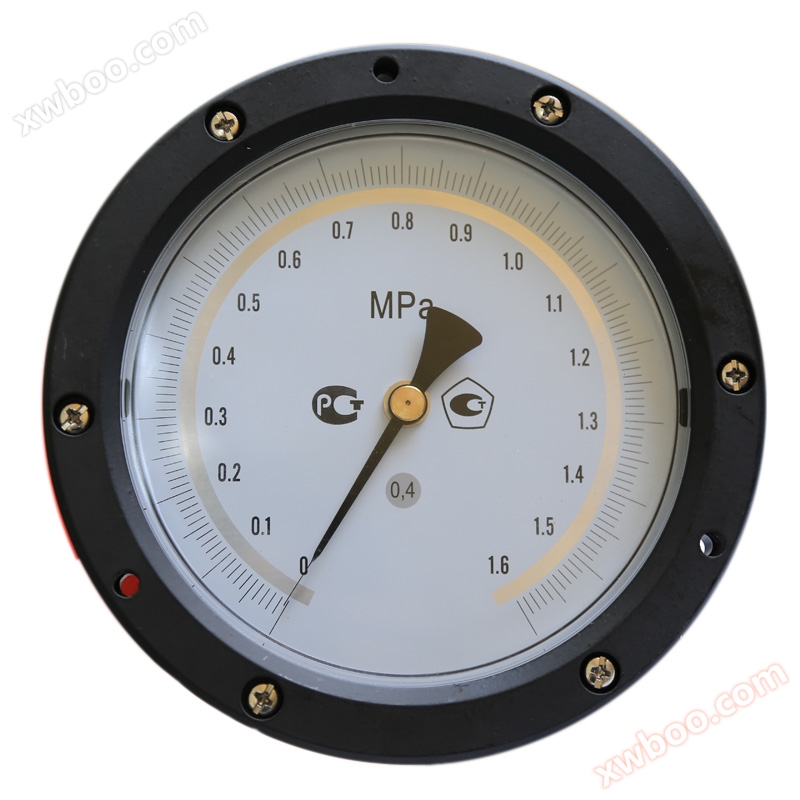
YTNB-150ZT series shock resistant precision pressure gauge
NegotiableUpdate on 12/18
- Model
- Nature of the Manufacturer
- Producers
- Product Category
- Place of Origin
Overview
Product model: YTNB-150ZT Theme features: Shock resistant precision pressure gauge is mainly used to calibrate industrial ordinary pressure gauges, and can also be used for precision measurement of pressure and vacuum on various non corrosive, non crystalline, non solidified media such as copper alloys and steel; Widely used in industrial production processes, precision measurement, and scientific experiments. Manufacturer: Hongqi Instrument Co., Ltd
Product Details
Product Introduction
Shock resistant precision pressure gauges are mainly used to calibrate industrial ordinary pressure gauges, and can also be used for precision measurement of pressure and vacuum on various non corrosive, non crystalline, non solidified media such as copper alloys and steel; Widely used in industrial production processes, precision measurement, and scientific experiments.
The shock resistant precision pressure gauge is filled with damping fluid and a matching buffer device inside,
Has good shock resistance performance.
Accuracy level: 0.4 level.
Measurement range: 0-0.1~0-60MPa
The working principle of a precision pressure gauge is that when the pressure of the measured medium acts on the elastic element, it produces elastic deformation displacement, which is amplified by the transmission mechanism driven by the pull rod, and the measured pressure is indicated by the indicator device.
Precision pressure gauges are classified according to accuracy: 0.25%, 0.4%
Technical Parameter
Main technical indicators:
○ Measurement range, accuracy level and characteristics of precision pressure gauge
Model: Spring tube material, measurement range: MPa, accuracy level, structural characteristics
YB-150A Tin Phosphorus Bronze
Chromium vanadium steel 0-0.1; 0-0.16; 0-O.25
; 0-0.4; 0-0.6; 0-1; 0-1.6;
0-2.5; 0-4; 0-6; 0-10;
0-16; 0-25; 0-40; 0-60 0.4 mirror surface
YB-150B 0.25 mirror zeroing
○ Environmental conditions for the use of precision pressure gauges: 5-40 ℃, relative humidity not exceeding 80%, and environmental vibrations and pressure source fluctuations have no effect on the accurate readings of the instrument.
○ Temperature effect of precision pressure gauge: If the ambient temperature deviates from 20 ± 3 ℃ (Type A) or 20 ± 2 ℃ (Type B), an additional temperature error of 0.4%/10 ℃ must be considered
○ Weight of precision pressure gauge: 1kg (Type A) 1.4kg (Type B)
Characteristic parameters
HQYB150 medium pressure precision pressure gauge is made of spring tube components imported from Germany
The range starts from 0.1MPa and can reach up to 60MPa
The pressure transmission component adopts silver soldering technology
The instrument panel has a direct reading of the MPa scale value
Accuracy level 0.25% 0.4%
● Double layered mirror dial
● Equipped with a dial zeroing device
● Iron spray coated watch case
Copper alloy internal components
● Measurement range -0.1 to 60MPa, schematic diagram of external dimensions
Classification of measurement range
Classification of measurement range for precision pressure gauges:
1. Micro pressure gauge (refers to instruments with an upper limit measurement value less than 0.1MPa)
2. Low pressure gauge (refers to instruments with an upper measurement limit of 0.1MPa [including 0.1MPa] to 6MPa [including 6MPa])
3. Medium pressure gauge (refers to instruments with an upper limit measurement value between 10MPa [including 10MPa] and 60MPa [including 60MPa])
4. High pressure gauge (refers to instruments with an upper measurement limit greater than 60MPa to 160MPa [including 160MPa])
5. Ultra high pressure gauge (referring to instruments with an upper limit measurement value greater than 160MPa)
Usage and its composition
1. It consists of a measurement system, an indicator part, and a case part.
2. Measurement system - composed of joints, spring tubes, and gear rotation mechanisms.
3. Under the pressure of the measured medium, the end (free end) of the spring tube is correspondingly displaced. With the help of the connecting rod, the sector gear in the mechanism is driven to produce an angular displacement, which causes the gear shaft to deflect and transmit it to the indicating part.
4. Indication part - composed of a dividing disc, a mirror surface (YB-201 type without mirror surface and pointer, etc.). The deflection value of the gear shaft is correspondingly indicated on the indexing plate by the pointer, indicating the pressure value of the measured medium.
5. Case section - composed of a watch cover, glass, and case. The lower end of the watch cover is equipped with a zero adjustment device for adjusting the zero position to maintain the accuracy of the zero value and reading.
Calibration after use
The basic requirements for calibration are as follows:
1) If the environmental condition calibration is carried out in the calibration room, the environmental conditions should meet the laboratory's requirements for temperature, humidity, and other regulations. If calibration is carried out on site, the environmental conditions shall be based on the conditions that can meet the on-site use of the instrument.
2) As a standard instrument for calibration, the error limit of the instrument should be 1/3 to 1/10 of the error limit of the calibrated meter.
3) Although personnel calibration is different from verification, the personnel conducting calibration should also undergo effective assessment and obtain corresponding qualification certificates. Only certified personnel can issue calibration certificates and reports, and only such certificates and reports are considered valid.
Tire pressure gauge calibration can be found at local metrology institutes or third-party calibration units, such as Shanghai Metrology Institute, Guangdong Metrology Institute, Suzhou Metrology Calibration Network, etc All prerequisites must have CNAS metrological qualifications in accordance with national regulations.