-
E-mail
376786168@qq.com
-
Phone
18971653633
-
Address
13th Floor, Zhongjian Guanggu Star Mansion, No. 799 Gaoxin Avenue, Donghu High tech Zone, Wuhan City, Hubei Province
Product Categories
Wuhan Shuntong Intelligent Technology Co., Ltd

demand response
NegotiableUpdate on 11/20
- Model
- Nature of the Manufacturer
- Producers
- Product Category
- Place of Origin
Overview
China will strive to peak carbon dioxide emissions before 2030 and strive to achieve carbon neutrality before 2060. The 9th meeting of the Central Financial and Economic Commission held on March 15, 2021 clarified the basic ideas and main measures for achieving carbon peak and carbon neutrality. The construction of a new power system with new energy as the main body has pointed out the direction for China's clean and low-carbon energy transformation.
Product Details
background
China will strive to peak carbon dioxide emissions before 2030 and strive to achieve carbon neutrality before 2060. On March 15, 2021, the 9th meeting of the Central Committee for Finance and Economics was chaired, which clarified the basic ideas and main measures for achieving carbon peak and carbon neutrality. The construction of a new power system with new energy as the main body has pointed out the direction for China's clean and low-carbon energy transformation.
The new power system has four characteristics: one trend, two contradictions, three values, and four changes.
A trend:
The large-scale integration of new energy has given rise to new characteristics of "double highs" and "double peaks" in the power grid. Electricity is the most convenient and efficient way to utilize new energy. And new energy generation has randomness and volatility. With the large-scale integration of wind power, photovoltaics, and other technologies into the power grid, the power system will exhibit a "double high" characteristic of a high proportion of renewable energy and a high proportion of power electronic equipment, as well as a "double peak" characteristic of electricity demand in winter and summer. The form of the power system has undergone profound changes.
Various forms of electricity and energy consumption at the terminal continue to emerge, promoting the improvement of electrification level. The terminal electrification rate in our country is showing a steady growth trend, and interactive energy facilities such as distributed energy, energy storage, and electric vehicles are rapidly developing. Various new forms of energy consumption are constantly emerging. Building a large-scale optimization and allocation platform for energy resources, and creating a core physical foundation to support the large-scale development and utilization of new energy in China, is the key to promoting China's energy green and low-carbon transformation.
Two contradictions:
Seasonal peak load growth in the power grid. In 2020, more than 95% of the peak duration of the maximum load in each province of the "Sanhua" region was between 7-60 hours, while more than 97% of the peak duration was only over 20 hours. Investing about 285 billion yuan in peak shaving power plants and supporting power grids will cause serious resource waste.
The contradiction of new energy consumption is becoming increasingly prominent. The installed capacity of new energy in 2030 and 2050 will reach 1.7 billion kilowatts and 3 billion kilowatts respectively, and the daily maximum power fluctuation will increase from the current over 100 million kilowatts to 400 million kilowatts in 2030 and 1.2 billion kilowatts in 2050; This poses a great challenge to the traditional "source load variation" power grid dispatch operation mode.
Three values:
Economic value - solving the problem of supply-demand balance in the power grid: In 2019, the utilization hours of over 95% of the peak load in the "Sanhua" region's power grid were only 5-81 hours. The pressure of peak shaving was alleviated through the construction of peak shaving power plants, and the investment in related power plants and supporting power grids was about 285 billion yuan. And implement the same effectdemand responseThe annual cost is about 2 billion yuan, which can significantly reduce the peak power supply pressure of the system and solve the supply-demand balance problem of the power grid more economically.
Environmental Value - Promoting the Consumption of New Energy: It can change users' traditional electricity consumption methods, facilitate the convergence of demand side electricity load and supply side new energy output curves, promote the large-scale development and application of new energy, and is of great significance for reducing the use of traditional fossil fuels and protecting the environment.
Customer value - achieving energy optimization and reducing energy costs: achieving energy optimization for customers, reducing energy consumption intensity and overall energy costs. Promote users to respond to price or incentive signals and participate in electricitydemand responseTrading with spot goods to increase customer income.
Four changes:
The power supply has undergone profound changes: the construction of conventional power generation has been tightened, and the installed capacity of clean energy power generation has continued to grow rapidly. The large-scale replacement of traditional thermal power by new energy has led to a decrease in the inertia level of the power system (a major reason for the 8.9 power outage in the UK). The proportion of power cleaning has increased, the regulation ability has decreased, and the instability has increased.
The power grid has undergone profound changes: the power backbone network has evolved from ultra-high voltage to ultra-high voltage. The proportion of power input in the central and eastern regions continues to increase, and traditional regulation capabilities are limited, resulting in increased risk of ultra-high voltage direct current lockout. There have been significant changes in the operation and stability control methods of the power grid.
The load has undergone profound changes: customer side distributed generation (distributed photovoltaics, integrated cooling, heating, and power), energy storage, and electric vehicles have developed rapidly, and customers have shifted from "passive" to "active". The proportion of general industrial, commercial, and residential loads has increased, and the air conditioning load has pushed up the peak of the power grid.
Profound changes in the market environment: With the deepening of the power system reform, the profitability of the power grid and the transmission and distribution prices are facing strict supervision and review, and traditional investment models are difficult to sustain. Market trading is becoming increasingly flexible, spot trading is urgent, and user participation has greatly increased.
Demand side management is an important means of smoothing the gap between electricity supply and demand: orderly use of electricity, controlling partial electricity demand in accordance with the law, and maintaining stable management of electricity use order. Ensure electricity supply for people's livelihoods, public services, and important users during peak load periods and insufficient power generation capacity of the power grid.
General principle
Openness and scalability
The adoption of mainstream technologies and products should meet the requirements of openness. Implement openness in the underlying technical standards, adopt a modular construction model, use a universal software development platform, support multiple hardware platforms, have good openness and portability, and adapt to the needs of computer and network technology development.
The various functions of the system can remain relatively independent, but each submodule must meet the requirements of relevant technical conditions and data transmission protocols. To ensure investment efficiency, the system should have good scalability and meet the requirements of software function expansion. The system can be constructed in stages and layers, and can be smoothly improved and upgraded according to the needs of development and application.
Safety and reliability
The software and hardware resources need to ensure the uninterrupted and reliable operation of the Taiyuan Power Demand Side Management Platform 24/7. Therefore, it is necessary to equip with comprehensive reliability measures to ensure the high reliability of the system operation, fully considering the reliability requirements of key applications, including multiple high reliability solutions for key links such as databases, hosts, application deployment, and networks.
Accuracy and completeness
In the actual operation of the system, the accuracy of terminal data collection and transmission, as well as the integrity of platform data processing, should meet relevant technical standards.
Practical and progressiveness
On the basis of practicality, try to use products with mature technology, and at the same time consider the progressiveness of the system to ensure that the technical level and application level of the system meet the application needs in the next three to five years.
System Network Architecture
demand responseThe terminal continuously monitors the operational status and load data of adjustable load resources (workshops/production lines/equipment) for industrial users, and calculates them in real-timedemand responseAbility to report to the real-time management system platform for electricity demand side.
Start up on the power griddemand responseWhen, the platform reports based ondemand responseAbility, intelligent allocation of load regulation indicators, throughdemand responseTerminal issuancedemand responseEvent to information exchange terminal, and simultaneously notify power users via SMS;
Users are concerned aboutdemand responseMake decisions on the event and provide feedback on the platform's decision results through interactive devices. If the user chooses to participate, they will issue a production plan adjustment plan, and the production staff will adjust the production equipment to meet the load control indicators.

demand responseterminal
Adjustable load interactive response terminal based on domestically produced independent intellectual property chips; Capable of receiving adjustable load interactive response system main station(demand responseService system ordemand responseAggregate event information issued by the main station of the aggregation system, and interact with the electrical equipment (system), intelligent terminal devices, energy management systems, and other information belonging to the power users to achieve interconnection and intercommunication of electrical equipment information, meeting the needs of the power industrydemand responseEnergy optimization and other functions.

demand responsemanagement platform
The demand side management platform is a comprehensive monitoring and management platform for electricity to ensure the operation of the electricity economy. Its main purpose is to achieve integrated control of regional economic operation analysis and regulation, energy efficiency management, and other aspects, and to achieve the management goal of "focusing on energy efficiency monitoring during normal times and ensuring tight power supply". Realize the digitization, networking, visualization, and specialization of electricity management, and provide electricity management or specialized custody services for power users.
Load reporting
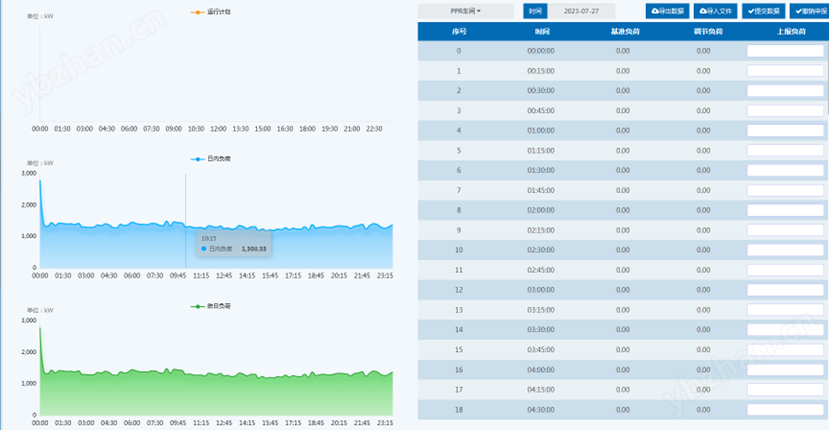
Load peak regulation warning


