-
E-mail
827425668@qq.com
-
Phone
15155513400
-
Address
No. 20 Renhe South Road, Tianchang City, Anhui Province
Anhui Tiankang (Group) Co., Ltd
Miniature intelligent brain for industrial precision measurement of compact diffusion silicon pressure transmitter
Date: 2025-07-22Read: 9
In the field of industrial automation and precision control, compact diffusion silicon pressure transmitters have become the core measuring components in industries such as petrochemicals, power energy, and environmental monitoring due to their characteristics of "small size, high precision, and strong adaptability". Its function is not only reflected in the collection of basic pressure data, but also through intelligent design to achieve stable output and remote control under complex working conditions, building a safe and efficient "perception nerve" for industrial production.
1、 High precision pressure sensing: full range coverage from micro pressure to high pressure
The compact diffusion silicon pressure transmitter adopts the American Nico silicon single crystal material, which converts the pressure signal into a resistance change through the piezoresistive effect, and then converts it into a 4-20mA standard electrical signal through electronic circuits. Its core advantages lie in accuracy and stability: within the measurement range of -100KPa to 60MPa, the digital accuracy can reach ± 0.075%, and the long-term stability error is less than 0.1%/year. For example, in the pressure monitoring of blast furnaces in the steel metallurgy industry, this equipment can accurately capture pressure fluctuations of 0.1KPa, avoiding damage to the furnace body caused by pressure loss of control; In the scenario of gas pipeline transportation, its 0.01% FS resolution can provide real-time feedback on pressure changes in the pipeline network, providing decision-making basis for the scheduling system.
2、 Adaptability to harsh environments: anti-corrosion and anti vibration "industrial armor"
For corrosive media environments such as chemical and papermaking, the equipment adopts 316L stainless steel shell and H alloy sheath technology to form a dual protective barrier. In a pulp liquid level measurement project at a paper mill, the PTFE coating on the surface of the diffusion silicon sensor successfully resisted chloride ion erosion, and the equipment life was extended to 8 years, which is three times longer than traditional ceramic sensors. At the same time, its anti vibration design (10g impact resistance) and IP68 protection level enable it to operate stably in abnormal scenarios such as offshore drilling platforms and earthquake monitoring stations.
3、 Intelligent integration: closed-loop management from data collection to remote control
The device is equipped with a 16 bit microprocessor and a HART protocol communication module, supporting real-time pressure value display, remote parameter calibration, and fault self diagnosis. In the renovation of a city's thermal pipeline network, 200 compact transmitters are networked through the Internet of Things to synchronize pressure data and upload it to a cloud platform. The system automatically analyzes the leakage points of the pipeline network and triggers alarms, reducing the response time for emergency repairs by 70%. In addition, its 4-20mA+HART dual signal output design is compatible with traditional DCS systems and new intelligent instruments, achieving a "plug and play" upgrade.
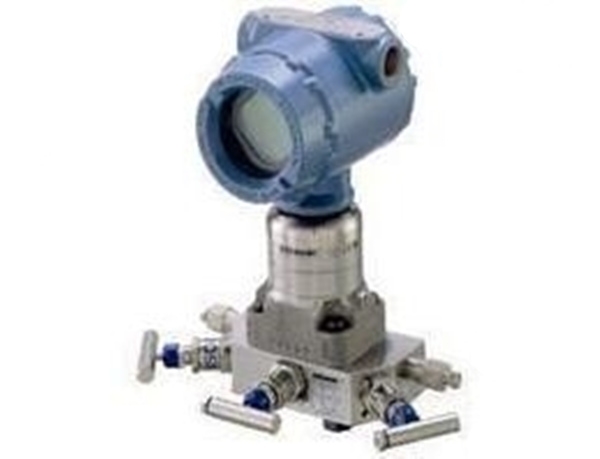
From microscopic semiconductor manufacturing to macroscopic urban energy dispatch, compact diffusion silicon pressure transmitters are redefining the boundaries of industrial measurement with their characteristics of "millimeter level accuracy, centimeter level volume, and kilometer level transmission". With the integration of MEMS technology and AI algorithms, future devices will have self-learning pressure compensation capabilities, achieving a measurement accuracy of 0.01% FS in the abnormal temperature range of -50 ℃ to 250 ℃, providing more reliable underlying data support for Industry 4.0.