-
E-mail
1225767627@qq.com
-
Phone
13581986832
-
Address
Shahewangzhuang Industrial Park, Changping District, Beijing
Beijing Guance Jingdian Instrument Equipment Co., Ltd
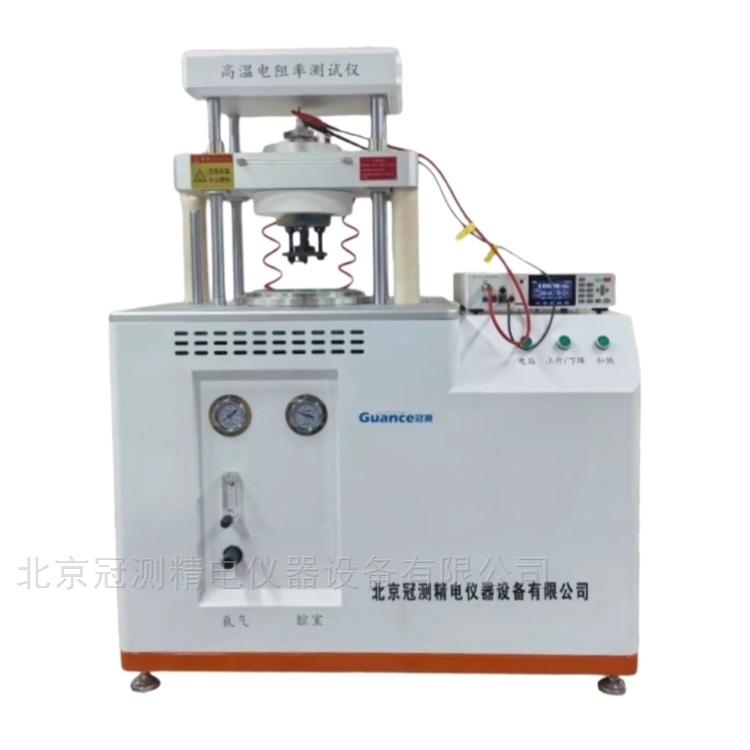
High temperature resistivity tester: the core equipment for testing the electrical properties of materials
Date: 2025-10-10Read: 76
In the fields of new material research and development, aerospace, energy and power, the electrical performance of materials in high-temperature environments directly determines product safety and reliability. As a professional equipment for accurately measuring the resistance characteristics of materials at high temperatures, the high-temperature resistivity tester has become a core instrument in industrial detection and scientific research experiments. Its progressiveness technology and detection stability are of great significance to industrial upgrading and technological breakthroughs.
1、 Core application scenario: covering detection needs in multiple fields
The application scenarios of high-temperature resistivity tester are extensive and critical. In the aerospace field, materials such as engine blades and high-temperature resistant coatings for spacecraft need to maintain stable electrical properties in high-temperature environments. Testers can simulate special high-temperature conditions such as space and high altitude, accurately measure changes in material resistivity, and provide data support for material selection and structural design; In the energy and power industry, the resistivity testing of high-temperature resistant components such as nuclear power plant reactor materials and solar photovoltaic modules is directly related to equipment operation safety and energy conversion efficiency. Testers can achieve long-term high-temperature aging testing and predict material failure risks in advance; In the field of new material research and development, the study of electrical properties of new materials such as ceramic matrix composites and high-temperature superconducting materials relies on continuous data monitoring provided by testing instruments in different temperature ranges to assist researchers in optimizing material formulations and preparation processes.
2、 Technical principle: The underlying logic of precise measurement
The high-temperature resistivity tester is based on specific detection methods and high-temperature control technology to achieve high-precision detection, and its core principle can be divided into three key steps. Firstly, the sample heating system adopts multiple heating methods, combined with high-precision temperature control modules, to stabilize the temperature in the sample area at the set value, meeting the differentiated heating rate and insulation time requirements of different materials; Next is the electrical measurement system, which tightly contacts the surface of the sample through a dedicated testing fixture. Some probes apply a constant current, while others collect the voltage at both ends of the sample. Based on basic electrical laws, the resistance value of the sample is calculated, and then combined with the sample size parameters to convert the resistance rate, effectively avoiding the interference of probe sample contact resistance on the measurement results; Finally, there is the data acquisition and analysis system, which is equipped with professional data acquisition components and can record temperature and resistivity change curves in real time. It automatically generates test reports through dedicated software and supports data export and secondary analysis, greatly improving detection efficiency.
3、 Product advantage: Meet testing standards
A high-quality high-temperature resistivity tester has three core advantages. Firstly, it has a wide range of applications and high measurement accuracy, which can cover multiple temperature ranges and meet diverse detection needs from metal conductors to insulation materials; The second is excellent stability and safety. The instrument adopts a special gas protection system, which can effectively prevent the sample from oxidizing at high temperatures. At the same time, it is equipped with multiple safety protection mechanisms to ensure the safe operation of the equipment; The third is intelligence and ease of use, equipped with a convenient operating interface, supporting multiple language switching, built-in multiple standard testing programs, allowing operators to quickly get started without professional training. At the same time, the instrument supports remote control and data transmission, facilitating laboratory data management and sharing.
4、 Operation process and maintenance points
A standardized operating procedure is the key to ensuring accurate test results. Before operation, it is necessary to prepare the sample, process it into a suitable size, and polish the surface smooth to reduce contact resistance; Subsequently, install the sample and adjust the position of the testing fixture to ensure even contact with the surface of the sample; Set test parameters, including temperature related, heating rate, insulation time, etc; Start the testing program, and the instrument automatically completes heating, data acquisition, and analysis; After the test is completed, wait for the sample to cool to room temperature, remove the sample and clean the testing fixture. In terms of daily maintenance, it is necessary to regularly check the wear and tear of heating elements and testing components, and replace aging components in a timely manner; Keep the interior of the instrument clean and avoid dust accumulation that affects heat dissipation; Regularly calibrate temperature and electrical measurement systems to ensure that equipment is in optimal working condition.
5、 Market trend: Technological innovation drives industry development
With the rapid development of manufacturing and new materials industries, the high-temperature resistivity tester market presents two major development trends. On the one hand, the high temperature detection capability continues to break through. In response to the demand for ultra-high temperature material detection in fields such as aviation engines and nuclear fusion devices, the upper limit of instrument high temperature detection continues to increase. At the same time, combined with new heating technologies, resistivity measurement under special high temperature conditions can be achieved; On the other hand, multi parameter integrated detection has become mainstream, and new testing instruments can simultaneously measure other physical properties of materials while measuring resistivity, achieving multi-dimensional data linkage analysis and providing more comprehensive reference for material research. In addition, green and energy-saving design has become a consensus in the industry, which optimizes heating methods and energy management systems to reduce instrument energy consumption, in line with the concept of sustainable development.
The high temperature resistivity tester, as a key link between material research and practical application, directly affects the core competitiveness of the manufacturing industry in terms of its technological development level. In the future, with the continuous improvement of detection accuracy and the continuous expansion of functions, this instrument will play an important role in more cutting-edge fields, providing strong support for technological innovation and industrial upgrading.