-
E-mail
1225767627@qq.com
-
Phone
13581986832
-
Address
Shahewangzhuang Industrial Park, Changping District, Beijing
Beijing Guance Jingdian Instrument Equipment Co., Ltd
The core tool for analyzing the electrical properties of materials using high and low frequency dielectric constant testers
Date: 2025-09-08Read: 95
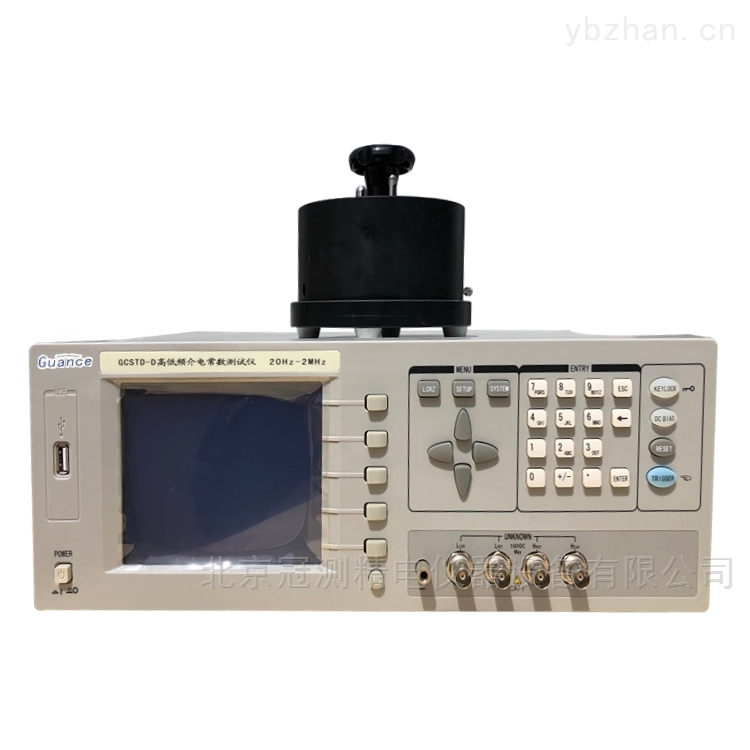
In the fields of materials science, electronic engineering, communication technology, etc., the dielectric properties of materials are one of the key indicators for evaluating their application value. As a professional equipment for accurately measuring dielectric parameters, high and low frequency dielectric constant testers not only provide data support for material research and development, but also play an irreplaceable role in product quality control and process optimization. This article will comprehensively analyze the technical characteristics and practical value of high and low frequency dielectric constant testers from instrument principles, core functions, application scenarios to selection and maintenance.
1、 Core concept: What is dielectric constant and high-low frequency testing?
Before delving deeper into the instrument, two key concepts need to be clarified: dielectric constant and high and low frequency testing range.
The dielectric constant is a physical quantity that describes the ability of a material to store charges in an electric field, directly affecting its performance in scenarios such as capacitance, insulation, and microwave transmission.
High and low frequency testing is aimed at meeting the needs of different application scenarios, covering dielectric parameter measurements from low to high frequencies. Low frequency testing is commonly used in insulation materials, ceramic capacitors, and other fields, while high-frequency testing focuses on high-frequency application scenarios such as microwave devices, new generation communication materials, and radar antenna covers.
The core value of the high and low frequency dielectric constant tester lies in breaking the limitations of single frequency testing, achieving accurate measurement of parameters such as dielectric constant, dielectric loss, and loss tangent over a wide frequency range, and providing comprehensive data for material multi scenario applications.
2、 Working principle: The core logic from signal excitation to data output
The measurement principle of the high and low frequency dielectric constant tester is based on the interaction between electromagnetic fields and materials. Different frequency ranges correspond to different testing methods, and the core can be divided into two categories: "low frequency capacitance method" and "high frequency resonance/transmission method":
1. Low frequency range: capacitance method and substitution method
At low frequencies, the dielectric response of materials is mainly manifested as the "capacitance effect", which is measured by the instrument through the following steps:
Sample preparation: Process the material into thin sheets, cover the upper and lower surfaces with conductive electrodes, and form a "parallel plate capacitor" structure;
Capacitance measurement: Connect the sample capacitor to the testing circuit, and the instrument outputs a low-frequency sine signal to measure the total capacitance of the circuit;
Data calculation: Based on the principle of parallel plate capacitance, deduce the relative dielectric constant of the material; Meanwhile, by measuring the loss current of the circuit, the dielectric loss is calculated.
To improve accuracy, some instruments also use the "substitution method" - first measure the capacitance of the empty electrode, then measure the capacitance of the sample, and eliminate the influence of electrode edge effects through the difference.
2. High frequency band: resonance method and transmission line method
At high frequencies, the dielectric response of materials is accompanied by "electromagnetic radiation" and "dispersion effect", and the capacitance method is no longer applicable. The following two methods are commonly used in instruments:
Resonance method: Place the sample into a resonant cavity and measure the resonant frequency and quality factor of the cavity with and without the sample. According to electromagnetic theory, frequency offset is positively correlated with dielectric constant, quality factor attenuation is positively correlated with dielectric loss, and high-frequency dielectric parameters are calculated accordingly;
Transmission line method: Process the sample into a shape that matches the transmission line, allowing high-frequency electromagnetic waves to pass through the sample along the transmission line. The instrument measures the "phase shift" and "amplitude attenuation" of electromagnetic waves passing through the sample - phase shift reflects the magnitude of the dielectric constant, and amplitude attenuation reflects the magnitude of the dielectric loss, suitable for wideband continuous frequency scanning testing.
3、 Application scenario: Full chain support from research and development to production
The application of high and low frequency dielectric constant testers runs through the entire process of material research and development, product design, quality inspection, etc., covering multiple industries:
1. In the field of electronic materials: performance verification of capacitors and insulation materials
Ceramic capacitance: Measure the dielectric constant of ceramic materials at low frequencies to ensure that the capacitance meets the design requirements;
PCB substrate: Test the dielectric constant and loss of the substrate at high frequencies to avoid signal delay or attenuation during transmission and ensure the performance of communication equipment;
Insulation materials, such as transformer oil and epoxy resin, require measurement of dielectric loss at low frequencies to evaluate their insulation performance and aging resistance.
2. In the field of new energy: safety assessment of batteries and energy storage materials
Lithium battery separator: The dielectric constant of the separator directly affects the ion conduction efficiency of the battery. The tester can measure the dielectric constant of the separator at low frequencies and optimize the material formula of the separator;
Solid state electrolyte: High frequency testing can analyze the dielectric response of solid state electrolytes, determine their ionic conductivity and interface stability, and provide data for the development of solid state batteries.
3. Aerospace and Communication Fields: Performance Optimization of High Frequency Materials
Radar antenna cover: The antenna cover needs to have low dielectric constant and low loss at high frequencies to reduce the reflection and attenuation of radar signals. The tester can accurately measure its high-frequency dielectric parameters;
Satellite communication materials, such as microwave dielectric ceramics for satellite antennas, need to maintain a stable dielectric constant over a wide frequency range. The "wideband scanning" function of the tester can verify the frequency stability of the material.
4. In the field of biomedicine: research on the dielectric properties of new materials
Biomimetic materials for biological tissues, such as artificial bones and medical catheters, require measurement of dielectric constant at low frequencies to ensure electrical compatibility between the material and human tissue;
Drug carrier materials, such as nanoliposomes, can be analyzed for their dispersibility and stability through low-frequency dielectric testing.
4、 Selection points and daily maintenance: Ensure long-term stable operation of the instrument
1. Selection: Match requirements to avoid "over configuration" or "insufficient functionality"
Clear testing frequency: If only insulation materials need to be tested, select the "low-frequency tester"; If microwave devices are involved, a "high and low frequency integrated instrument" should be selected;
Pay attention to sample characteristics: When testing powder/liquid samples, it is necessary to choose instruments that are compatible with the "sample pool"; Testing materials in special environments requires selecting models with corresponding adaptation devices;
Emphasize accuracy and repeatability: instruments with high dielectric loss accuracy should be selected for scientific research scenarios; In the production quality inspection scenario, instruments with moderate accuracy and fast testing speed can be selected to balance efficiency and cost.
2. Daily maintenance: Extend lifespan and ensure measurement accuracy
Environmental control: The instrument should be placed in a constant temperature, humidity, and electromagnetic interference free environment to avoid temperature drift and electromagnetic noise affecting the testing;
Regular calibration: It is recommended to calibrate the instrument regularly with standard samples. Before calibration, the instrument should be preheated for sufficient time to ensure circuit stability;
Sample processing: Clean the surface of the sample before testing to avoid impurities affecting electrode contact; Flat samples need to ensure uniform thickness, otherwise it may cause deviation in the calculation of dielectric constant;
Component maintenance: The resonant cavity and transmission line interface for high-frequency testing need to be regularly cleaned to avoid signal attenuation caused by oxidation or dirt; The electrodes used for low-frequency testing should avoid scratches to ensure good conductivity.
5、 Technology Trends: Higher Frequency, Smarter, and More Portable
With the development of new generation communication, quantum communication, new energy and other fields, high and low frequency dielectric constant testers are upgrading in the following directions:
High frequency expansion: extending from existing high frequency bands to higher frequency bands to meet the testing needs of cutting-edge fields such as quantum devices and new imaging;
Intelligent upgrade: integrating intelligent algorithms to achieve full process automation of "automatic sample recognition automatic parameter setting automatic data analysis", reducing human operation errors;
Portable design: Traditional instruments are mostly desktop, while new portable instruments can meet on-site testing needs, such as material testing for outdoor communication base stations;
Multi parameter synchronous measurement: In addition to the dielectric constant, other parameters related to material properties have been added for synchronous measurement, providing more comprehensive data for material performance evaluation.