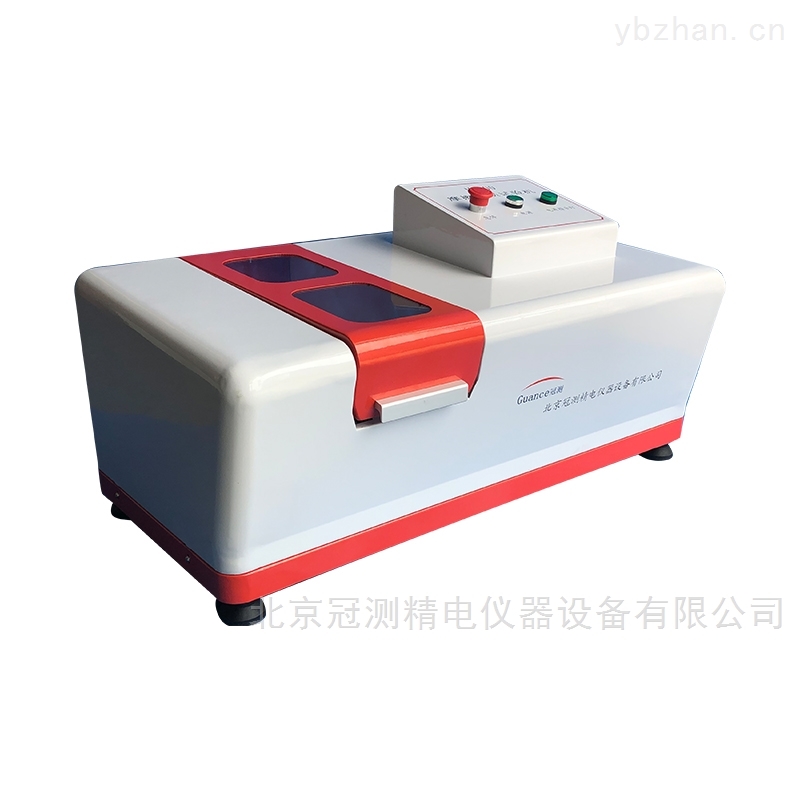
-
E-mail
1225767627@qq.com
-
Phone
13581986832
-
Address
Shahewangzhuang Industrial Park, Changping District, Beijing
Beijing Guance Jingdian Instrument Equipment Co., Ltd
Who is more wear-resistant? Understanding the mystery of plastic friction and wear testing machine in one article
Date: 2025-08-21Read: 85
In today's society where plastic products dominate daily life, from lightweight car parts to household appliance casings, from food packaging to medical devices, the durability of plastic directly determines the service life and safety of products. When two plastic parts or plastic and metal parts undergo relative motion, friction and wear quietly occur. Which material is more wear-resistant? Which surface treatment can extend the lifespan of parts? The key to answering these questions is hidden in the plastic friction and wear testing machine.
1、 Why is it necessary to specifically test the friction and wear of plastics?
Unlike metal materials, the friction and wear behavior of plastics is more complex:
Temperature sensitivity: The heat generated by friction is not easily dissipated, which can cause the surface temperature of the plastic to rise and soften, thereby significantly changing its wear mechanism.
Viscoelasticity: Plastic is a viscoelastic material, and its mechanical properties are greatly affected by loading time and speed, which is completely different from the elastic-plastic deformation of metals.
Transfer film phenomenon: Some plastics may form a thin plastic transfer film on the metal surface when rubbed against it, which may actually change the friction coefficient and protect the plastic itself.
Therefore, general wear testing machines often cannot accurately simulate the actual working conditions of plastics. Specialized plastic friction and wear testing machines have emerged, which can precisely control the test conditions, simulate real scenarios, and provide scientifically reliable evaluation data.
2、 Core principle: How does the testing machine work?
The core idea of plastic friction and wear testing machine is simulation. It rapidly and quantitatively evaluates the wear resistance of materials by reproducing the friction and wear conditions they experience in practical applications in a controllable laboratory.
The basic working principle is:
Preparation of samples: Process the plastic to be tested into standard sized samples.
Clamping and Grinding: Clamp the sample with a grinding piece in a specified contact method and pressure.
Apply load: Apply a precise vertical normal force to the contact surface through a lever, weight, or servo motor system to simulate actual working pressure.
Relative motion: Drive the motor to generate relative motion between the sample and the grinding piece, simulating sliding or rolling friction.
Measurement and recording: High precision sensors monitor and record the friction force in real-time during the process, and obtain the variation curve of the friction coefficient through the calculation formula (friction coefficient=friction force/normal load).
Result evaluation: After the experiment is completed, the mass loss of the sample is measured using a high-precision balance, or its wear volume is measured using a 3D profilometer and the microstructure of the worn surface is observed.
3、 List of mainstream experimental methods
According to different forms of contact and modes of movement, various standardized testing methods have been derived, including:
Ring block type: A rectangular plastic test block is ground against a rotating metal ring under constant pressure. This method has a large contact area, good repeatability of experimental results, and is widely used.
Pin disk: A plastic cylindrical pin is pressed onto a rotating disk with a fixed load. The structure is simple and easy to replace the grinding pair, making it very suitable for material screening and comparative testing.
Reciprocating: High frequency linear reciprocating motion between the plastic sample and the grinding piece. Simulated the actual working state of components such as cylinders, guide rails, bearings, etc.
Taber abrasion: Use two specific abrasion wheels to rotate and grind flat plastic specimens under specific pressure. The main purpose is to evaluate the scratch resistance and wear resistance of materials under the action of loose or fixed abrasives, commonly used in testing floors, countertops, coatings, etc.
4、 Interpretation of key data: friction coefficient and wear amount
One experiment will produce two core results:
Friction coefficient: It is a dimensionless number that measures the ratio of frictional force to load. The smoother the curve, the more stable the friction process; The lower the value, the smoother the material and the lower the resistance to movement.
Wear and tear: usually expressed in terms of mass loss (milligrams) or volume loss (cubic millimeters). This is the most direct indicator for measuring the wear resistance of materials. Under the same experimental conditions, materials with lower wear rates exhibit superior wear resistance.
Engineers can scientifically evaluate who is more wear-resistant by comparing the data of plastics with different formulas, processes, or treatment methods under the same testing conditions, thereby guiding material research and development, quality control, and product selection.
5、 Beyond Screening: Deep Applications of Testing Machines
The role of plastic friction and wear testing machine goes far beyond material ranking.
Failure analysis: By observing the surface morphology after wear through an electron microscope, the wear mechanism of the material can be accurately determined, providing direction for improving the material from the root.
Working condition simulation: Advanced testing machines can simulate environments, such as testing in high-temperature chambers, low-temperature chambers, vacuum or immersion in liquids, to evaluate the performance of materials in specific real environments.
Lubricant evaluation: Testing the improvement effect of different lubricants on the performance of friction pairs and finding lubrication solutions.