-
E-mail
1485311053@qq.com
-
Phone
13806142315
-
Address
27 Hongshan Road, Jintan District
Changzhou Jintan Taina Instrument Factory
Calibration traceability: How can wireless ultraviolet monitoring devices ensure long-term accuracy?
Date: 2025-12-13Read: 116
With the development of IoT technology,Wireless ultraviolet monitoring deviceDue to its flexible deployment and real-time transmission advantages, it has rapidly become popular in fields such as agriculture, meteorology, and public health. However, its "wireless" feature also brings new challenges: how to ensure long-term measurement accuracy under unmanned conditions? The answer lies in establishing a complete calibration traceability system.
Calibration traceability refers to linking the measurement results of an instrument to national or international standards through a series of traceable comparison chains. For wireless ultraviolet monitoring devices, this means that their sensor output must be traceable to standard ultraviolet irradiance units (W/m ²). To achieve this goal, we need to start from three aspects: hardware design, factory calibration, and on-site maintenance.
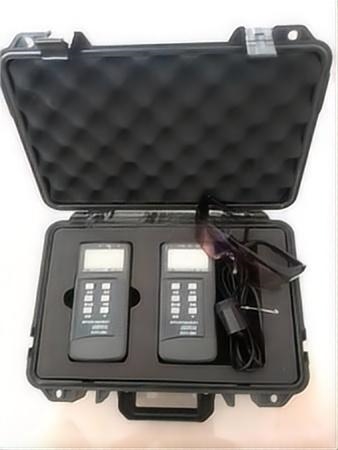
Firstly, in the manufacturing stage, high stability ultraviolet detectors (such as silicon carbide photodiodes) should be selected, and temperature compensation circuits should be integrated to reduce environmental interference. Each device must undergo multi-point calibration under a standard ultraviolet light source before leaving the factory, and generate calibration coefficients to be stored in the device firmware.
Secondly, a periodic calibration plan needs to be developed after deployment. It is recommended to conduct on-site calibration at least once a year. A portable standard UV meter can be used as a transmission standard to measure the same light source synchronously with wireless devices, calculate deviations, and update calibration parameters. Some of the better devices support remote calibration function, which improves operation and maintenance efficiency by issuing correction coefficients through the cloud.
In addition, data quality monitoring is equally crucial. The system should have the functions of identifying outliers, self diagnosis, and logging. For example, when the readings deviate from the historical mean by more than a threshold for multiple consecutive days, an alarm is automatically triggered, indicating possible sensor drift or contamination.
Moreover, all calibration activities must retain complete records, including standard certificate numbers, environmental conditions, operator information, etc., to meet quality management system requirements such as ISO/IEC 17025.
In conclusion,Wireless ultraviolet monitoring deviceThe long-term accuracy does not rely on "one-time calibration", but is jointly guaranteed through full lifecycle traceability management, intelligent diagnosis, and regular maintenance. Only in this way can "wireless" truly become the reliable eye of data.