-
E-mail
1485311053@qq.com
-
Phone
13806142315
-
Address
27 Hongshan Road, Jintan District
Changzhou Jintan Taina Instrument Factory
Guidelines for Flow Calibration and Sampling Time Calculation of Air Microbial Samplers
Date: 2025-12-19Read: 171
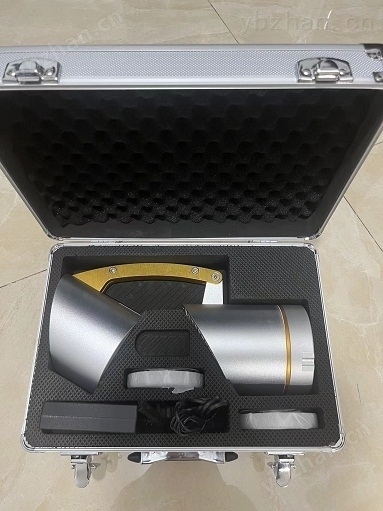
Microbial Air Monitoring SystemsThe accuracy of sampling results by capturing suspended bacteria, fungi, and other microorganisms in the air onto the culture medium through suction flow is highly dependent on the precise control of sampling flow rate and sampling time. If the flow rate is inaccurate, even if the sampling time is correct, the obtained bacterial count cannot truly reflect the level of air pollution.
Firstly, flow calibration is a necessary step before use. The nominal flow rate of different models of samplers varies (commonly 28.3 L/min, 100 L/min, etc.), but the actual flow rate may deviate due to membrane resistance, battery voltage drop, or pump aging. It is recommended to use a certified electronic soap film flowmeter or orifice flow calibrator for calibration, with the sampler connected to the actual sampling head. Calibration should be carried out at room temperature and pressure, and atmospheric pressure and temperature should be recorded for correction.
In terms of calibration frequency, new equipment must be calibrated before initial use; Afterwards, recalibrate every 3 months or after completing 50 samples; If the pump, battery, or sampling head type is replaced, recalibration is also required. Some of the better devices have built-in flow sensors, but their accuracy still needs to be verified externally.
The core formula for calculating sampling time is:
Sampling volume (L)=flow rate (L/min) × time (min)
For example, if 1000 liters of air need to be collected and the measured flow rate is 28.3 L/min, the sampling time=1000 ÷ 28.3 ≈ 35.3 minutes.
Special attention should be paid: the sampling time should not be too short (<5 minutes), otherwise the statistical error will be large; It should not be too long (>30 minutes) to avoid drying of the culture medium or microbial inactivation. It is usually recommended to sample a volume between 500-1000 L, depending on the testing standards (such as GB/T 18204.3, ISO 16000-17).
In addition, environments with high altitude or large temperature differences can affect air density, which in turn affects the actual sampling volume. When conditions permit, flow meters with temperature and pressure compensation should be used, or corrected through formulas:
Standard volume=measured volume x (P/101.3) x (273/(273+T))
Where P is atmospheric pressure (kPa) and T is temperature in Celsius.
In short, accurate flow calibration and reasonable sampling time setting are prerequisites for obtaining reliable air microbial data. Neglecting these details may lead to misjudging the cleanroom rating, hospital infection risk, or indoor air quality, resulting in serious consequences.