-
E-mail
flora187@126.com
-
Phone
18926849868
-
Address
Building 1, No. 2 Shuishi Road Street, Jiujiang, Changping Town, Dongguan City, Guangdong Province
Dongguan Saisi Testing Equipment Co., Ltd
Maintenance techniques for the water circuit of the constant temperature and humidity test chamber
Date: 2025-09-04Read: 8
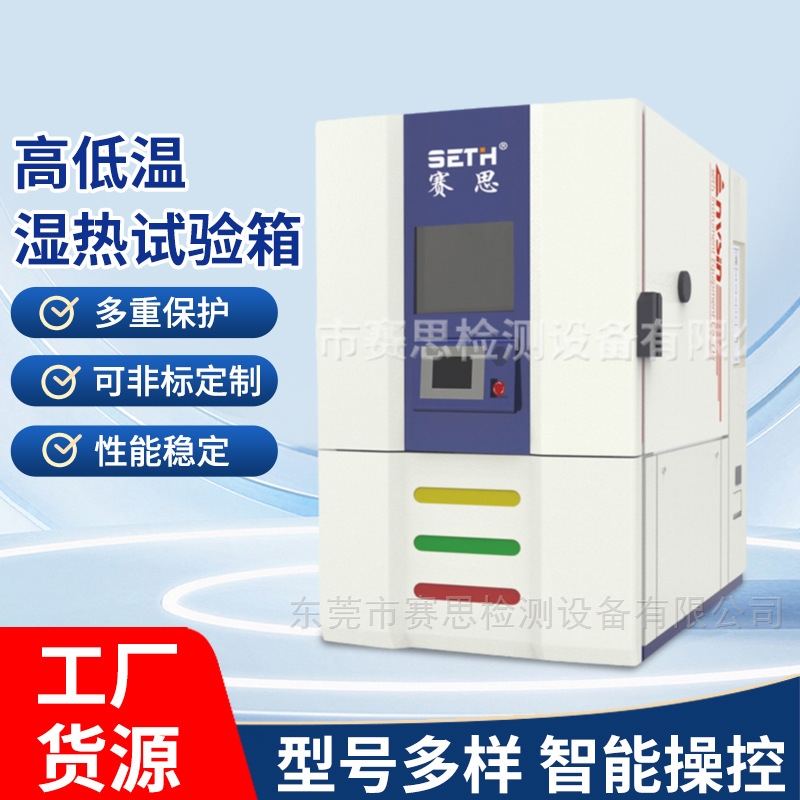
High and low temperature alternating humidity test chambers/constant temperature and humidity test chambers are widely used in industries such as electronics, healthcare, and automotive.High and low temperature alternating humidity test chamber/The reliability and stability of the constant temperature and humidity test chamber are not only related to the accuracy of the test results, but also directly affect the quality of the product. The humidity of the waterway system is closely related to the experimental conditions. This article explores the water circuit layout, blockage troubleshooting, and maintenance methods of high and low temperature humid heat test chambers/constant temperature and humidity test chambers.
1High and low temperature alternating humidity test chamber/Water circuit layout of constant temperature and humidity test chamber
The water system inside the high and low temperature humidity test chamber/constant temperature and humidity test chamber is an important part of achieving constant temperature and humidity. It consists of a water source, pipelines, as well as heating and cooling devices. Understanding the basic layout of waterways can help us be more proficient in maintenance and troubleshooting.
The waterway system is generally divided into several parts: inlet, circulating insulation, and drainage:
1. Inlet system
Usually connected to a pure water machine or directly connected to a water storage tank through a pipeline, its function is to provide necessary moisture for the inside of the test chamber. High quality inlet pipes can effectively prevent water pollution.
2. Circulating waterway
The circulation system inside the test chamber is mainly composed of water pumps, pipelines, and heating and cooling components. In the process of water circulation, water is regulated by a heater or cooler to adjust its temperature, and then sent back to the environmental chamber to achieve precise control of the internal environment.
3. Drainage system
Used to drain excess water, condensate, etc. from the equipment, ensuring that the inside of the test chamber remains dry at all times and avoiding affecting the test results.
2、 Troubleshooting of waterway blockages
Waterway blockage isHigh and low temperature alternating humidity test chamberOne of the common problems is that in severe cases, it can cause equipment failure and affect the stability of the test. So, how should effective blockage troubleshooting be carried out?
1. Regularly inspect the waterway
Firstly, regularly check the integrity of the waterway pipelines, including connections and interfaces, to confirm if there is any leakage or freezing.
2. Observe the water flow situation
During operation, observe the flow of liquid. If the water flow is significantly reduced or the cooling and heating effects are not obvious, it may be due to blockage in the waterway.
3. Use stress testing
By applying a certain amount of pressure to the waterway, observing the water flow and checking for blockages in the pipeline. Once a blockage is found, the pipeline should be immediately dismantled for maintenance.
4. Check the water pump
As the "heart" of the waterway, the normal operation of the water pump is crucial. If the water pump does not work properly, it may cause poor water flow, resulting in the equipment being unable to reach the preset temperature and humidity conditions.
3、 Maintenance methods for waterways
Dongguan Saisi Testing Equipment Co., Ltd. teaches you how to do wellHigh and low temperature alternating humidity test chamber/The maintenance of the water circuit in the constant temperature and humidity test chamber can effectively extend the service life of the equipment. So, what specific maintenance measures should be taken?
1. Regularly clean the pipeline
It is recommended to conduct a professional cleaning of the waterway once every quarter, using appropriate cleaning agents to remove scale and bacteria from the inner walls of the pipeline, ensuring the cleanliness and hygiene of the water quality.
2. Use high-quality water sources
Try to use filtered pure water as much as possible to avoid impurities in tap water from affecting the equipment. In addition, using distilled water or deionized water can further improve water quality.
3. Monitor water quality
Regularly check the pH value, hardness, and microbial content of water to ensure that it meets the requirements for equipment use. Once the water quality is found to be below the standard, the water source should be replaced immediately.
4. Regularly replace the filter element
If the equipment is equipped with a water filter or strainer, it is necessary to regularly replace the filter element to ensure the flow of water and the cleanliness of water quality.
5. Lubrication inspection
Before each operation, check the lubrication of the water pump and various valves to ensure smooth operation. If necessary, lubricating oil can be added in moderation.
High and low temperature alternating humidity test chamber/The water system of the constant temperature and humidity test chamber is like a lifeline, maintaining the normal operation of the equipment and the accuracy of scientific experiments. By gaining a deep understanding of waterway layout, utilizing troubleshooting techniques, and conducting regular maintenance, solid support can be provided for the experiment.

model |
SEH-150 |
SEH-225 |
SEH-408 |
SEH-800 |
SEH-1000 |
|
Studio size (cm) |
50×50×60 |
50×60×75 |
60×80×85 |
100×80×100 |
100×100×100 |
|
Dimensions (cm) |
115×75×150 |
115×85×165 |
130×105×170 |
165×105×185 |
170×125×185 |
|
|
sex can |
temperature range |
0℃/-20℃/-40℃/-70℃~+100℃/+150℃/+180℃ |
||||
Temperature Uniformity |
<2℃ |
|||||
temperature deviation |
±2℃ |
|||||
temperature fluctuation |
≤ 1 ℃ (≤± 0.5 ℃, expressed according to GB/T5170-1996) |
|||||
warm-up time |
+20 ℃~+150 ℃/about 45 minutes (unloaded) |
|||||
cooling time |
+20 ℃~ -20 ℃/30min/+20 ℃~ -40 ℃/50min/+20 ℃~ -70 ℃/60min/(unloaded) |
|||||
humidity range |
(10)20~98%RH |
|||||
Humidity deviation |
±3%(>75%RH), ±5%(≤75%R 上) |
|||||
Temperature Controller |
Chinese color touch screen+PLC controller (self-developed control software) |
|||||
Equipment operation mode |
Fixed value operation, program operation |
|||||
refrigeration compressor |
Imported fully enclosed compressor |
|||||
Humidification water |
Distilled water or deionized water |
|||||
Security protection measures |
Leakage, short circuit, overheating, water shortage, motor overheating, compressor overpressure, overload, overcurrent |
|||||
power supply |
AC380V 50Hz three-phase four wire+grounding wire |
|||||
meet the standard |
GB10589-89,GB10592-89,GB11158; GB/T10586-89, GB/T2423.1-2008; GB/T2423.2-2008; GB/T2423.3-2006; GB/T2423.4-2008; GB/T2423.22-2002; IEC60068-2-1.1990; IEC60068-2-2.1974; GJB150.3; GJB150.4; GJB150.9 |
|||||