-
E-mail
51037070@qq.com
-
Phone
18028963555
-
Address
Room 113, Building 1, No. 3 Shugang Avenue, Hongmei Town, Dongguan City, Guangdong Province
Guangdong Derui Testing Equipment Co., Ltd
Reliability Testing Plan for HAST Radiators in Data Centers
Date: 2025-12-12Read: 7
Hello everyone, today I would like to talk to you about an inconspicuous but crucial equipment in data centers - the HAST radiator reliability test box. Many people may not be familiar with this type of equipment, but it plays an indispensable role in ensuring the stable operation of data centers. Next, I will give you a brief introduction to science popularization from several aspects.
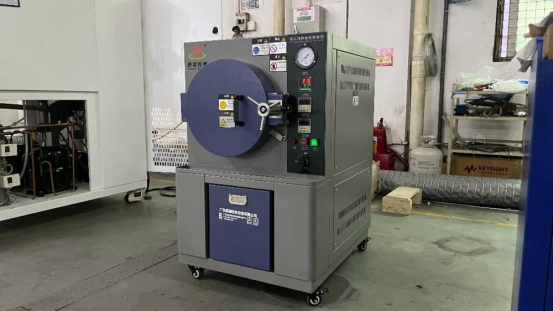
What is the HAST radiator reliability test box?
HAST, The full name is "High Acceleration Stress Test", mainly used to simulate high temperature and high humidity environments and test the tolerance of radiators under harsh conditions. Radiators are responsible for cooling servers and other devices in data centers. If the cooling effect is not up to standard, the devices may malfunction due to overheating. The test chamber controls temperature and humidity to quickly verify whether the material and structure of the radiator meet the requirements for long-term use.
Why do data centers need this type of testing?
Data centers typically require uninterrupted operation, and as the core component of the cooling system, the reliability of the heat sink directly affects the stability of the entire data center. Through the HAST test, it is possible to simulate the environmental stress that a radiator may encounter over many years of use in a relatively short period of time, helping to detect potential problems in advance and avoid equipment shutdown or damage caused by heat dissipation failure.
3. Basic working principle of the test chamber
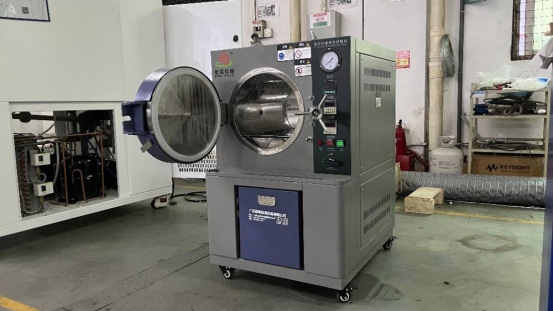
The HAST test chamber creates a high-temperature and high humidity environment in a closed space through a heating and humidification system. During testing, the radiator is placed inside the box and subjected to stress for a certain period of time. During the process, indicators such as changes in appearance, material properties, and heat dissipation efficiency will be monitored. These data help evaluate the performance of the radiator in practical use.
4. Main parameters of concern during testing
In HAST testing, key parameters such as temperature, humidity, and time are usually considered. For example, the temperature may be set above 100 degrees Celsius, the humidity close to saturation, and the testing time ranges from tens to hundreds of hours. By combining these conditions, the reliability of the radiator in harsh environments can be more accurately reflected.
5. The practical significance of such tests
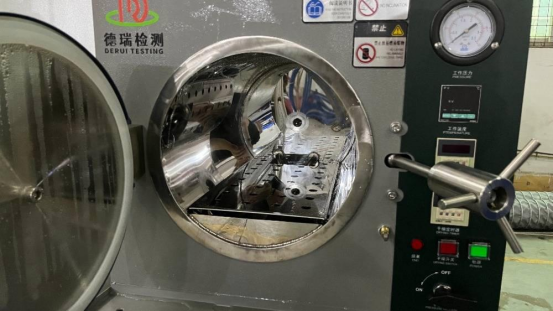
For data centers, using heat sinks that have undergone HAST testing can reduce the risk of failures caused by heat dissipation issues and extend equipment lifespan. It also helps to save maintenance costs and avoid losses caused by unexpected downtime. In the long run, this type of testing enhances the durability and economy of the overall system.
6. Common practices in the industry
Currently, many data center equipment manufacturers and operators use HAST testing as a part of quality control. Testing standards usually refer to industry standards to ensure comparability and accuracy of results. This is not only responsible for the product, but also a manifestation of responsibility to the users.
7. Future Development Trends
With the expansion of data center scale and the increase of equipment power, the reliability requirements for heat sinks are also constantly improving. The technology of the HAST test chamber is also gradually being optimized, such as more precise control systems and more efficient testing methods, to meet future needs.
Overall, although the HAST radiator reliability test box sounds professional, its role is very practical - it helps ensure that the data center cooling system can work stably and efficiently. I hope that through today's sharing, everyone can have a clearer understanding of this aspect. If you have relevant experience or ideas, please feel free to exchange and discuss.