-
E-mail
51037070@qq.com
-
Phone
18028963555
-
Address
Room 113, Building 1, No. 3 Shugang Avenue, Hongmei Town, Dongguan City, Guangdong Province
Guangdong Derui Testing Equipment Co., Ltd
Accelerated evaluation and performance optimization solution for UV weather resistance of rubber sealant
Date: 2025-12-15Read: 6
As a widely used sealing material in industries such as construction, automotive, and electronics, the stability of rubber sealant's performance directly affects the product's service life and safety. In practical applications, rubber sealants are often exposed to outdoor environments and are subject to the combined effects of various factors such as ultraviolet radiation, temperature, and humidity, which can easily lead to aging and performance degradation. It is particularly important to evaluate the UV weather resistance of rubber sealant. This article will introduce the equipment used to evaluate the UV weather resistance of rubber sealants, providing a detailed explanation of its principles, structure, testing methods, and other aspects to help readers gain an excellent understanding of this professional field.
1. Basic principles of the equipment
The core principle of the rubber sealant UV weather resistance evaluation equipment is to simulate the natural environment's UV radiation, temperature changes, and humidity conditions, and predict the performance changes of materials in long-term outdoor use by accelerating aging. Ultraviolet radiation is one of the main factors causing the aging of rubber sealant, which can cause the breakage and cross-linking of material molecular chains, resulting in hardening, brittleness, discoloration, and other phenomena. The device simulates the ultraviolet part of sunlight through UV lamps of specific wavelengths, and combines with a temperature and humidity control system to create a controllable testing environment. This accelerated aging test can obtain data on the weather resistance of materials in a relatively short period of time, greatly shortening the development and quality control cycle.
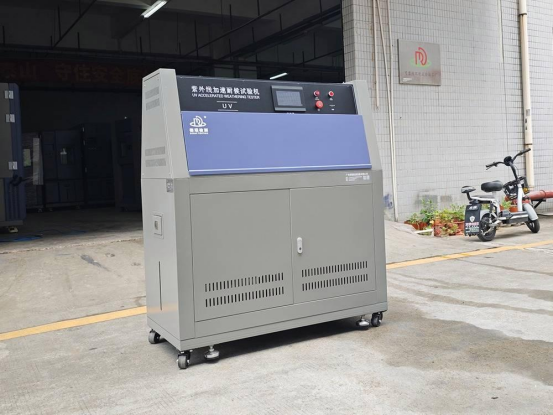
2. Main structure of the equipment
A typical rubber sealant UV weather resistance evaluation equipment consists of the following key components:
-UV radiation system: including UV lamps, reflector plates, and power adjustment devices. UV lamps typically use UVA or UVB bands to simulate the intensity of ultraviolet radiation in different regions and environments. Reflective plates are used to evenly distribute ultraviolet rays, ensuring that the surface of the test sample receives consistent light. The power regulation device can control the intensity of UV radiation to meet the requirements of different testing standards.
-Temperature and humidity control system: composed of heater, refrigeration unit, humidifier, and dehumidifier. This system can accurately control the temperature and humidity inside the test chamber, covering various conditions from low to high temperatures, to simulate day night or seasonal changes.
-Sample rack: used to fix rubber sealant samples, usually designed to be rotatable or adjustable in angle to ensure that all samples are uniformly exposed to UV radiation. The material of the sample rack needs to be corrosion-resistant and heat-resistant to avoid its own aging affecting the test results.
-Control system: Modern devices are often controlled by microprocessors, and users can preset testing programs, including UV intensity, temperature, humidity, and cycle time. The control system also has data recording function, which can monitor and store test parameters in real time for subsequent analysis.
3. Testing methods and processes
The testing process for evaluating the UV weather resistance of rubber sealant usually follows international or industry standards, such as ASTM G154, ISO 4892, etc. The following are the basic testing steps:
-Sample preparation: Make standard sized test pieces of rubber sealant, such as rectangular or circular, and ensure that the surface is clean and flawless. If necessary, the sample can be pre cured to simulate the actual usage state.
-Equipment settings: Set the UV radiation intensity, temperature, humidity, and testing time according to the testing standards. For example, a common cycle is: UV irradiation for 8 hours (at a temperature of 60 ° C), followed by condensation for 4 hours (at a temperature of 50 ° C), repeated multiple times to simulate long-term exposure.
-Test execution: Place the sample on the sample rack and start the device. During the testing process, the equipment automatically controls UV, temperature and humidity cycling, and regularly records data. The testing time can range from several hundred hours to several thousand hours, depending on the expected service life of the material and evaluation requirements.
-Performance evaluation: After the test is completed, take out the sample for performance testing. Common evaluation indicators include changes in appearance (such as discoloration and cracking), mechanical properties (such as tensile strength and elongation), and chemical properties (such as changes in molecular weight). By comparing the data before and after the test, the weather resistance level of the material can be quantified.
4. Equipment selection and maintenance
When selecting suitable UV weather resistance assessment equipment, multiple factors need to be considered:
-Testing requirements: Determine the required UV band, temperature and humidity range, and testing standards based on the application field of rubber sealant. For example, sealants used in the automotive industry may require stricter temperature cycling testing.
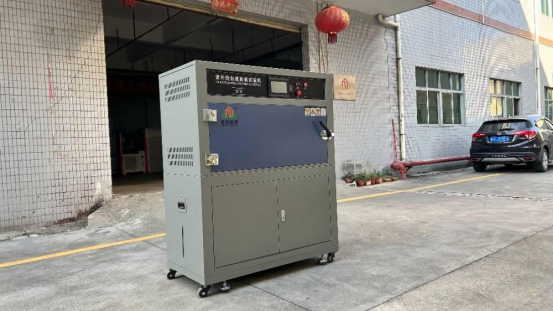
-Equipment accuracy: Prioritize selecting equipment with high control accuracy and complete data recording to ensure the reliability and repeatability of test results.
-Safety: The equipment should have safety functions such as overheating protection and leakage protection to avoid operational risks.
In terms of daily maintenance, regular cleaning of UV lamps and reflectors is crucial to prevent dust from affecting radiation uniformity. Check the calibration of temperature and humidity sensors to ensure long-term accuracy. When the equipment is not in use for a long time, it should be powered off and covered with a dust cover.
5. Application and Significance
The UV weather resistance evaluation equipment for rubber sealant is not only used for quality control, but also plays an important role in the research and development stage. Through accelerated aging testing, manufacturers can select material formulations with better weather resistance, optimize product design, and extend service life. The test results are helpful in formulating service life recommendations in the product manual and enhancing user trust. From an industry perspective, this type of equipment has driven advances in materials science, promoted environmental protection and sustainable development, such as developing more durable sealants that can reduce resource waste and maintenance costs.

The UV weather resistance evaluation equipment for rubber sealant is a crucial tool in modern industry, which helps predict and improve material performance by scientifically simulating the natural environment. With the continuous advancement of technology, future devices will become more intelligent and precise, bringing greater value to the industry. For ordinary readers, understanding the working principle and process of this device can help enhance their understanding of the durability of daily products and make wiser choices.