-
E-mail
51037070@qq.com
-
Phone
18028963555
-
Address
Room 113, Building 1, No. 3 Shugang Avenue, Hongmei Town, Dongguan City, Guangdong Province
Guangdong Derui Testing Equipment Co., Ltd
Solution for UV Weather resistant Intelligent Testing System for Industrial IoT Devices
Date: 2025-12-17Read: 7
When industrial IoT devices are used outdoors, long-term exposure to environmental factors such as ultraviolet radiation, temperature changes, and humidity may affect their performance and lifespan. To ensure stable operation of equipment in a real environment, UV weather resistance testing has become an important part of the production process. This system evaluates the durability of equipment casing materials, electronic components, and connecting parts by simulating natural environment conditions such as ultraviolet radiation, temperature cycling, and humidity changes, thereby helping to improve product quality.
The testing system usually consists of several core components: ultraviolet irradiation module, temperature and humidity control unit, and data acquisition and monitoring platform. The ultraviolet irradiation module uses a specific wavelength ultraviolet lamp to simulate ultraviolet radiation in sunlight. The temperature and humidity control unit can adjust the temperature and humidity inside the test box to match different climate conditions. The data acquisition system collects real-time parameters such as temperature, humidity, and ultraviolet intensity through sensors, and transmits the data to the monitoring platform for analysis.
The application of industrial Internet of Things technology makes testing systems more intelligent and efficient. The data collected by sensors is transmitted to the central processing system through the network, and operators can remotely monitor the testing process, adjust parameters in real time, and ensure that the testing conditions meet the standards. The system can also automatically record test data, generate reports, reduce human operation errors, and improve the accuracy and reliability of test results.
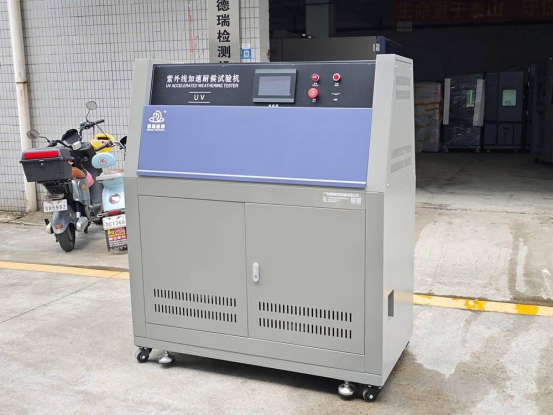
The testing process usually includes the following steps: placing the device under test in the testing box, setting parameters such as UV intensity, temperature, and humidity. The parameter setting should refer to the actual application environment, such as high temperature and strong ultraviolet radiation in desert areas, and high humidity conditions in coastal areas. The testing time can be set according to the requirements, ranging from a few days to several months. During the process, the system continuously monitors the equipment status and records phenomena such as material discoloration, brittleness, and changes in sealing performance.
After the testing is completed, analyze the data and evaluate the weather resistance of the equipment. The analysis includes changes in material appearance, mechanical properties, and electronic component performance. Based on the test results, manufacturers can adjust material selection or design to enhance product durability.
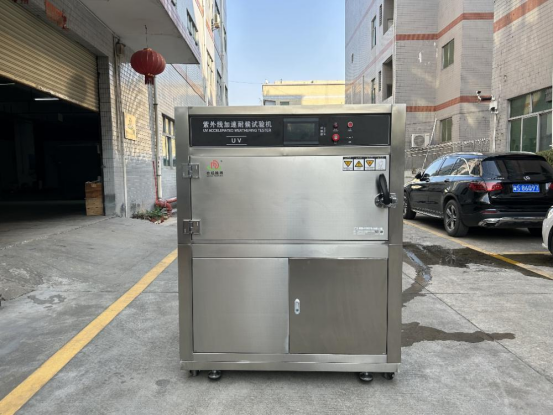
The advantage of UV weather resistance testing system lies in its ability to highly simulate real environments. By precisely controlling the testing conditions, the system can accelerate the material aging process, shorten testing time, and help manufacturers evaluate product life faster. The automation function of the system reduces manual intervention and improves testing efficiency.
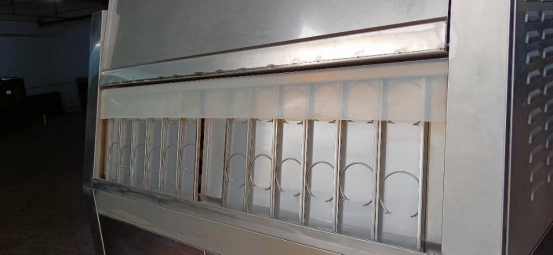
In the field of industrial Internet of Things, the reliability of equipment is crucial. The UV weather resistance testing system is not only suitable for shell materials, but also for testing internal components such as sensors and communication modules. Through this testing, manufacturers can ensure that the equipment operates stably in harsh environments for a long time, meeting the needs of industrial applications.
Summary focus:
1. The UV weather resistance testing system evaluates the durability of industrial IoT devices by simulating environmental conditions such as ultraviolet radiation, temperature and humidity.
2. The system utilizes industrial Internet of Things technology to achieve remote monitoring, automatic data collection and analysis, improving testing efficiency and accuracy.
3. The test results help manufacturers optimize product design and material selection, and improve the reliability of equipment in outdoor environments.