-
E-mail
76942054 @qq.com
-
Phone
18028937131
-
Address
No.15 Shihuan Road, Sangyuan Community, Dongcheng Street, Dongguan City
Guangdong Kebao Experimental Equipment Co., Ltd
How to avoid frosting on programmable constant temperature and humidity testing machines? Maintenance Guide for Dehumidification System
Date: 2025-12-08Read: 8
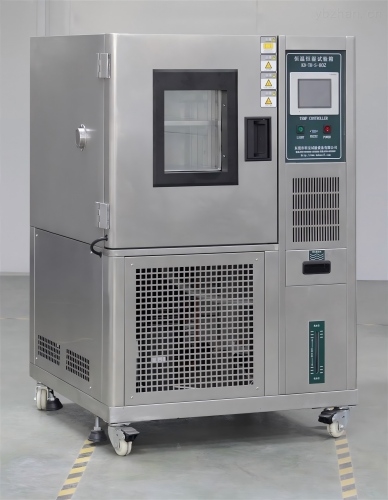
InProgrammable constant temperature and humidity testing machineFrost formation is a common problem that affects the stable operation and testing accuracy of equipment, especially in low temperature and high humidity conditions. Frosting not only hinders the heat transfer efficiency of the evaporator, but may also cause humidity fluctuations and even equipment damage. The core cause is that the surface temperature of the evaporator in the dehumidification system is lower than the dew point temperature of the air, leading to the condensation of water vapor into frost. By scientifically maintaining and optimizing the dehumidification system, this problem can be effectively avoided.
1、 Optimize operational parameter settings
To avoid frosting, we need to start with control logic: firstly, set a reasonable temperature and humidity range, and try to avoid combinations of low temperature below 0 ℃ and humidity ≥ 80% RH for a long time; Secondly, utilizing the device's "anti frost mode" (supported by some models), this mode will prevent the evaporator from maintaining low temperatures through intermittent heating or reducing wind speed; In addition, a "defrosting interval" can be added during multi-stage programming, such as automatically performing a 5-10 minute high-temperature reheating after running continuously for 2-4 hours to melt potential frost layers.
2、 Strengthen the daily maintenance of the dehumidification system
1. Evaporator cleaning: Check the evaporator fins monthly. If there is dust or oil accumulation, it will hinder heat exchange and cause local temperatures to be too low. You can use a soft bristled brush combined with neutral cleaning agent to gently sweep and ensure smooth ventilation.
2. Refrigerant management: Insufficient refrigerant can cause a decrease in evaporation pressure, and a sudden drop in evaporator temperature can lead to frost formation. It is necessary to regularly contact professional personnel to test the pressure (normal R404A refrigerant low pressure is about 0.3-0.5MPa), and promptly supplement or replace it.
3. Drainage system inspection: If the condensed water is not discharged in time, it may flow back to the bottom of the evaporator and freeze. Clean the water tray and drainage pipe weekly to ensure there are no blockages or tilts.
4. Sensor calibration: Deviation of humidity/temperature sensors can cause system misjudgment, and standard instruments need to be calibrated every quarter to avoid triggering frost due to inaccurate temperature control.
3、 Emergency response to abnormal frosting
If frost has appeared, immediately stop the machine and switch to manual mode. Raise the temperature to above 10 ℃ and run for 30 minutes to defrost. Do not forcefully start the high humidity program. Check if the evaporator is deformed or leaking after defrosting, and contact the manufacturer for repair if necessary.
Overall, through parameter optimization, regular maintenance, and timely intervention, the risk of frosting can be significantly reduced, ensuringProgrammable constant temperature and humidity testing machineAccuracy and durability.