-
E-mail
1170569713@qq.com
-
Phone
13401821290
-
Address
No. 18, East Gong'er Road, Jinhu County Industrial Park, Huai'an City, Jiangsu Province
Huai'an Qingchuan Instrument Co., Ltd
Complete analysis of measurement methods for sophisticated pressure transmitters: from basic detection to high-precision calibration
Date: 2025-11-20Read: 10
Exquisite pressure transmitters are widely used in industrial process control, environmental monitoring, aerospace and other fields due to their small size, high precision, and strong anti-interference ability.Its measurement method covers three core aspects: basic testing, system calibration, and dynamic performance evaluation, and requires the combination of professional tools and standardized processes to ensure data reliability.
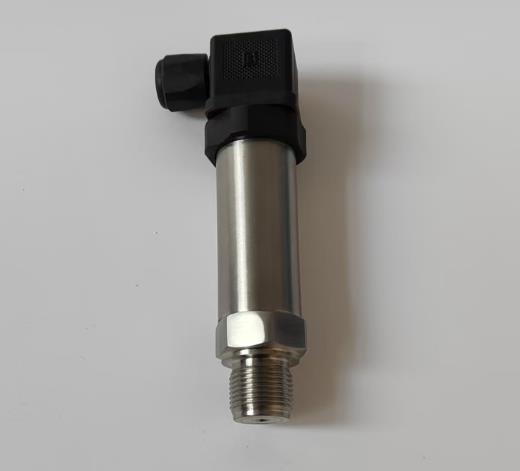
1、 Basic detection: Quickly check the status of equipment
1. Appearance and sealing inspection: Firstly, conduct a visual inspection to confirm that the transmitter housing is not deformed, cracked, or corroded, and that there are no leaks at the pressure inlet and joint. The sealing can be tested by applying soap water method: Apply soap water to the pressure inlet, apply 0.5 times the range pressure, and observe whether bubbles are generated to ensure that the sealing level meets IP65 or above standards.
2. Zero point and bridge detection: Zero point detection should be carried out in a pressure free state. Use a multimeter to measure the zero current of a 4-20mA output transmitter, and the standard value should be 4.00mA ± 0.02mA. If it exceeds the tolerance, it needs to be adjusted through the zero point screw on the body or the HART controller. Bridge detection uses a multimeter to measure the impedance of the input/output terminals in the ohm range. The normal value should be 350 Ω± 50 Ω. Abnormal impedance may indicate sensor damage or incorrect pin definition.
2、 System calibration: Ensure measurement accuracy
1. Direct comparison method: Connect the transmitter to be calibrated in series with a standard pressure transmitter to a standard pressure source, apply 0%, 25%, 50%, 75%, and 100% range pressures, and record the output values of both. For example, at the 100% range point, when the standard indication value is 20MPa, the output of the tested transmitter should be 20.00mA ± 0.08mA. If the error exceeds the limit, automatic calibration should be performed by inputting the standard pressure value through a HART controller.
2. Static calibration method: By gradually increasing/decreasing the pressure, record the output values of each pressure point and draw a calibration curve. Taking the diffusion silicon pressure transmitter as an example, its temperature compensation range is usually -20 ℃ to 70 ℃, which needs to be carried out at standard temperature (20 ℃± 5 ℃).
3、 Dynamic performance evaluation: Dealing with complex working conditions
1. Dynamic response test: Use a dynamic pressure generator to generate rapid pressure pulses and measure the rise time of the transmitter output from 10% to 90% range. The aerospace industry requires a transmitter response time of ≤ 10ms to monitor real-time fluctuations in engine fuel pressure.
2. Anti interference capability verification: Use an oscilloscope to monitor the ripple coefficient of the transmitter output signal in strong electromagnetic interference environments such as frequency converters and high-power motors. The high-quality and exquisite transmitter adopts a digital dedicated circuit, with an anti frequency conversion interference capability of over 60dB, ensuring stable output at interference frequencies of 0-100Hz.
4、 Industry application cases
In the food and beverage industry, sophisticated transmitters are used to monitor the pressure of fermentation tanks. By regular calibration and dynamic response testing, the pressure fluctuations during the fermentation process are controlled within ± 0.005MPa, significantly improving product consistency. In the automotive industry, tire pressure monitoring systems (TPMS) use miniature pressure transmitters to ensure measurement errors of ≤± 1kPa in environments ranging from -40 ℃ to 125 ℃ through zero point detection and temperature compensation.
The measurement of sophisticated pressure transmitters requires a combination of standardized processes and professional tools, forming a complete closed loop from basic detection to high-precision calibration. Enterprises should choose appropriate methods based on application scenarios and establish a regular maintenance system to fully leverage their technological advantages of "small size, big impact".