-
E-mail
1170569713@qq.com
-
Phone
13401821290
-
Address
No. 18, East Gong'er Road, Jinhu County Industrial Park, Huai'an City, Jiangsu Province
Huai'an Qingchuan Instrument Co., Ltd
Guidelines for Quota Application of Intelligent Liquid Level Gauge: Principles, Classification, and Pricing Practice
Date: 2025-11-24Read: 8
As a core instrument for modern industrial process control and water resource management, the reasonable determination of installation cost of intelligent liquid level gauges relies on accurate quota application.Quota is not only the basis for engineering valuation, but also the bridge connecting technical solutions and economic benefits. The intelligent liquid level gauge achieves accurate measurement and remote monitoring of the liquid level height inside the container through integrated sensing technology, signal processing, and communication functions. Its quota application strictly follows the principle of "quantity price separation", which distinguishes between installation consumption and main material equipment price, ensuring the scientific and fair nature of project cost.
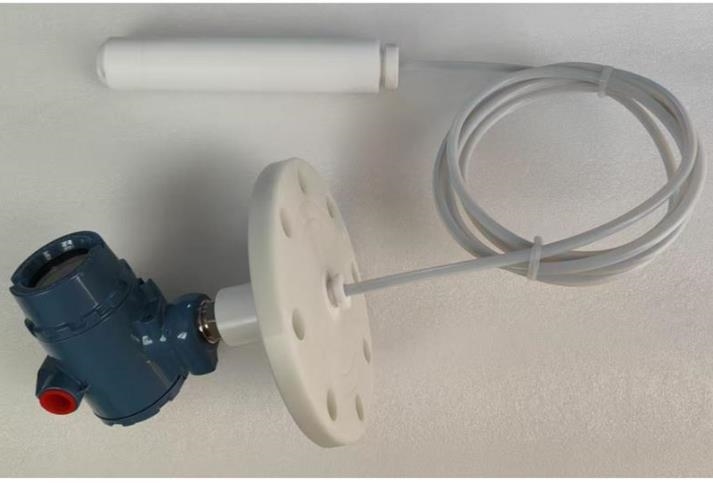
1、 Technical characteristics and quota application basis of intelligent liquid level gauge
According to the measurement principle, it can be divided into various types such as radar, ultrasonic, differential pressure, floating ball, etc. For example, radar level gauges use the principle of microwave reflection and are suitable for high temperature and high pressure environments; Ultrasonic level gauges use sound waves for distance measurement and are commonly used in corrosive media; Differential pressure level gauges rely on static pressure difference to convert liquid level height. These differences directly affect the installation difficulty and quota selection. The core of quota application lies in matching the design drawings with the work content of quota sub items. The fixed unit price includes labor, auxiliary materials, machinery shift, management fees, and profit, but does not include the main material cost of the liquid level gauge itself, which needs to be priced separately according to the brand, model, and technical specifications.
2、 The key steps and classification practice of quota application
1. Clarify the type of instrument and installation environment: The application of intelligent level gauges requires distinguishing their functional attributes first. For level gauges used in fire water tanks or collection tanks, if an alarm function is integrated, an additional "signal alarm device" sub item needs to be applied. The installation environment also affects pricing: outdoor installation requires consideration of waterproof and explosion-proof measures, and the consumption of auxiliary materials may be higher than indoor scenes; The installation of liquid level gauges in sealed containers usually requires higher manual labor due to safety protection requirements.
2. Distinguish between installation content and main material prices: The application of quotas requires strict division between "installation fees" and "equipment fees". The installation fee covers processes such as positioning, fixing, wiring, and debugging, and its unit price has been integrated with the social average level.
3. Pay attention to regional differences in quota rules: There are subtle differences in quota manuals among different provinces. Therefore, in practice, it is necessary to prioritize following the quota standards of the project location and pay attention to version updates in a timely manner to avoid pricing deviations caused by rule iterations.
3、 Common problems and optimization suggestions in quota application
Typical problems with the application of this instrument's quota include incorrect sub items and incorrect calculation of engineering quantities. The optimization suggestions are as follows: firstly, deepen the design disclosure, clarify its technical parameters and installation interface, and avoid duplicate pricing with pipeline and electrical specialties; The second is to refer to typical cases, such as the radar level gauge for the lifting pump of the water collection tank, which needs to be separately listed in the procurement list, and the installation quota should be adjusted according to the sub item "Electrical Instrument Installation"; The third is to use professional tools or consult cost engineers to ensure compliance.
Conclusion
The quota application of intelligent liquid level gauges is a professional activity that integrates technical knowledge and cost rules. From precise classification to regional rule adaptation, each step directly affects the effectiveness of cost control. Engineering personnel need to have a deep understanding of instrument principles and adhere closely to quota specifications in order to achieve reasonable cost determination and effective control in complex installation scenarios, laying the foundation for lean management of the project.