-
E-mail
2444789544@qq.com
-
Phone
18971683772
-
Address
Jinghe Road and Hechang Industrial Park, Dongxihu District, Wuhan City
Hubei Gaotian Experimental Equipment Co., Ltd
Strategy for setting defrosting frequency of high and low temperature impact test chamber
Date: 2025-11-18Read: 97
During the operation of the high and low temperature impact test chamber, frosting inside the chamber can affect the performance of the equipment and the accuracy of the test results. Reasonably setting the defrosting frequency can ensure stable operation of the test chamber. The following Hubei Gaotian experimental equipment introduces the factors and methods that need to be considered when setting defrosting frequency.
1、 Consider the usage of the test chamber
1. Running time: If the test chamber runs continuously for a long time, the frosting speed is relatively fast. For example, in reliability testing of some electronic products, the experiment may take several days or even weeks, in which case the defrosting frequency should be relatively increased. Generally, if the continuous operation exceeds 24 hours, defrosting operation can be considered every 12-24 hours, and the specific adjustment can be made according to the actual degree of frosting. If the running time is short, such as not exceeding 8 hours per run, the defrosting frequency can be appropriately reduced, such as defrosting every 2-3 days.
2. Environmental humidity: High environmental humidity can accelerate frosting inside the box. In humid areas in the south or near water sources, the frosting rate of the test chamber is significantly faster than in dry environments. If the humidity in the environment frequently exceeds 70%, it is recommended to increase the defrosting frequency. The frosting situation can be checked every 8-16 hours, and defrosting can be carried out if necessary. In dry environments, such as humidity below 40%, the defrosting frequency can be adjusted to check every 1-2 days.
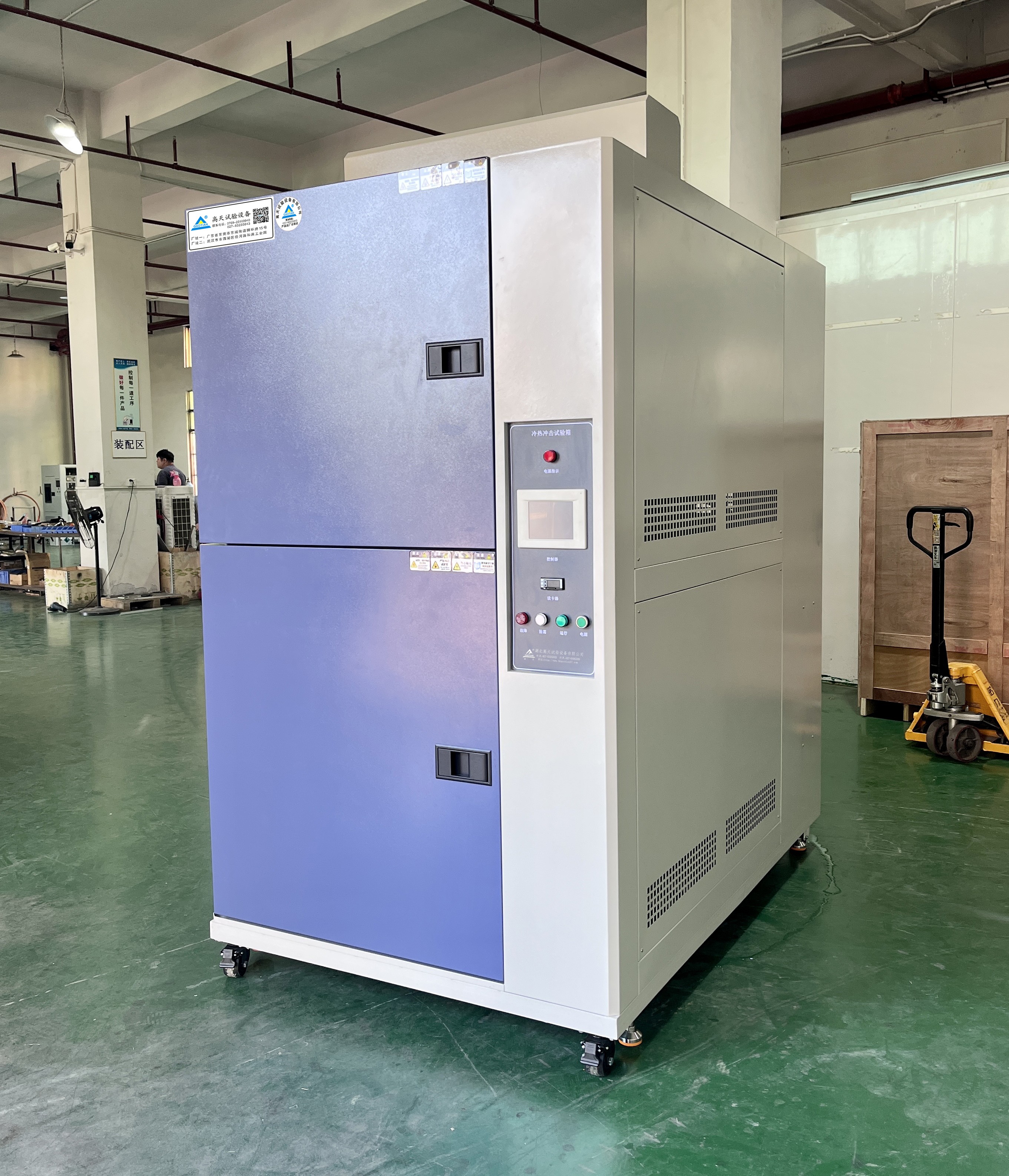
2、 Pay attention to the performance and structure of the test chamber
1. Refrigeration system performance: A high-efficiency test chamber for the refrigeration system, with a low evaporator temperature and relatively fast frosting. If the refrigeration system of the test chamber has a fast cooling speed and a large cooling amplitude, the defrosting frequency should be appropriately increased. For example, a test chamber using an efficient compressor and evaporator may require more frequent defrosting compared to a conventional refrigeration system test chamber, with defrosting occurring every 10-18 hours. At the same time, regularly check the operating status of the refrigeration system. If a decrease in refrigeration efficiency is found, it may be due to excessive frosting, and defrosting should be carried out in a timely manner to identify the cause.
2. Box sealing performance: Good sealing can reduce the entry of external water vapor and delay frosting. If the sealing strip of the test chamber is aged or damaged, external humid and hot air is prone to infiltrate, accelerating frosting. At this point, it is necessary to first repair the sealing issue, and then adjust the defrosting frequency according to the frosting situation. If poor sealing leads to significantly accelerated frosting, defrost every 6-12 hours first. After repairing the seal, gradually reduce the defrosting frequency to a normal level.
3、 Combining the characteristics of the test sample
1. Sample moisture content: If the test sample itself has a high moisture content, it will release water vapor during the test process, increase the humidity inside the box, and promote frosting. When conducting high and low temperature impact tests on some biological products or foods with high water content, the defrosting frequency needs to be increased. Check and defrost every 6-10 hours based on the moisture content of the sample. For samples with extremely low moisture content, the defrosting frequency can be maintained at a lower level.
2. Sensitivity of samples to humidity: Samples that are sensitive to humidity may be affected by even a small amount of water vapor generated by frosting and melting, which may affect the test results. For some high-precision electronic components, frosting and water vapor may cause short circuits or performance changes. For the testing of such samples, the defrosting frequency should be strictly controlled, possibly every 4-8 hours, to ensure that the humidity inside the box is at a low level.

4、 Method for setting defrosting frequency
1. Manual setting: Most test chambers can be manually controlled for defrosting. The operator can set the defrosting time interval based on the above factors and experience. After each defrosting, observe the frosting speed inside the box and adjust the next defrosting time according to the actual situation. For example, if defrosting is set every 12 hours and the frost layer is found to be thicker after about 10 hours, it can be adjusted to defrost every 10 hours next time.
2. Automatic setting: Some test chambers have an automatic defrosting function, which can automatically determine frost formation and defrost based on sensor data such as humidity and temperature inside the chamber. Users can set defrost parameters in the device control system, such as frost thickness threshold, defrost time interval range, etc. The device will automatically defrost at the appropriate time according to the set parameters. But automatic settings also require regular manual checks to ensure good defrosting effect and prevent malfunctions in the automatic defrosting system.
The defrosting frequency setting of the high and low temperature impact test chamber needs to be adjusted flexibly based on various factors to ensure the stable operation of the test chamber and the reliability of the test results.