-
E-mail
3008863989@qq.com
-
Phone
18761508201
-
Address
No. 5, ASEAN Road, Nanzha Town, Jiangyin City
Jiangsu Ankerui Electric Appliance Manufacturing Co., Ltd
Research on Intelligent Management of Charging Stations for New Energy Electric Vehicles Empowered by the Internet of Things
Date: 2025-12-12Read: 6
Ankrui Liu Qiuxia
Abstract: With the continuous development of new energy vehicles, the improvement of the new energy vehicle industry chain has become crucial. As a device for supplementing electricity in new energy vehicles, charging stations are interconnected with new energy vehicles. Therefore, realizing the intelligence of charging stations is an important development trend. On the basis of analyzing the current operation and maintenance status of new energy vehicle charging piles and the application advantages of IoT technology, this article constructs an intelligent management system for new energy vehicle charging piles based on IoT technology, providing new ideas and directions for the intelligent management of new energy vehicle charging pile facilities.
Keywords: Internet of Things technology; New energy vehicles; Charging station; Intelligent management system
0 Introduction
Charging stations are devices that provide electrical energy for new energy vehicles, and the current market demand is increasing. To meet the charging needs of users and improve the safety and stability of charging station operation, building an intelligent management platform that can be used to manage and monitor the operation of charging stations is a development trend in the industry. The Internet of Things technology utilizes end facilities such as sensors to collect data, and through specific technologies to transmit and process data, it can establish close connections between objects and between people and objects. Its key technology can achieve real-time monitoring of operational data during the operation and maintenance process of charging facilities and provide effective assistance for operation and maintenance decisions. Applying IoT technology to the intelligent management system of new energy vehicle charging stations is an effective way to achieve the intelligence of charging stations.
1. Current situation of operation and maintenance of new energy vehicle charging piles
At present, due to the limited total number of new energy vehicle charging stations, there is a common problem of "charging anxiety" among new energy vehicle owners. Implementing the operation and maintenance of charging stations on the basis of limited charging facilities is a key measure to promote the coordinated development of the new energy vehicle industry and infrastructure system.
There are problems of information lag and untimely operation and maintenance in the maintenance process of new energy vehicle charging stations. Information lag refers to the inability to update the operational data of charging stations in a timely manner during use, resulting in the inability to update the usage status of charging stations to the user end, leading to low resource utilization of charging stations and low convenience for car owners to charge. Delayed operation and maintenance means that when there is a problem with the charging station, different levels of judgment cannot be made based on the type of problem, and flexible decisions cannot be taken. In addition, the environment where the charging piles are located is mostly outdoor, which is greatly affected by the weather. When there is rainstorm, strong wind and other * end weather, the data transmission of the charging piles is prone to problems, and some charging piles are built in remote places, which has the problem of blocked communication. It can be seen that in order to achieve the operation and maintenance of charging stations, the informationization level of charging stations should be improved, the big data assisted operation and maintenance decision-making function should be expanded, and the reliability and security of data transmission and use should be enhanced.
The application advantages of IoT technology in the intelligent management system of new energy vehicle charging piles
The intelligent management system for new energy vehicle charging piles can utilize key technologies in the Internet of Things, such as sensing technology, big data technology, and communication technology, to achieve intelligent management. The Internet of Things technology has three advantages in promoting system intelligence.
*1、 The bidirectional communication technology in the Internet of Things can achieve close connections between things and people, and when applied to the intelligent management system of new energy vehicle charging stations, it can improve the information transmission capability between charging equipment and facilities, the interaction capability between users and maintenance personnel and charging stations, and the efficiency of data collection and transmission. When there is a problem with the charging pile in the charging station, the intelligent management system of the charging pile can track the changes in the operation data of the charging pile, timely detect the problem, determine the location and type of the problem, and then the system will make a judgment and report the specific problem. After receiving the alarm information, the operation and maintenance personnel can handle it in real time according to the specific situation.
*2、 The big data technology in the Internet of Things has strong data processing and analysis capabilities, which can analyze and classify the faults of charging piles according to the actual situation, and provide auxiliary operation and maintenance decisions to achieve intelligent management of charging piles. For example, collecting data on the normal operation of detected charging stations, regularly comparing it with various problem databases in the system, predicting possible faults, and improving the system's predictive function.
*3、 The data encryption technology in the Internet of Things can encrypt and protect the transmitted information, so that when malicious software attempting to attack the intelligent management system of the charging station is discovered, attempts to obtain user personal information can be intercepted and reported. In addition, during the process of data transmission, information security technology can encrypt the system's data to prevent information leakage incidents and further improve the system's security.
Applying IoT technology to the intelligent management system of new energy vehicle charging piles can effectively improve the problems of information lag and untimely operation and maintenance in the current operation and maintenance process of new energy vehicle charging piles. It is conducive to improving the utilization rate of charging piles, increasing economic benefits, and is an effective measure to promote the intelligent development of charging pile facilities
Overall design of intelligent management system for new energy vehicle charging piles based on IoT technology
3.1 Overall System Framework
Taking into account the development needs of the intelligent management system for new energy vehicle charging piles in terms of reliability, real-time performance, safety, and economy, the Internet of Things technology is applied to the intelligent management system for charging piles, and a three-tier charging pile intelligent management system based on Internet of Things technology is established. The overall framework of the system is shown in Figure 1.
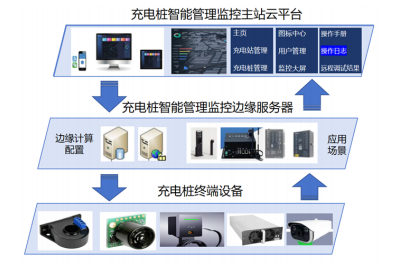
Figure 1 Overall intelligent management system for charging stations
"Cloud" is the cloud platform of the master station, which is a remote data processing platform. It can store a large amount of data and process complex data through the Internet of Things technology to provide more effective information, and feed back the results to the terminal devices and edge servers, so as to improve the intelligence level of the whole system. "Edge" is edge computing, which refers to the edge servers near the terminal devices, which can quickly process and analyze the data of the terminal devices, and send the processing results to the terminal devices. "End" is the terminal devices. In the intelligent management system of charging piles, the terminal devices include charging heads, Hall current sensors, ultrasonic sensors, cameras: metering devices, etc. These devices collect and process data, while also uploading valid data to edge servers, laying the foundation for interaction between users and operations personnel.
3.2 Data Collection of Terminal Devices
The collection of data by terminal devices is an important part of the entire intelligent management system for charging stations. *1、 From the perspective of ensuring the normal power supply of charging stations, terminal devices can monitor the operation status of charging stations and collect the charging status of charging stations, which facilitates timely detection of charging station abnormalities. *2、 From the perspective of improving the reliability of intelligent management systems, collecting charging data from charging stations, including the total amount of charged electricity, the amount of charging fees, and statistics on charging duration, provides important basis for rational allocation of resources. *3、 Considering optimizing user experience and integrating user information of car owners, retrieve the charging records of car owners, including the model, charging location, charging period, charging range requirements, etc., to understand the consumption habits of car owners and users and improve the quality of service to users.
3.3 Architecture Model of Edge Server
The current intelligent management systems mostly adopt a centralized cloud platform architecture model, as shown in Figure 2. Each terminal device transmits the measured operational data to the cloud platform, which analyzes the data before transmitting it back to the terminal device and taking corresponding actions. It is suitable for situations where the transmission speed of operational data is low and there is less operational data required.
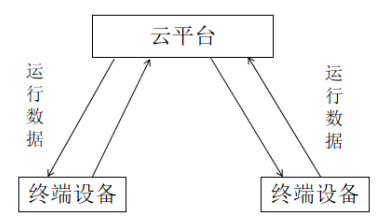
Figure 2: Architecture Model of Centralized Cloud Platform
In order to meet the charging needs of new energy vehicle owners, there are a large number of charging piles and a large amount of operating data. The traditional centralized cloud platform architecture model can no longer meet the demand for real-time monitoring of operating data. Through research, a distributed edge server architecture model is selected, as shown in Figure 3. The terminal device transmits the measured operational data to the edge server, which analyzes the data and sends the processed results back to the terminal device. At the same time, the edge server also undertakes the task of uploading the processed data and results to the main station cloud platform, so that the cloud platform can further analyze and store the relevant data in the database. The distributed edge server architecture model is adapted to the actual situation of new energy vehicle charging stations, which can improve the processing efficiency of the intelligent management system for charging stations and provide more convenient charging services.
3.4 Big Data Applications on the Main Station Cloud Platform
To achieve intelligent management of charging piles, it is necessary to effectively handle the diverse and diverse large amounts of data generated during the operation of charging piles. Ordinary data processing techniques cannot meet this requirement, but big data technology is suitable for this situation: data integration management technology can effectively store massive data in a database, data mining technology can analyze the relationship between massive operating data and provide effective operation and maintenance decisions, and data processing technology can achieve real-time analysis and processing of large amounts of data. Applying big data technology to the main cloud platform of the intelligent management system for charging piles can achieve monitoring of the operating status of various charging piles and analyze and judge the monitored data, realizing timely fault warning, alarm and alarm notification, thereby improving the operation and maintenance efficiency of charging piles.
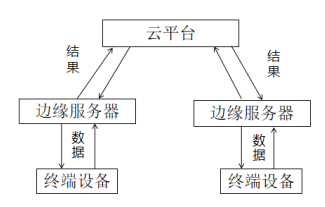
Figure 3 Distributed Edge Server Architecture Model
Operating principle of intelligent management system for new energy vehicle charging piles based on IoT technology
The intelligent management system for charging piles utilizes terminal devices to monitor the operation information, environmental information, charging data information, etc. of charging piles in real time, and uploads the data to edge servers through Ethernet and 5G communication. As shown in Figure 4, when the charging station needs to be upgraded, started or stopped, or malfunctions, the edge server will feed back the processing method to the terminal device for nearby processing based on the received data information, and upload the relevant information to the cloud platform. The cloud platform will identify the collected data, classify it, and store it in the database for subsequent big data analysis. When the problematic edge server cannot be repaired, the data management of the cloud platform will further evaluate the current situation and report the evaluation results and corresponding data to the app, which will then be reported to the operation and maintenance personnel to achieve human-computer interaction. The big data technology applied by the main station cloud platform enables the intelligent management system of charging piles to have complete protection functions, such as overvoltage protection, undervoltage protection, overcurrent protection, short circuit protection, over temperature protection, output reverse protection, emergency stop function, etc. Through real-time detection of dynamic data of charging piles, active protection is achieved to protect battery safety and fully improve the safety and reliability of the entire system.
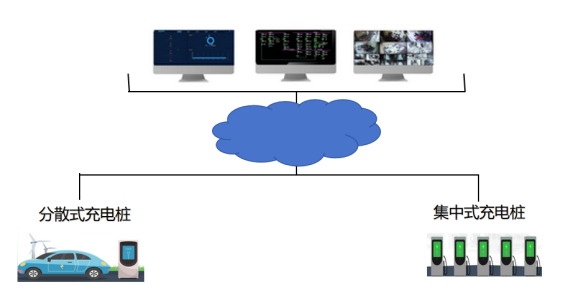
Figure 4 Topology structure of intelligent management system for charging piles
5. Selection Plan for Ankerui Charging Pile Charging Operation Cloud Platform System
5.1 Overview
The AcrelCloud-9000 Ankerui Charging Pole Charging Operation Cloud Platform system uses IoT technology to continuously collect and monitor data from electric bicycle charging stations and various charging stations connected to the system. It monitors the operation status of charging stations in real time, provides charging services, payment management, transaction settlement, asset management, energy management, and detailed queries. At the same time, warning for various faults such as over temperature protection, leakage, input/output overvoltage, undervoltage, and low insulation of the charger; The charging pile supports Ethernet, 4G or WIFI access to the Internet, and users can charge through WeChat, Alipay, and cloud flash payment scanning code.
5.2 Application Sites
Suitable for the design of charging infrastructure in charging station modes such as civil buildings, general industrial buildings, residential areas, industrial units, commercial complexes, schools, and parks.
5.3 System Structure
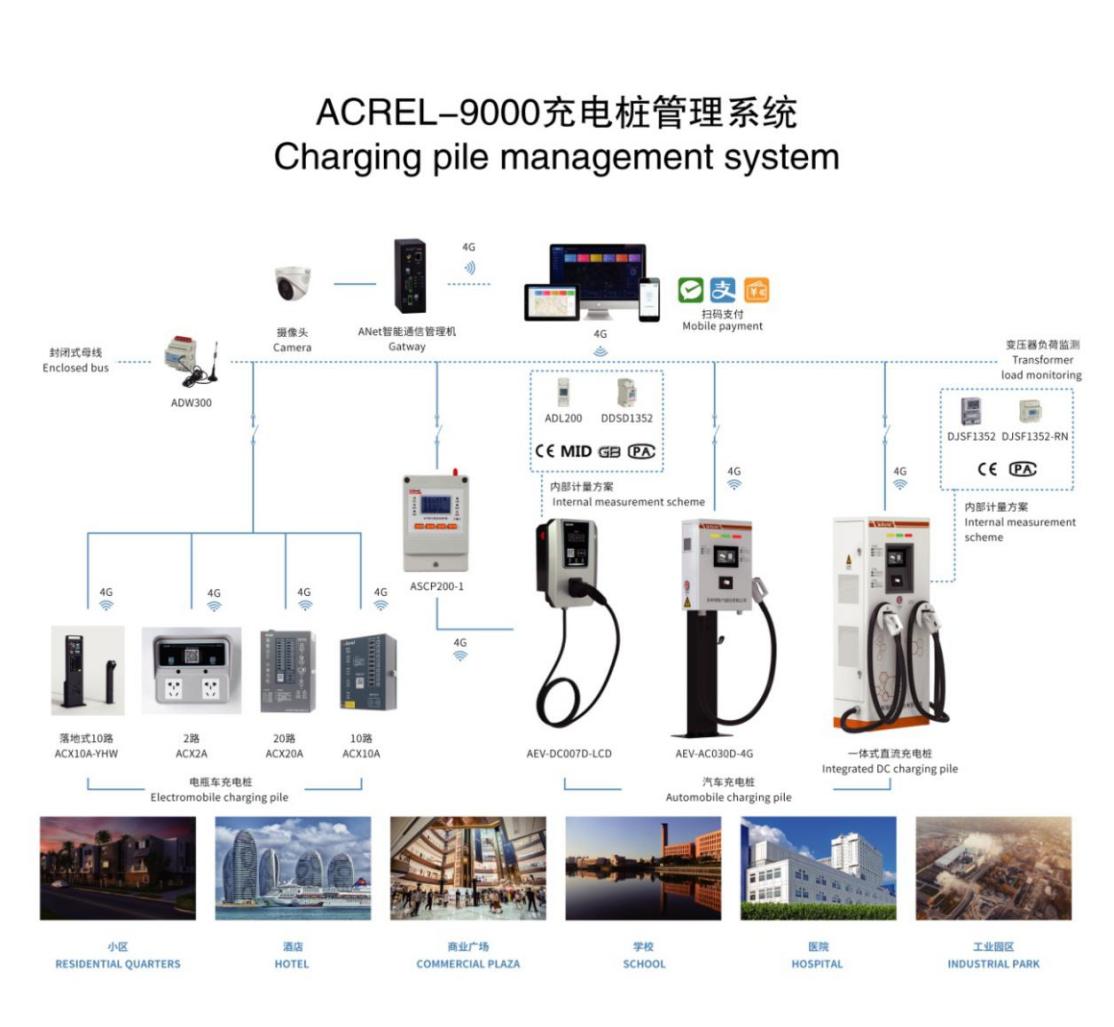
The system is divided into four layers:
1) That is, the data collection layer, network transmission layer, data middle layer, and client layer.
2) Data collection layer: The communication protocol for the intelligent charging station of the electric scooter is standard Modbus RTU. The intelligent charging station for electric scooters is used to collect power parameters of the charging circuit, and perform energy metering and protection.
3) Network transport layer: Upload data to a pre built database server through 4G network.
4) Data layer *: includes application servers and data servers. The application server deploys data collection services and WEB websites, while the data server deploys real-time databases, historical databases, and basic databases.
5) Client layer: System administrators can access the electric scooter charging station charging platform in the browser. Terminal charging users start charging by swiping their card and scanning the code.
The functions of the community charging platform mainly include intelligent large screens for charging facilities, real-time monitoring, transaction management, fault management, statistical analysis, basic data management, etc. At the same time, it provides operation and maintenance personnel with operation and maintenance apps, and charging users with charging mini programs.
5.4 Ankerui Charging Pile Cloud Platform System Functions
5.4.1 Intelligent large screen
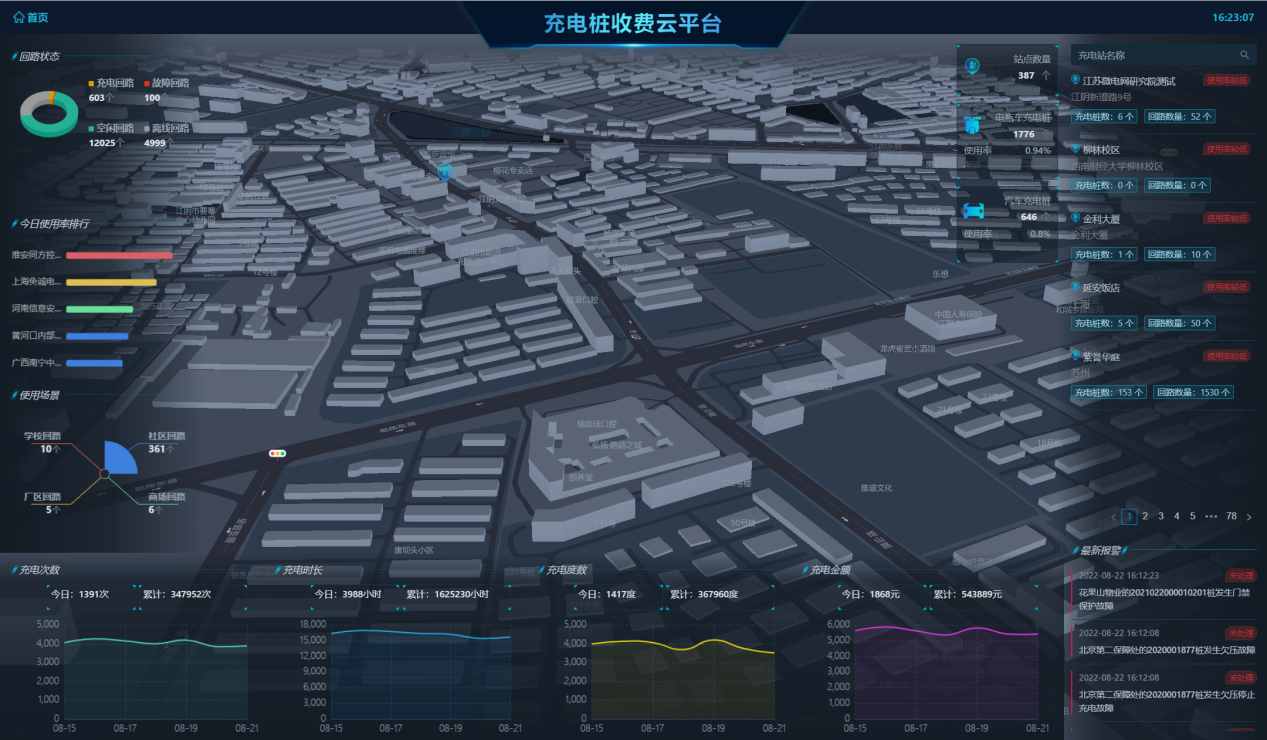
The intelligent large screen displays the distribution of stations, including device status, device usage rate, charging frequency, charging duration, charging amount, charging degree, charging pile faults, etc. It can also view the station information, charging pile list, charging records, revenue, energy consumption, fault records, etc. of each station. Unified management of community charging stations, monitoring equipment utilization rates, and rational allocation of resources.
5.4.2 Real time monitoring
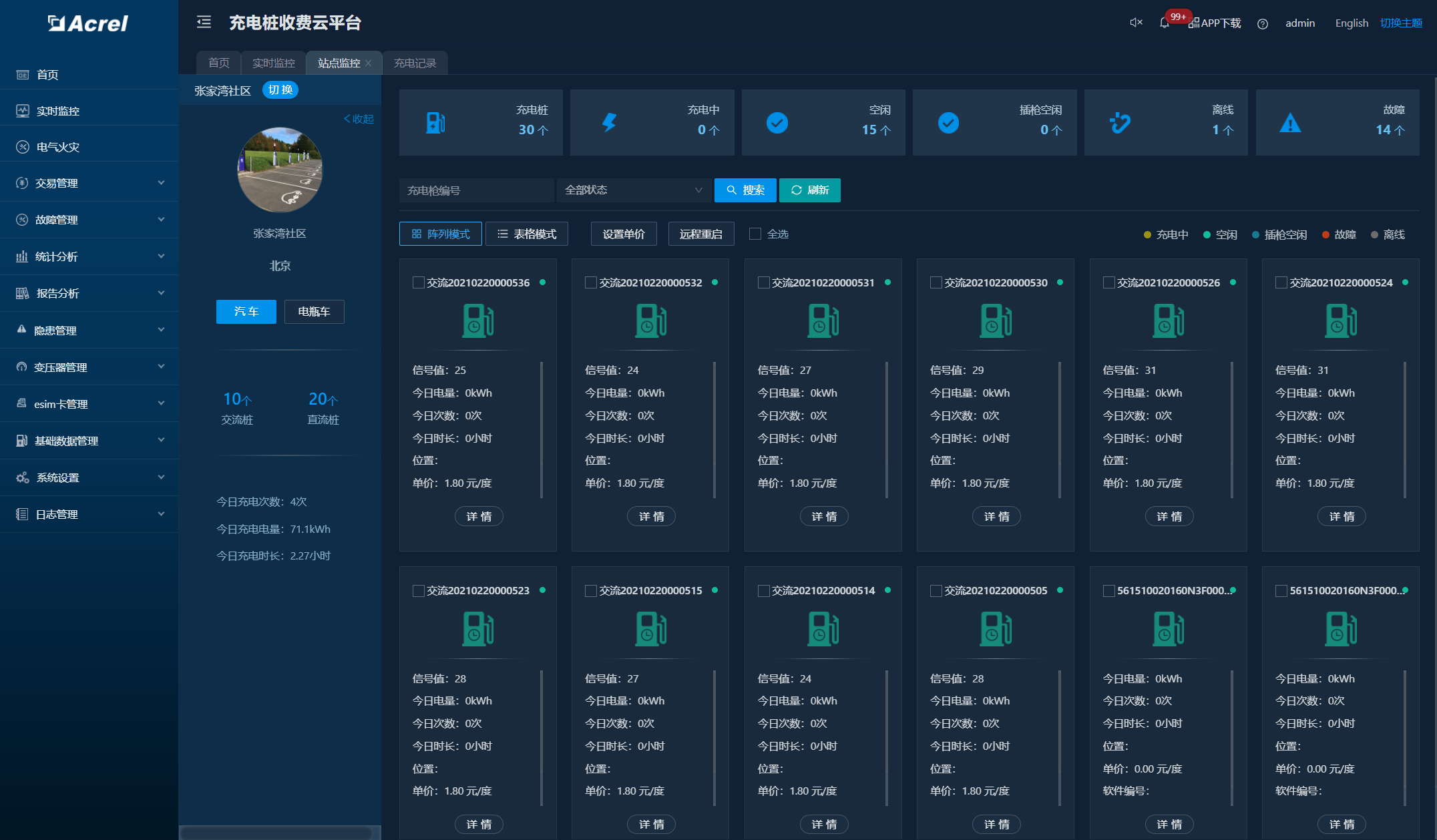
Real time monitoring of the operation status of charging facilities, mainly including the operation status of charging stations, circuit status, charging power during the charging process, charging voltage/current, charging station alarm information, etc.
5.4.3 Transaction Management
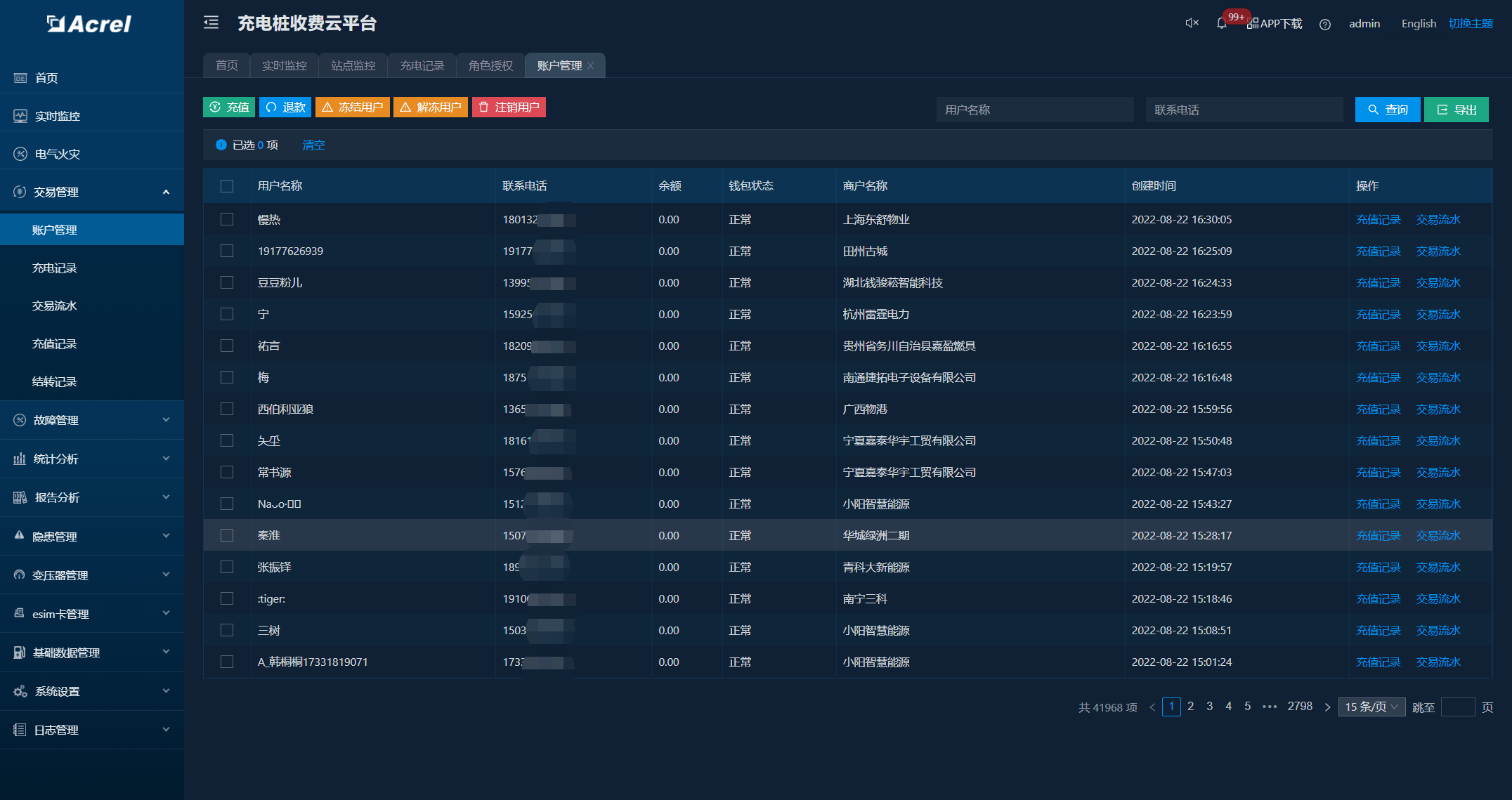
Platform management personnel can manage charging user accounts, perform account recharge, refund, freeze, cancel and other operations, and view detailed daily charging transaction information of community users.
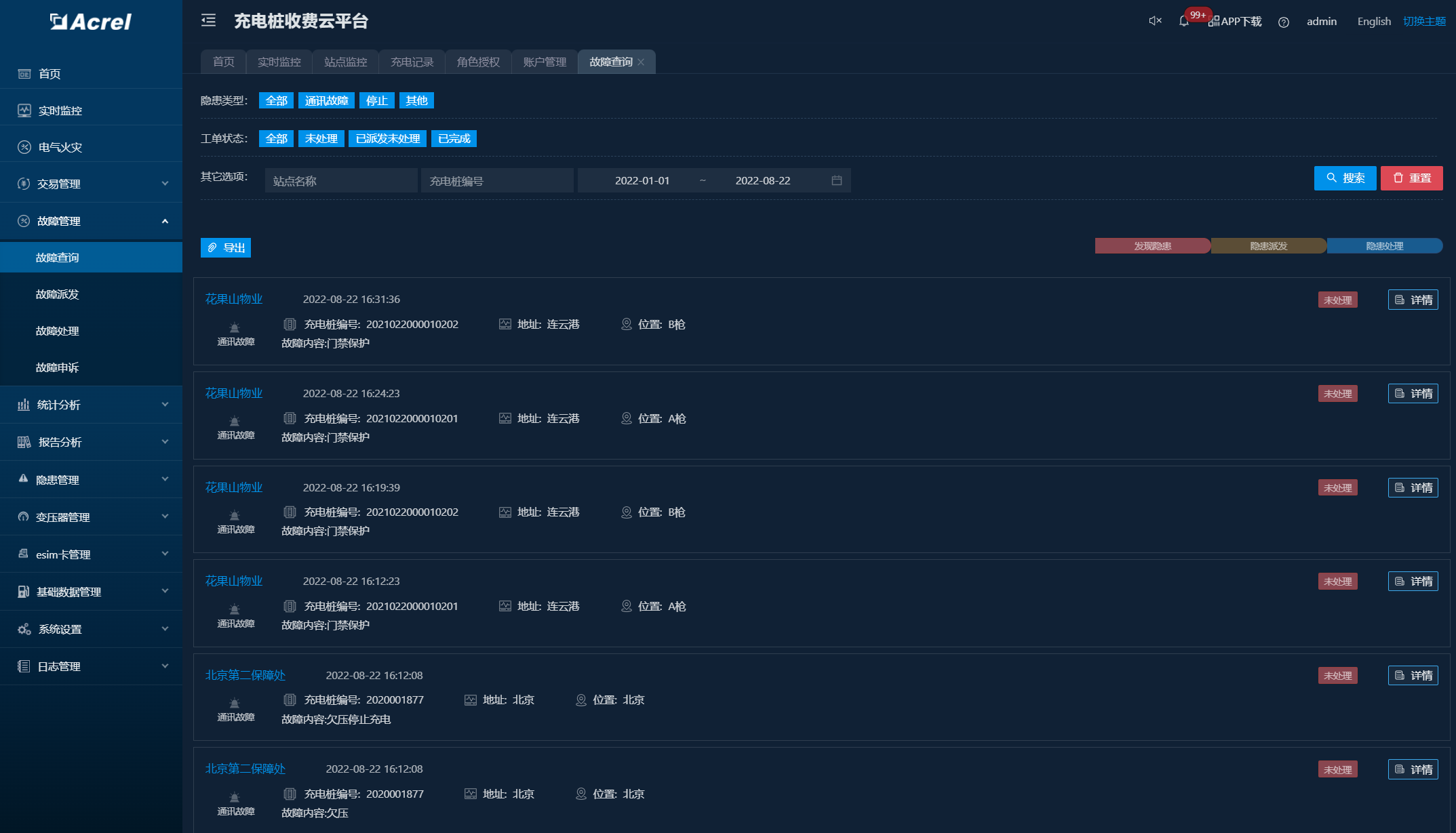
5.4.4 Fault Management
The equipment automatically reports fault information, and platform management personnel can view and distribute fault information through the platform. At the same time, operation and maintenance personnel can receive fault push notifications through the operation and maintenance APP, and report the results after the operation and maintenance work is completed. Charging users can also provide feedback on on-site issues through the charging mini program.
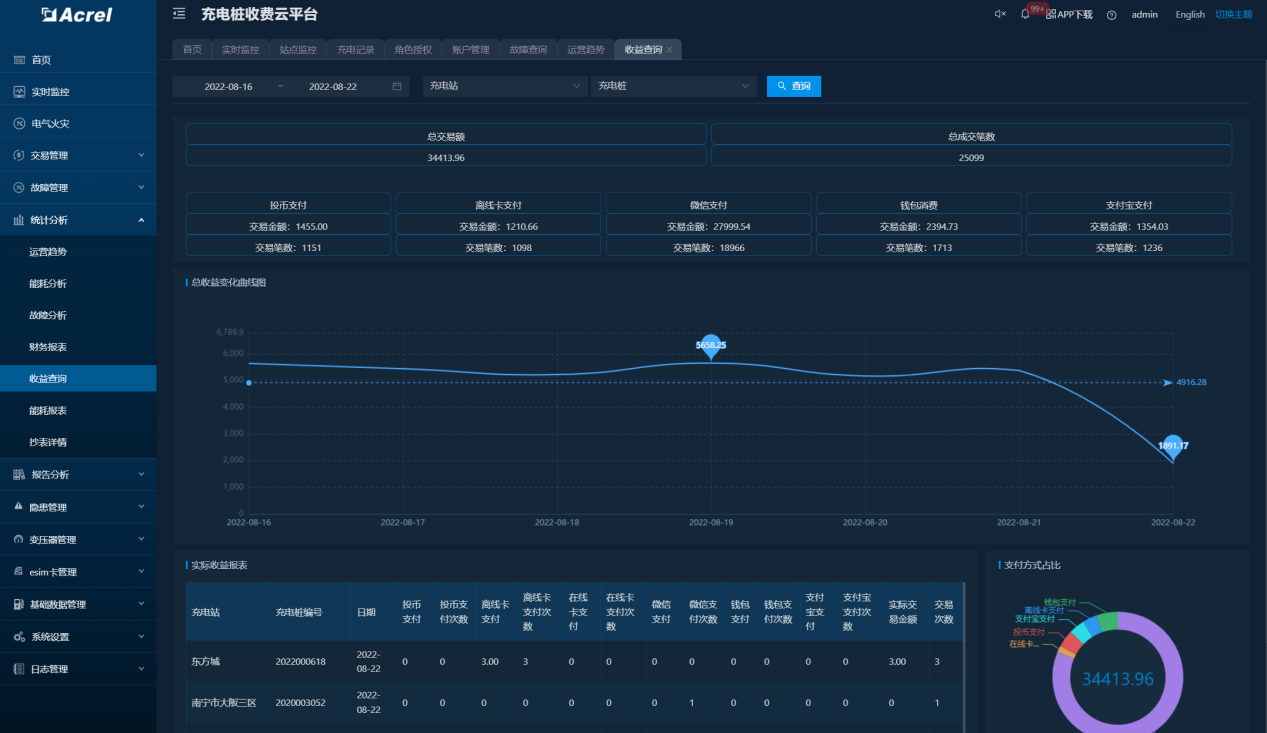
5.4.5 Statistical analysis
Through the system platform, query charging transaction statistics and energy consumption statistics from different perspectives such as charging stations, charging facilities, charging time, and charging methods.
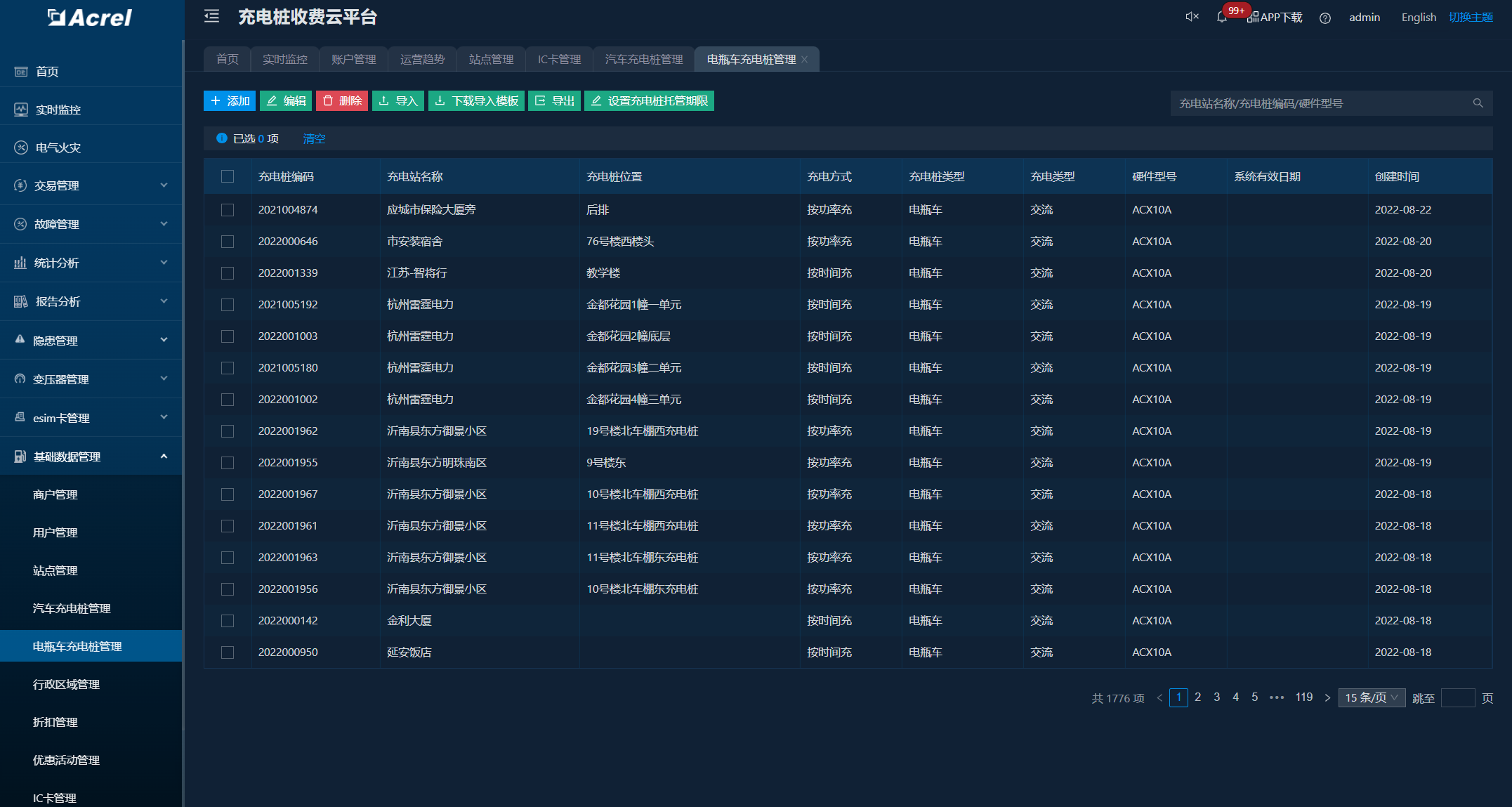
5.4.6 Basic Data Management
On the system platform, operators can establish and manage the required sites and charging facilities for their operations, maintain charging facility information, pricing strategies, discounts, and promotional activities. They can also manage online card user recharge, freezing, and unbinding.
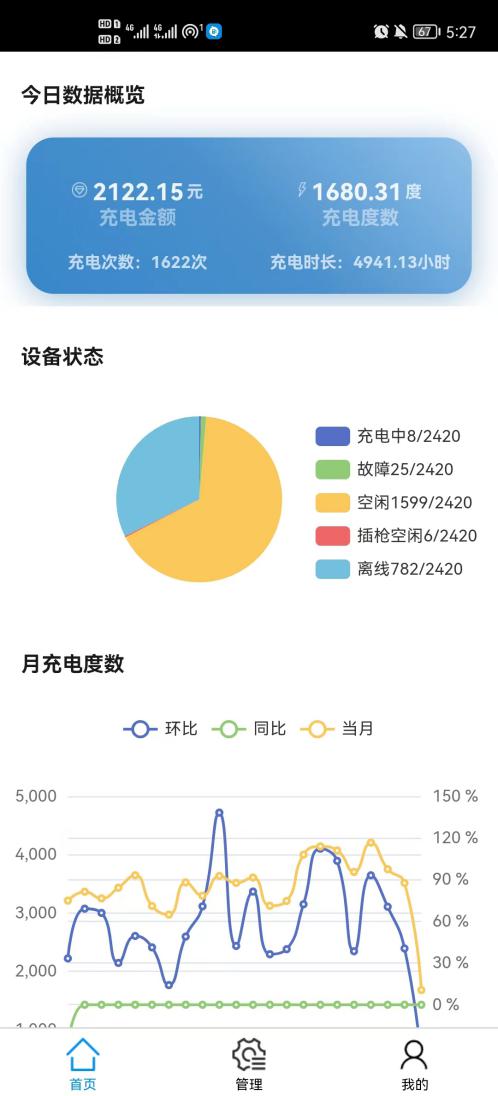
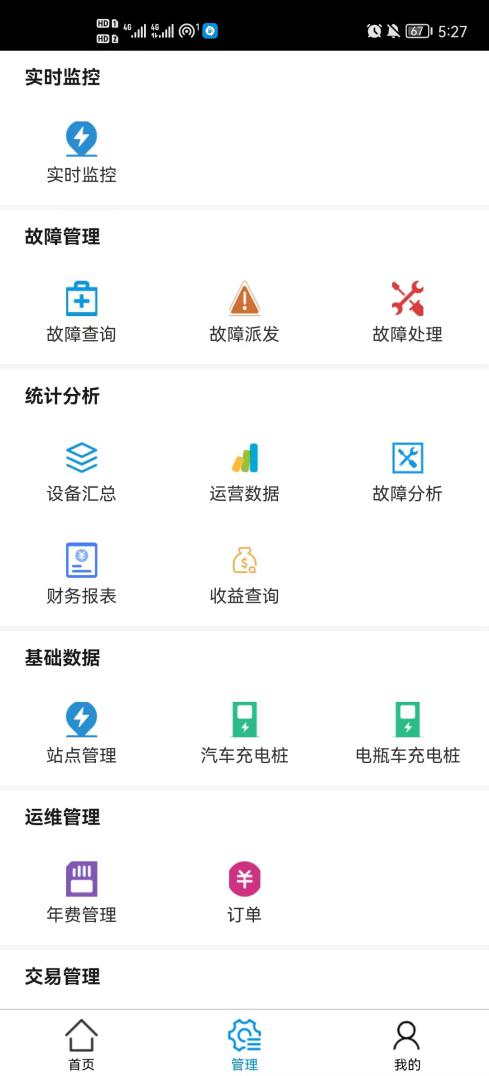
5.4.7 Operation and Maintenance APP
For operation and maintenance personnel, it can manage sites and charging stations, handle fault loops, check the usage of data cards, inquire about charging/recharging status, set remote parameters, and receive fault push notifications.
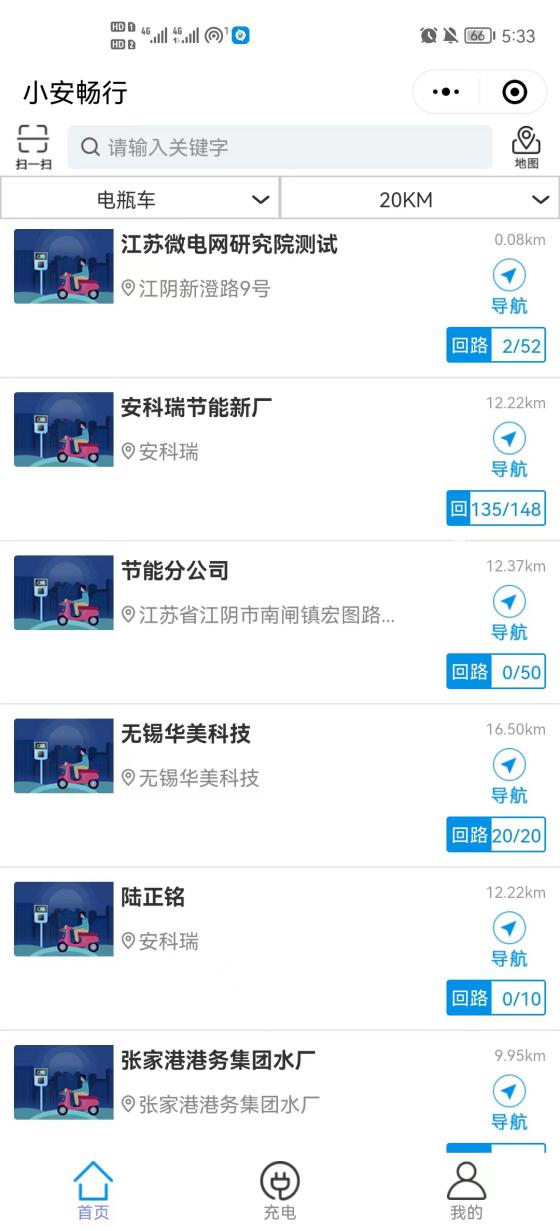
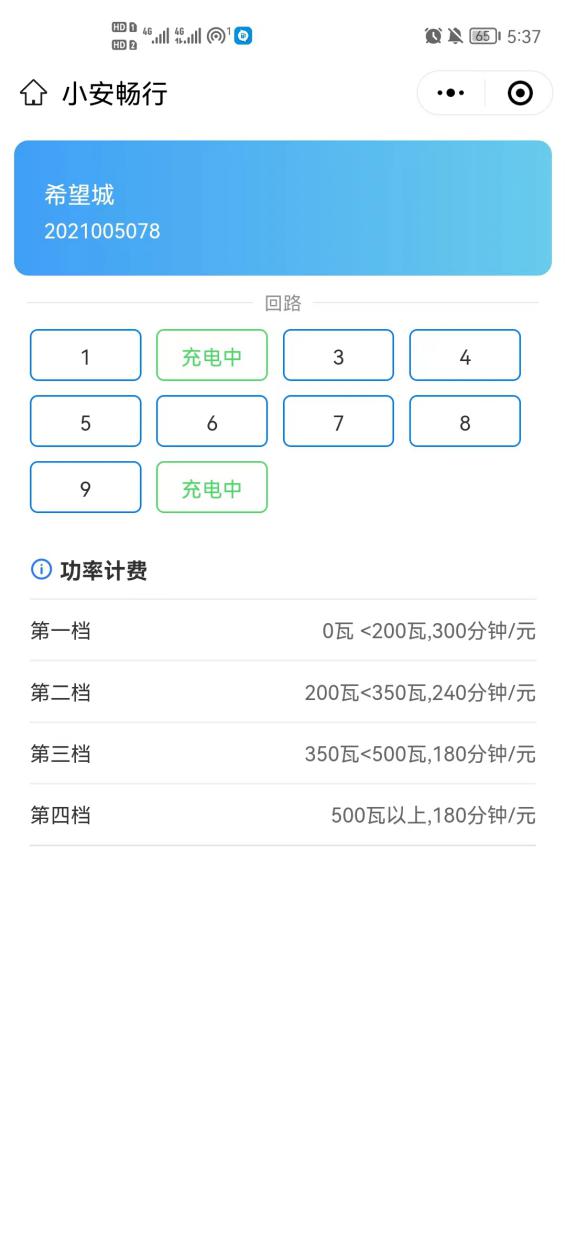
5.4.8 Charging Mini Program
Targeting charging users, it can view nearby idle devices and mainly includes functions such as scanning codes for charging, account recharge, charging card binding, transaction inquiry, and fault appeal.
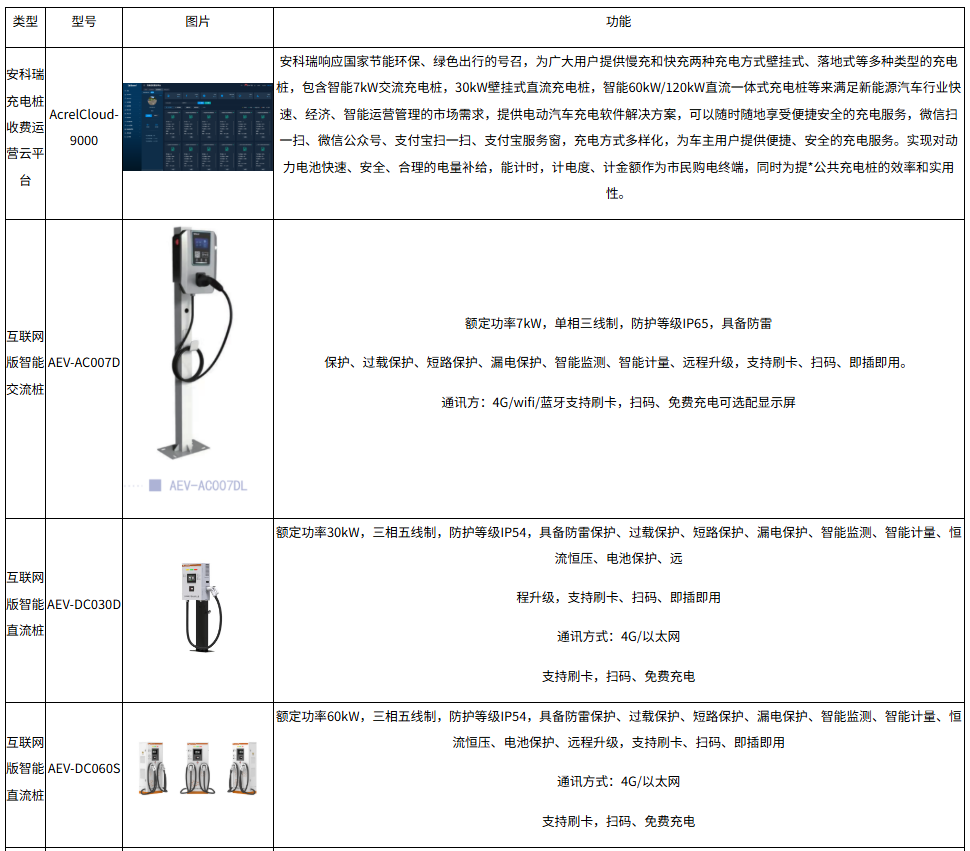
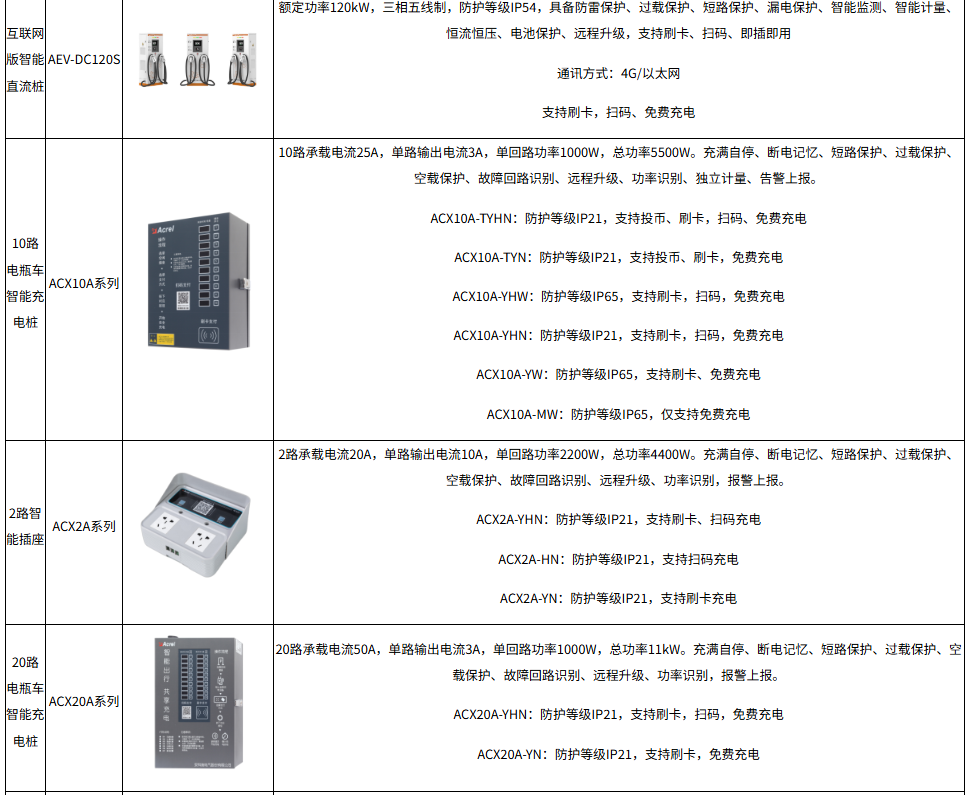
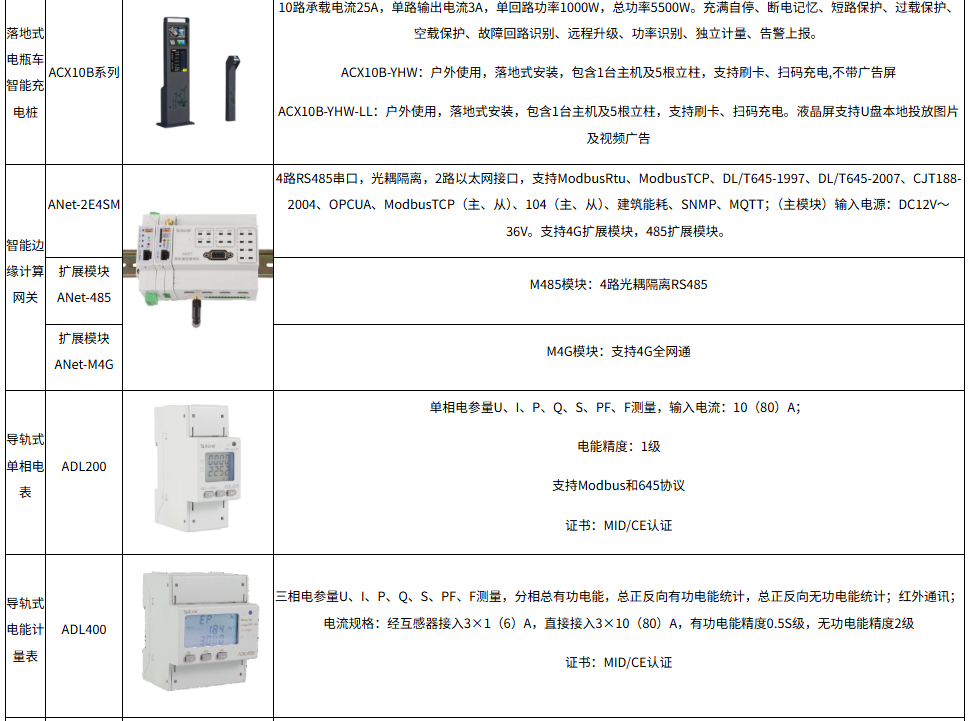
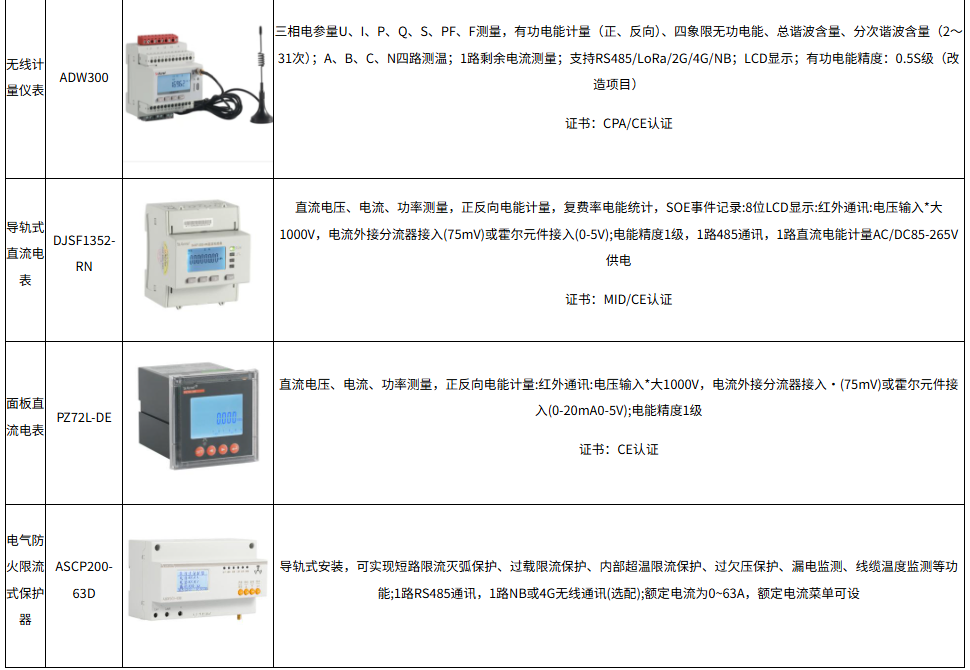
5.5 System Hardware Configuration
6 Conclusion
Starting from the current situation of operation and maintenance of new energy vehicle charging piles, this paper analyzes the advantages of applying Internet of Things technology to intelligent management systems for charging piles. Combining with the development needs of intelligent management for charging piles, a three-layer intelligent management system for charging piles based on Internet of Things technology is established, which realizes the design of an intelligent management system for charging piles with strong reliability, good real-time performance, high safety, and good economy. However, when building an intelligent management system for charging stations, there may still be situations where on-site interference factors are not considered to affect data collection. Subsequently, the entire intelligent management system for charging stations should be optimized based on individual cases in special environments, and typical real-life cases that occur on site should be collected. After analyzing the data, it should be transmitted to the data processing center to improve the database and enhance the practical applicability of the entire intelligent management system.
References:
[1] Fu Ruoqi, Xue Jingyi, Guo Yuqi, etc Development Status and Suggestions for Charging Station Facilities for New Energy Vehicles in China [J]. Times Automotive, 2024 (8): 130-132
[2] Zhang Xiaoli, He Yan Energy Data Service Platform Based on Internet of Things Technology [J]. Electrical Transmission Automation, 2023 (2): 59-63
[3] Ankerui Enterprise Microgrid Application Manual 2020.06 Edition
[4] Zhang Yang, Zhang Qingxiao Research on Intelligent Management System of New Energy Vehicle Charging Station Based on Internet of Things Technology [J]