-
E-mail
3008863989@qq.com
-
Phone
18761508201
-
Address
No. 5, ASEAN Road, Nanzha Town, Jiangyin City
Jiangsu Ankerui Electric Appliance Manufacturing Co., Ltd
Implementation path of low-carbon factories in automobile manufacturing: supporting the green and high-quality development of the industry
Date: 2025-12-11Read: 9
Ankrui Liu Qiuxia
Abstract: Automotive carbon emissions are the main source of carbon emissions in the transportation sector and one of the areas for social carbon control. Reducing carbon emissions during the production stage of automobiles is crucial for the automotive industry to reduce carbon emissions. Building low-carbon factories is a key measure to reduce carbon emissions during the production stage of automobiles. This article analyzes the key influencing factors of carbon emissions in the automotive production stage, and proposes six main measures for building low-carbon factories from four aspects: top-level design, infrastructure construction, resource and energy application, and production and operation management, providing reference for the construction of low-carbon factories in the automotive manufacturing industry.
Keywords: automobile manufacturing; Low carbon factories; Implementation path
1. Background
Since September 22, 2020, China solemnly announced at the 75th National Congress that it will strive to peak carbon dioxide emissions before 2030 and achieve carbon neutrality before 2060. Since then, China has attached great importance to carbon peak and carbon neutrality work, and has clearly required solid efforts to achieve carbon peak and carbon neutrality. It has also urgently formulated action plans for carbon peak before 2030. Among them, the industrial sector takes promoting industrial structure optimization and upgrading as an important node, carries out energy conservation and carbon reduction work, promotes low-carbon process innovation and digital transformation in the industrial sector, and enhances the low-carbon development level of the service industry.
Transportation is a key sector for fossil energy consumption and greenhouse gas emissions, and has become one of the rapidly growing areas of greenhouse gas emissions in China in recent years. Under the background of the "dual carbon" target, the transportation sector is facing severe pressure to reduce emissions. Promoting the peak and deep reduction of carbon emissions in the transportation sector is of great significance for the whole society to achieve carbon peak and carbon neutrality. Automobile carbon emissions are the main source of carbon emissions in the transportation sector and one of the areas for social carbon control. According to public data, automobile carbon emissions account for more than 80% of China's transportation sector carbon emissions and about 7.5% of the total social carbon emissions. The low-carbon development of the automobile industry has an important impact on the achievement of the "dual carbon" target in the transportation sector.
According to relevant research and standard specifications at home and abroad, automobile carbon emissions generally refer to the carbon emissions during the acquisition stage of automobile raw materials, production stage, and the use stage of automobiles owned by the whole society in the current year. The raw material acquisition stage refers to the stage of resource acquisition and material production, including the carbon emissions from resource extraction, processing, and manufacturing processes. For example, the carbon emissions from the production of steel used in automobiles should be included in the raw material acquisition stage; The production stage refers to the carbon emissions generated during the entire vehicle manufacturing process within an automobile manufacturing plant. To reduce carbon emissions, it is necessary to optimize production processes; The carbon emissions during the use stage of automobiles account for about 90% of the carbon emissions of automobiles, and the development of clean energy vehicles can effectively reduce the carbon emissions during this stage. Considering the complexity of the calculation method for automobile carbon emissions and the diversity of measures to reduce automobile carbon emissions, this article mainly discusses the carbon emissions during the production stage.
2. Factors affecting carbon emissions during the automobile production stage
The "Technical Specification for Carbon Emission Accounting of Passenger Vehicle Life Cycle" released by China National Automobile Group Corporation in 2021 explains the calculation method of carbon emissions during the production stage of automobiles. The carbon emissions during the production stage are the sum of energy or fuel consumption, carbon emissions, and CO2 emissions from welding processes. The specific calculation formula is as follows:
CProduction=Σ(Er×CEFr+Er×NCVr×CEFr’)+Mco2(1)
In the formula: CProduction - carbon emissions during the production stage of the entire vehicle, in kgCO2e (kilogram of carbon dioxide equivalent);
Er - the amount of purchased energy or fuel r, measured in kWh, m3, kg, etc;
CEFr - Carbon emission factor of energy or fuel production, measured in kgCO2e/kWh, kgCO2e/m3, or kgCO2e/kg;
CEFr '- Carbon emission factor for energy or fuel use, measured in tCO2e/GJ (tons of carbon dioxide equivalent per gigajoule)
NCVr - the average low calorific value of energy or fuel r. The units are GJ/t and GJ/104m3;
Mco2- the amount of CO2 emitted during the welding process, measured in kgCO2e (kilogram of carbon dioxide equivalent), and the calculation formula generally uses the default value.
From the above calculation formula, it can be seen that there are two key factors that affect the carbon emissions during the production stage of automobiles, namely the amount of energy or fuel used in the production process and its carbon emission factor. To reduce carbon emissions in the production process, efforts should be made to minimize the use of energy and fuel during the process, and clean energy with lower carbon emission factors should be prioritized.
Analyzing the four major processes of stamping, welding, painting, and final assembly in vehicle production, the main types of energy consumed include electricity, gas, compressed gas, steam, and water. The consumption of compressed gas and steam can be statistically analyzed through the power consumption of air compressors, electric boilers, or gas boilers. Therefore, reducing carbon emissions in the production process should start with reducing the use of electricity and gas, reducing water consumption, and increasing the proportion of green electricity.
3. Implementation path of low-carbon factories
Factories are the space and carrier for automobile manufacturing, and building low-carbon factories is a key measure to reduce carbon emissions from automobiles during the production stage. Taking into account the entire process of factory design, construction, and operation, the construction of low-carbon factories is mainly carried out from four aspects: top-level design, infrastructure construction, resource and energy application, and production and operation management.
Top level design mainly refers to the overall design concept and goal setting of reducing carbon emissions in automobile factories, which enables the construction and operation of the entire factory through low-carbon concepts; Infrastructure construction includes the construction of hardware and software facilities such as buildings, structures, and related equipment in automobile factories. Low carbon infrastructure is the specific support for achieving low-carbon factories; The application of resources and energy refers to the specific use of various resources and energy sources such as water, electricity, and gas in the production and manufacturing process, in order to achieve the goal of reducing carbon emissions by increasing the proportion of clean energy to a limited extent; Production and operation management includes the formulation of management strategies and the establishment of management systems. Low carbon factories need to use intelligent management methods to improve production efficiency and operational level. The specific implementation path is as follows:
3.1 Current carbon verification and determination of low-carbon targets
Determine the boundary for calculating carbon emissions, generate a carbon emissions verification report based on actual monitoring data (referring to the testing data of similar factories for new factories), and grasp the current carbon emissions situation of the factory. By comparing industry standards, data from similar factories, and their own emission reduction requirements, low-carbon factory targets are determined, generally based on the carbon emissions per unit product. Establish a carbon emission prediction model, determine the prediction period and scenario, and simulate and predict carbon emissions.

Figure 1 Carbon Emission Accounting Boundary during the Automotive Production Stage
3.2 Carry out the construction of green industrial buildings
According to the requirements of relevant standards and specifications such as the "Evaluation Standards for Green Industrial Buildings" GB/T50878 and the "General Principles for Evaluation of Green Factories" in China, relevant technical measures should be implemented to build green and low-carbon factories. The factory adopts BIM technology throughout the entire process of planning, design, construction, and operation, forming a comprehensive building basic data information model.
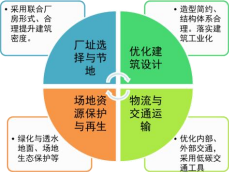
Figure 2 Planning and Design Requirements for Green Industrial Buildings
3.3 Adopting low-carbon equipment and facilities
Optimize production processes, improve the energy efficiency of production equipment, and reduce pollutant emissions during the production process. Improve the energy efficiency level of auxiliary production equipment and facilities, optimize the planning and design of the joint power station, and use energy-saving products for air conditioning equipment, power equipment, air compressors, lighting facilities, etc. Specific measures include: achieving an energy efficiency ratio of 2 or above for each public equipment, designing the enclosure structure to meet energy-saving requirements, using energy-saving lamps and conducting reasonable lighting control, designing the form, parameters, and zoning of the heating and air conditioning system reasonably and energy-saving, and recovering and utilizing the waste heat of the air conditioning system and process system. At the same time, do a good job in energy-saving operation and adjustment of relevant equipment and facilities, ensuring that the equipment is in good condition to achieve the predetermined energy efficiency ratio.
3.4 Use green and low-carbon energy to ensure the environmental requirements within the factory
Most automobile factories operate continuously throughout the year. According to a survey of a northern automobile production enterprise, the factory operates for more than 250 days per year, running continuously for 24 hours a day. The heating system operates for about 110 days and the air conditioning system operates for about 80 days, resulting in carbon emissions caused by energy consumption to maintain the hot, humid, and light environment inside the factory. Therefore, it is necessary to increase the proportion of clean and renewable energy applications, introduce green electricity, and systematically optimize the energy structure of factories. Prioritize the use of roof resources in the factory building and install renewable energy facilities such as solar photovoltaics and solar hot water. Increase the application proportion of non-traditional water sources and recycled water, and minimize the use of tap water. The use of heat recovery systems at the end of air conditioning can effectively utilize waste heat and this "green energy" can effectively reduce the energy consumption of air conditioning heating and carbon emissions.
3.5 Optimizing Production Process
Optimizing production processes to provide conditions for the application of low-carbon production materials, while reducing the consumption of various materials in the production process and improving the recycling rate of various production wastes, is an important measure to reduce the carbon emissions of automobile factories. According to research, the production process and usage of aluminum in the raw material manufacturing process have a significant impact on global warming potential. Increasing the proportion of secondary aluminum application and reducing the cut-off rate of metal sheets through process optimization can significantly reduce carbon emissions levels.
3.6 Building a Smart Low Carbon Operation Management Platform
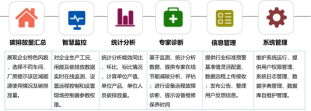
For project electricity consumption, such as air conditioning system, lighting system, process, ventilation and dust removal, and other electricity consumption; The non electric energy of the project includes sub metering of production and domestic water supply, reclaimed water, heating hot water, cold water, compressed air inlet, etc., and the metering data will be included in a unified low-carbon management system. The equipment and facilities adopt measures such as frequency conversion and group control to control the number of devices or their frequency based on load changes, achieving intelligent operation and reducing equipment energy consumption. Carry out low-carbon and energy-saving diagnosis and intelligent regulation to ensure the operational status of low-carbon factories.
3.7 Purchase green electricity or engage in carbon trading
According to statistical data during the 13th Five Year Plan period, 90% of carbon emissions in the automobile production process come from emissions caused by electricity. The carbon emissions that cannot be reduced through the above measures can be further offset by purchasing green electricity or conducting carbon trading to meet the demand for clean energy production and achieve a high degree of economic, social, and environmental benefits.
4. Acrel EIOT Energy IoT Cloud Platform
4.1 Overview
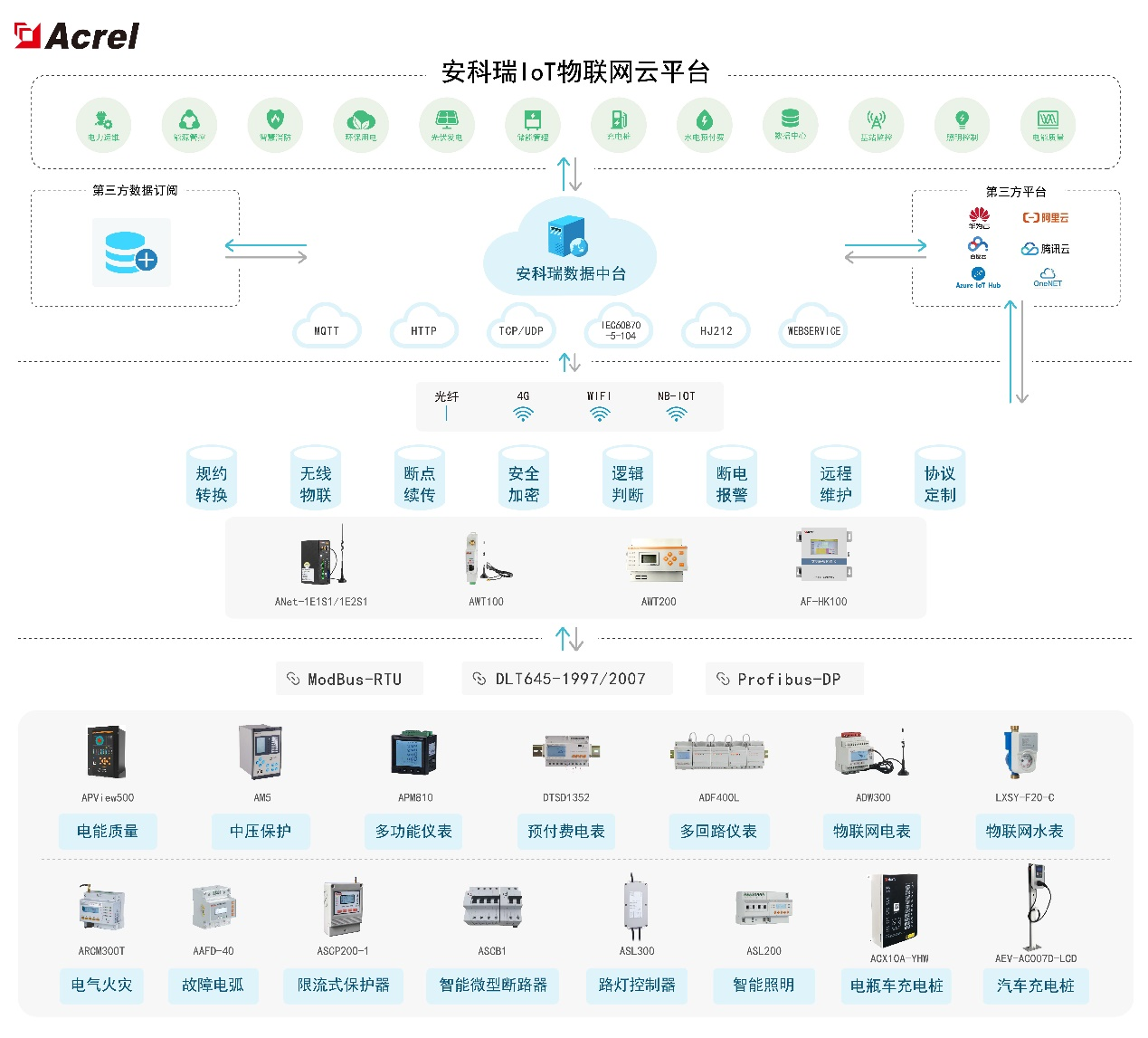
Acrel EIoT Energy IoT Open Platform is a set of platform based on the IoT data middle platform to establish a unified uplink and downlink data standard and provide Internet users with energy IoT data services. Users only need to purchase Ankerui IoT sensors, select gateways, install them themselves, and scan the code to obtain the required industry data services using their mobile phones and computers.
This platform provides functions such as data cockpit, electrical safety monitoring, power quality analysis, electricity management, prepaid management, charging pile management, intelligent lighting management, abnormal event alarm and recording, operation and maintenance management, and supports multi platform, multi language, and multi terminal data access.
4.2 Application Sites
This platform is suitable for apartment tenants, chain supermarkets, small factories, building management system integrators, small property management, smart cities, substations, buildings, communication base stations, industrial energy consumption, smart lighthouses, power operation and maintenance, and other fields.
4.3 Platform Structure
4.4 Platform Functions
(1) Electricity collection and copying
The power collection module can realize the query, analysis, warning, and comprehensive display of various monitoring data to ensure the environmental friendliness of the distribution room. Realize telemetry, remote signaling, and remote control of the power supply and distribution monitoring system in terms of intelligence, and conduct comprehensive testing and unified management of the system; In terms of data resource management, it is possible to display or query the operation of various equipment in the power supply and distribution room (including historical and real-time parameters), and to query or print daily, monthly, and annual reports according to the actual situation, improving work efficiency and saving human resources.

Transformer monitoring distribution diagram
(2) Energy consumption analysis
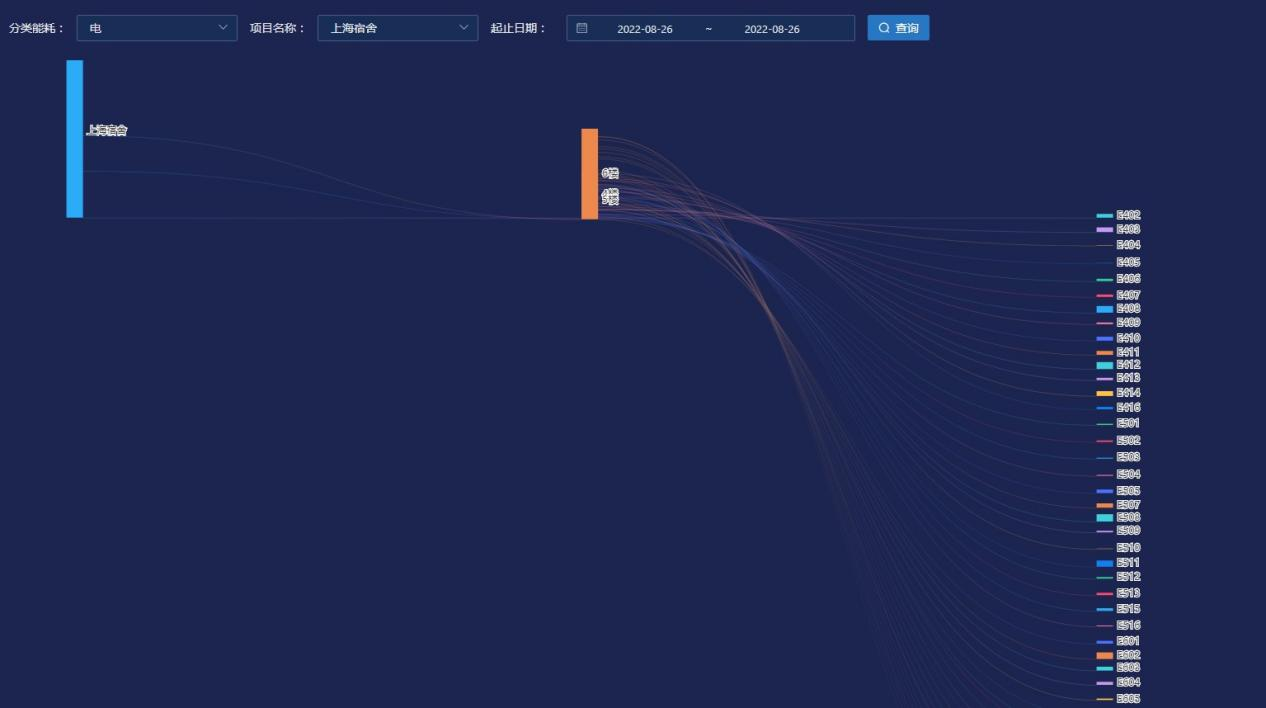
The energy consumption analysis module adopts automation and information technology to achieve automated and scientific management of the entire process from energy data collection, process monitoring, energy medium consumption analysis, energy consumption management, etc., organically combining energy management, energy production, and use. By using * data processing and analysis technology, offline production analysis and management are carried out to achieve unified scheduling of the entire plant's energy system, optimize energy medium balance, effectively utilize energy, improve energy quality, reduce energy consumption, and achieve the goal of energy conservation, consumption reduction, and overall energy management level improvement.
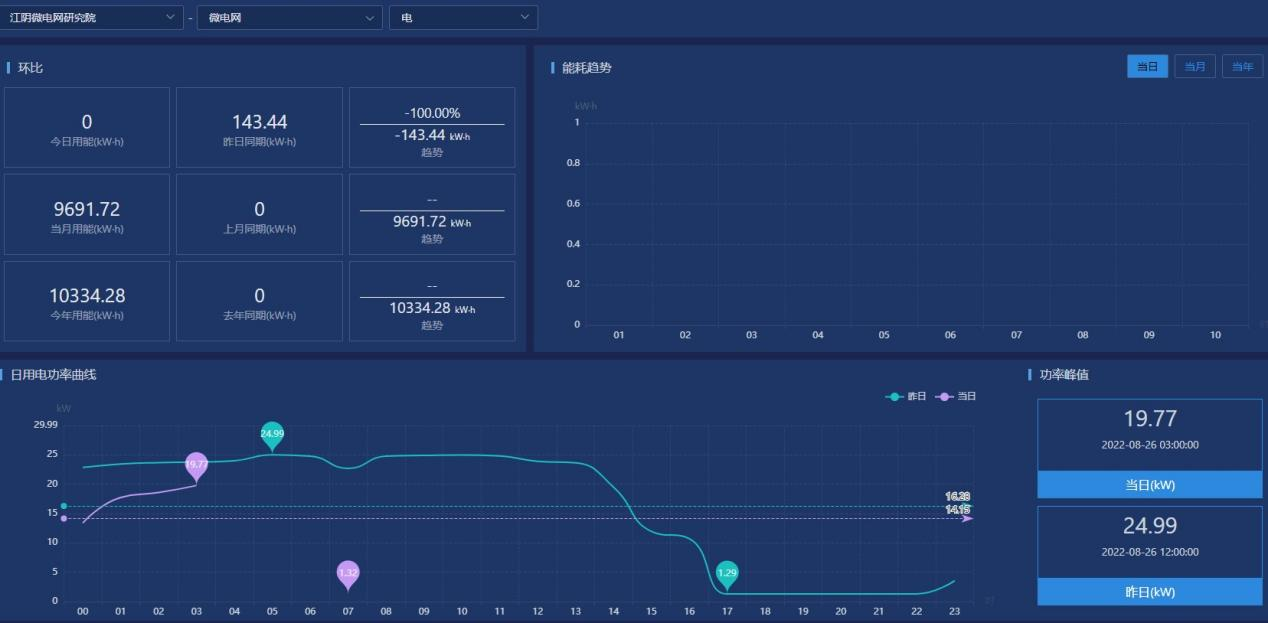
Energy Consumption Overview
(3) Prepaid management
Login management: manage operator accounts and permission assignments, view system logs and other functions;
System configuration: Configure buildings, communication management machines, instruments, and default parameters;
User management: perform account opening, account closing, remote opening and closing, batch operations, and record queries for shop users;
Electricity sales management: perform remote electricity sales, refunds, corrections, and record queries on tables that have already been opened;
Water sales management: perform remote water sales, refunds, record queries, and other operations on tables that have already been opened;
Report: Provides financial reports for electricity and water sales, energy consumption reports, alarm reports, and other queries. All reports and record queries in this system support exporting in Excel format.
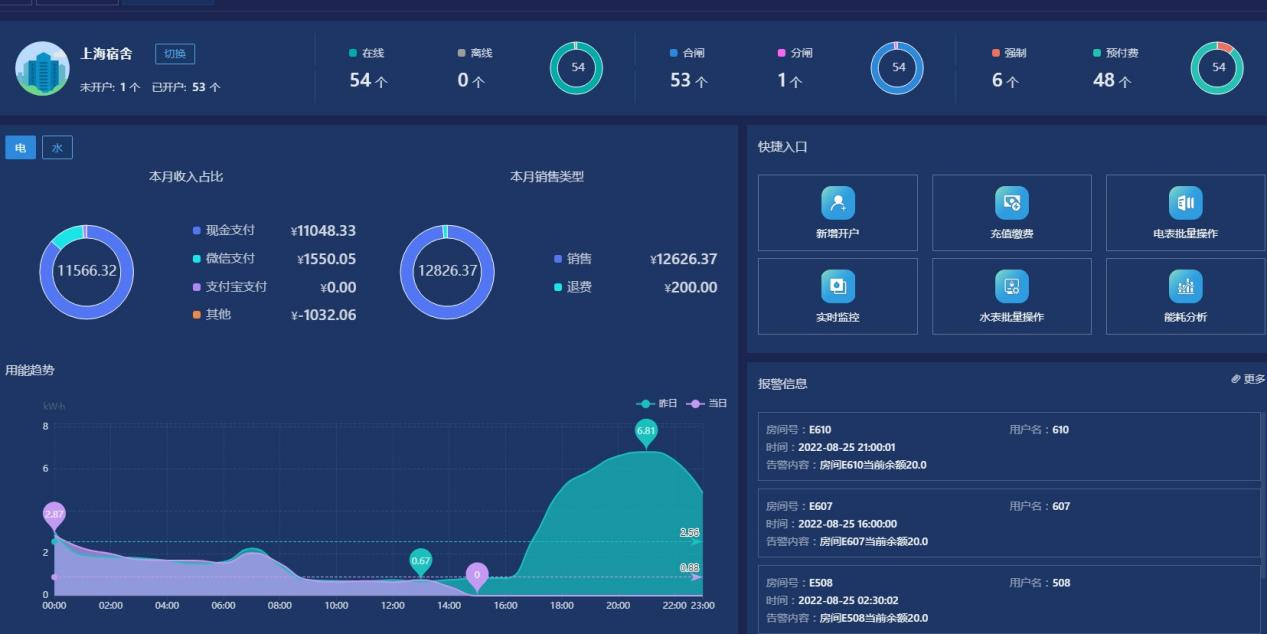
Prepaid Dashboard
(4) Charging pile management
Through IoT technology, uninterrupted data collection and monitoring are carried out on the charging station sites and various charging stations connected to the system, while warning various faults such as over temperature protection of the charging machine, input and output overvoltage and undervoltage of the charging machine, insulation detection faults, and a series of other faults. The cloud platform includes all the functions of charging and charging station operation, including city level large screens, transaction management, financial management, transformer monitoring, operation analysis, basic data management, and more.
(5) Intelligent lighting
Intelligent lighting uses Internet of Things technology to continuously monitor the electrical status of indoor lighting, city street lights, and other lighting circuits installed in various areas of the city. It can also achieve timed switch strategy configuration, remote management in the background, and mobile management, reducing the difficulty and cost of maintaining street light facilities, improving management level, and achieving certain energy-saving and reduced hanging effects.
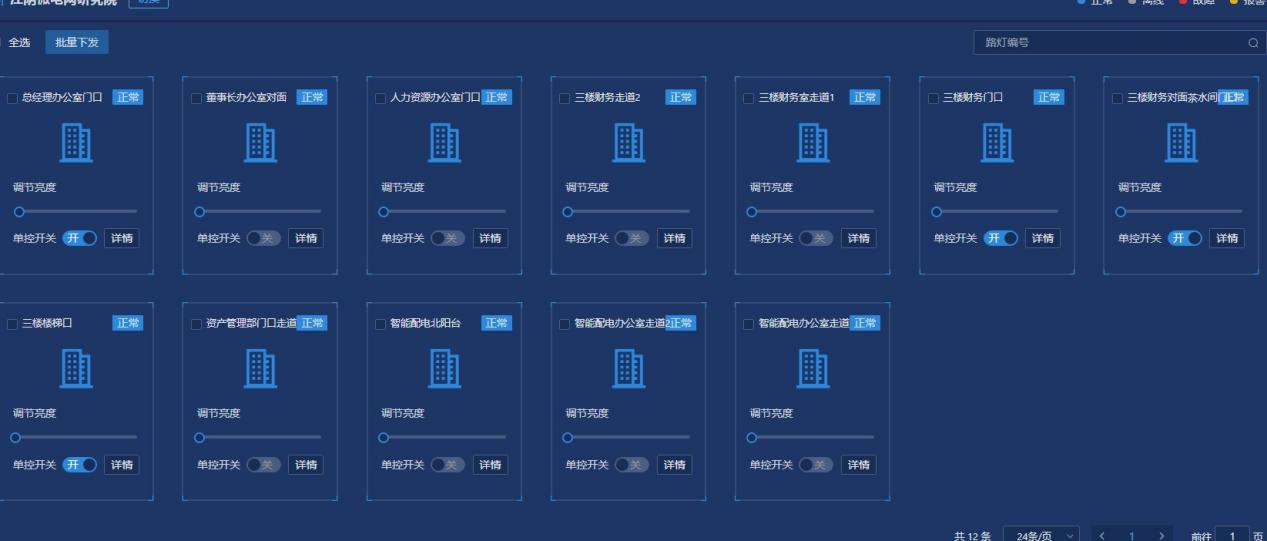
monitoring page
(6) Safe use of electricity
The safe use of electricity adopts independently developed residual current transformers, temperature sensors, and electrical fire detectors to continuously track and statistically analyze the main factors that cause electrical fires (wire temperature, current, and residual current), and timely push various hidden danger information discovered to enterprise management personnel to guide the enterprise to carry out time investigation and treatment, achieving the goal of eliminating potential electrical fire safety hazards and preventing them in advance.
Smart firefighting utilizes cloud platforms for data analysis, mining, and trend analysis, helping to achieve goals such as scientific fire warning, grid management, and implementing multiple responsibility supervision. Previously, there was a gap in the effective monitoring of "nine small sites" and hazardous chemical production enterprises. This has been adapted to all public and civil buildings, achieving unmanned and intelligent fire protection, meeting the practical needs of "automation", "intelligence", "systematization" of smart fire protection, and "refinement" of electricity management.
5. Outlook
With the continuous progress of China's "dual carbon" target implementation, the carbon reduction requirements of the automotive industry will continue to increase, and the construction of low-carbon factories in the automotive manufacturing industry will become an inevitable requirement. In addition to the above key measures, the construction of low-carbon factories should also pay attention to the following:
(1) Combining with digital factories, establish a comprehensive carbon emission prediction model for automobile manufacturing factories, control key carbon emission links through model prediction, and explore greater carbon reduction potential.
(2) Strengthen the systematic construction of low-carbon factories, further optimize the energy structure and configuration, improve the utilization efficiency of the energy system, and promote the development of low-carbon factories towards near zero carbon and zero carbon factories.
(3) Emphasize green operation and maintenance, establish a comprehensive green operation and maintenance mechanism for automobile manufacturing factories, and promote standardized and low-carbon factory operations.
(4) Utilize more low-carbon market tools such as green finance to broaden the channels for factory carbon reduction.
References
[1] Wei Huijiao, Han Zhao Discussion on the Implementation Path of Low Carbon Factories in Automotive Manufacturing Enterprises [J]. China Science and Technology Journal Database, 2023, 4 (9): 6
[2] Zhou Xinjun, Man Chaohan Full life cycle carbon emission accounting method and its application [J]. Railway Energy Conservation, Environmental Protection, Safety and Health, 2019, 9 (4): 5
[3] Zhou Yalan, Gong Bengang, Zhang Xiaoqi Calculation and Analysis of Carbon Emissions from Energy Consumption in the Automotive Production Process [J]. Journal of Chaohu University, 2014 (3): 92-97
[4] China Academy of Building Research GB/T50878-2013 Green Industrial Building Evaluation Standard [M]. Beijing: China Architecture&Building Press, 2014
[5] Ankerui Enterprise Microgrid Design and Application Manual 2022.5 Edition