-
E-mail
info@gti-test.com
-
Phone
17640053769
-
Address
Room 7 # 2212, COFCO Plaza, No. 56-39 Huanghe North Street, Huanggu District, Shenyang City
Jitai Precision Instrument (Shenyang) Co., Ltd
Common problems with leak detection of high-efficiency filters in clean areas of pharmaceutical production
Date: 2025-10-27Read: 10
For pharmaceutical companies, their cleanroom environment control needs to be strictly carried out in accordance with relevant regulations and guidelines, especially for high-efficiency filters used in clean areas, laminar flow hoods, and high-efficiency filters in ultra clean workbenches, which require regular leak detection according to regulatory requirements. According to the high-efficiency filter grade standard, the leakage rate of high-efficiency filters in clean areas, laminar flow hoods, and ultra clean workbenches should be less than 0.01%. According to relevant regulations and standards, high-efficiency filters for air conditioning systems in Class A and B clean areas need to be checked for leaks every six months, while those in Class C and D clean areas need to be checked for leaks every year.
Efficient filter leak detection method and principle
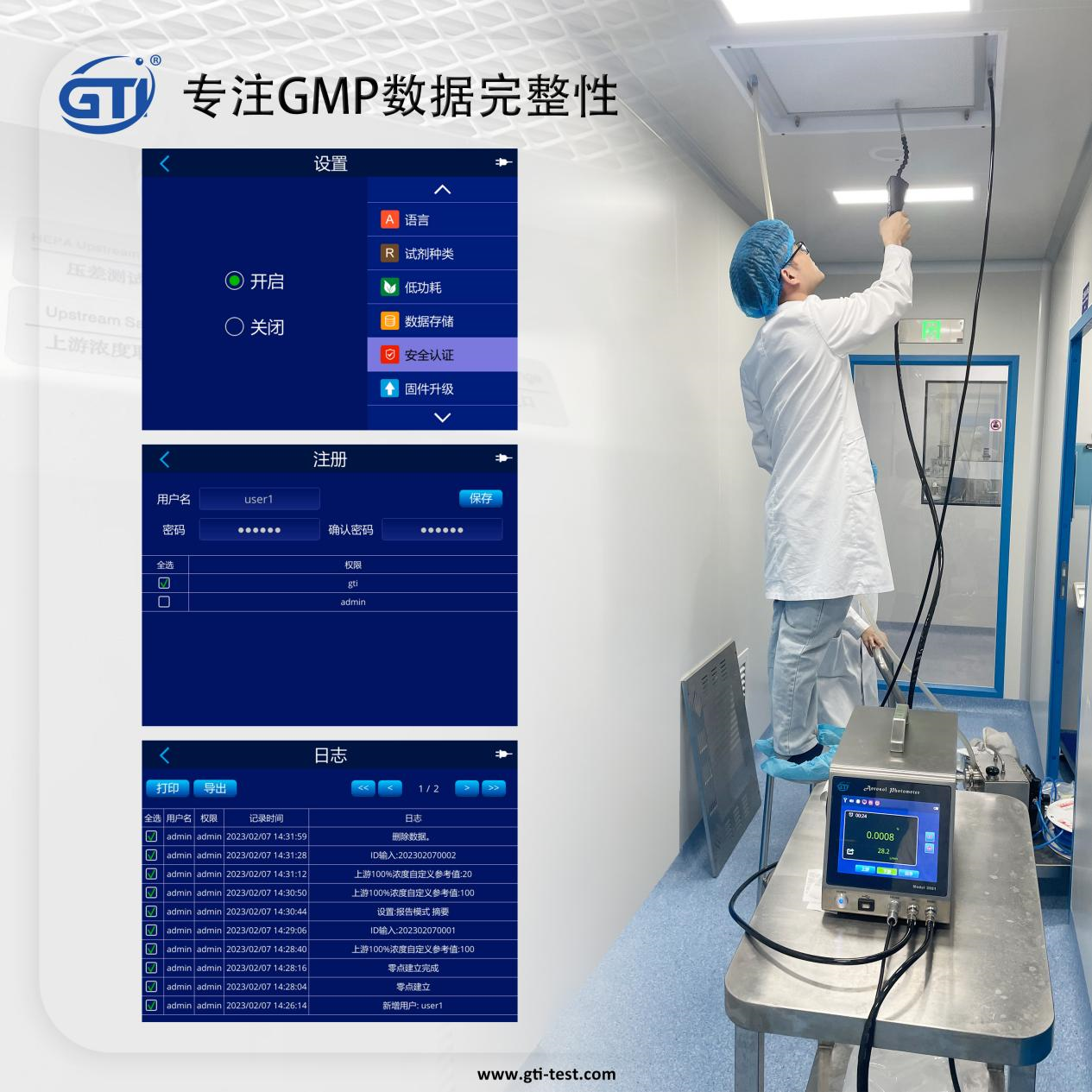
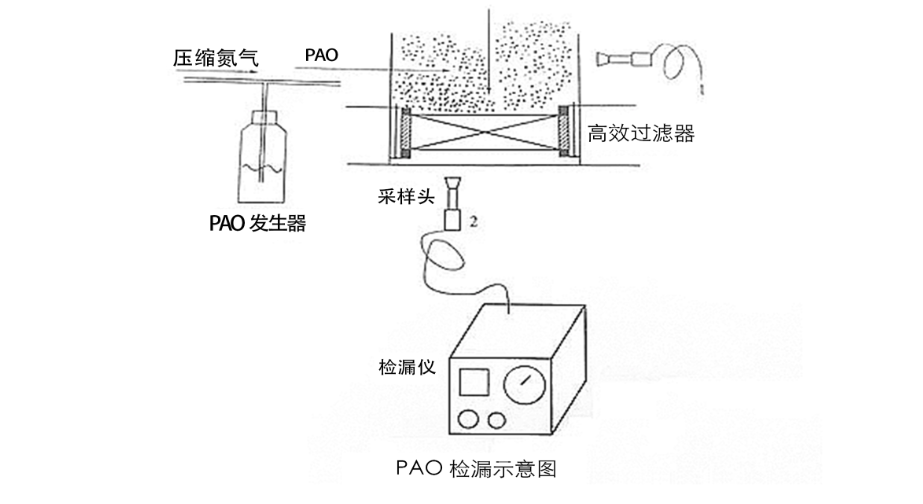
The leak detection method is required in the updated GMP Aseptic Appendix or the previous ISO14464-3 standard to use aerosol photometer scanning method for leak detection of high-efficiency filters in clean areas. The main principle is to use PAO aerosol as a dust source on the upwind side of the tested high-efficiency filter, and use aerosol photometer sampling on the downwind side. The dust containing gas generates scattered light through an aerosol photometer, which is converted into an electrical signal through photoelectric effect and linear amplification, and displayed in real-time by a microampere meter. After the sample air passes through the diffusion chamber, the difference in light intensity is measured to obtain the relative concentration, thereby calculating the penetration rate of the high-efficiency filter. The relationship between penetration rate (K) and filtration efficiency (α) is:
K = (1 - a) × 100%
When conducting upstream concentration testing, it is necessary to adjust the smoke emission to achieve an upstream concentration of 10-80 μ g/L. Then, set the upstream concentration to 100%, and use a scanning probe to conduct a comprehensive scan of the filter element, frame, and the connection between the filter and the static pressure box. The scan should cover the entire area, with adjacent paths overlapping by about 1 centimeter. The probe should be about 1 centimeter away from the filter, and the scanning speed should not exceed 5 cm/s.
Selection and common problems of aerosol generator
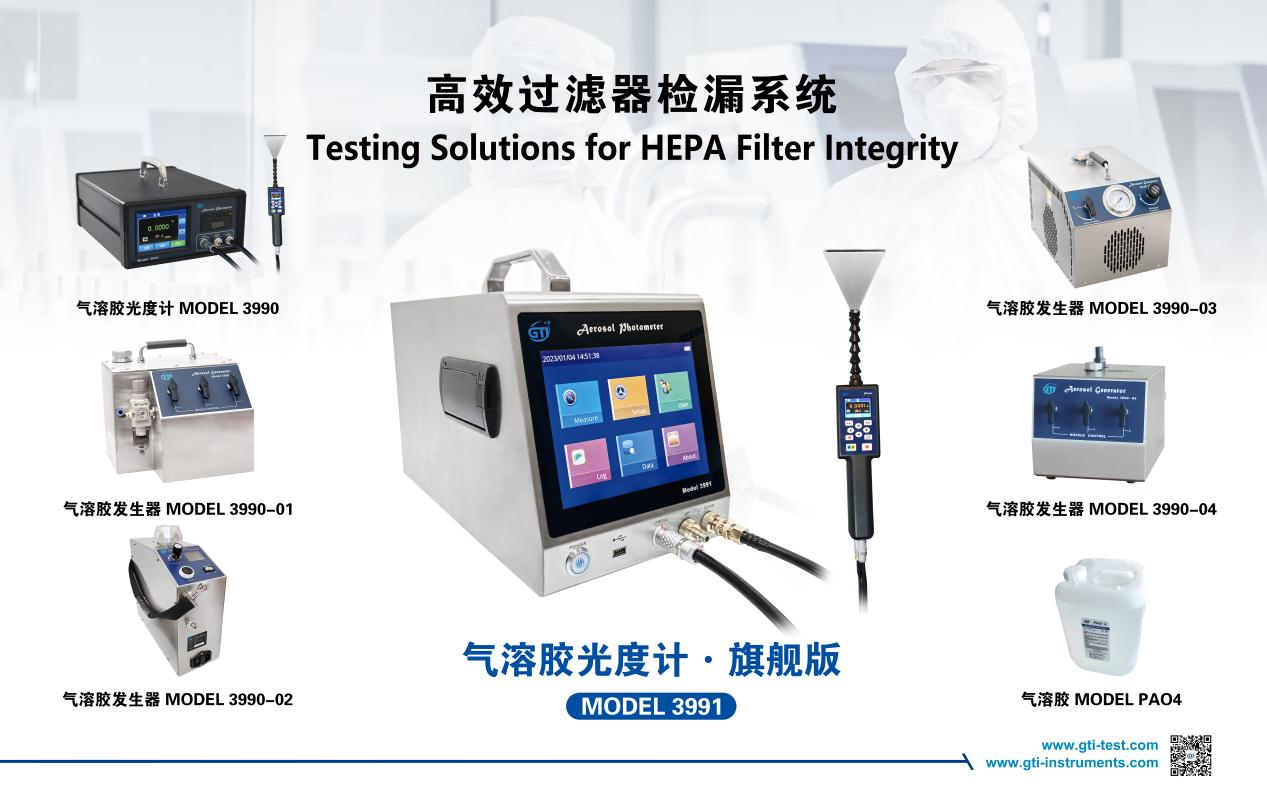
Different types of aerosol generators are used for leak detection of high-efficiency filters in different regions. Currently, two common methods are cold smoke and hot smoke. Cold smoke is commonly used for leak detection of high-efficiency filters in small areas, one by one; Hot smoke is commonly used for leak detection in air conditioning systems. For different smoke detection methods, some common problems and solutions during the leak detection process are as follows:
01 Common problems and solutions for cold smoke leak detection
Cold smoke is commonly used in equipment such as laminar flow hoods, ultra clean workbenches, transfer windows, tunnel ovens, and negative pressure weighing rooms.
Operation steps: load PAO oil into the cold smoke generation equipment, connect the smoke generation pipe and the smoke outlet of the leak detection equipment, connect the compressed air, adjust the pressure and smoke generation volume, and after the upstream concentration reaches the standard, scan the high-efficiency air outlet surface and frame with a photometer to detect whether the leakage rate exceeds the standard.
Common problems and solutions:
Upstream concentration is difficult to reach above 10 μ g/L
Reason: The smoke tube and sampling tube are misaligned, and the high wind speed causes the smoke to be quickly filtered and not fully diffused.
handle
Increase the compressed air pressure or adjust the smoke level;
Reduce the frequency of the equipment fan appropriately to promote the diffusion of smoke inside the static pressure box.
Excessive testing time causes PAO oil to clog the high-efficiency filter
Reason: Continuous smoking causes a large amount of PAO oil to be trapped by the high-efficiency filter.
handle
Optimize upstream concentration debugging and shorten preparation time;
Train operators to improve their proficiency, and if necessary, implement a "mentorship" approach.
02 Common problems and solutions for hot smoke leak detection
Hot smoke is mainly used in clean area air conditioning systems.
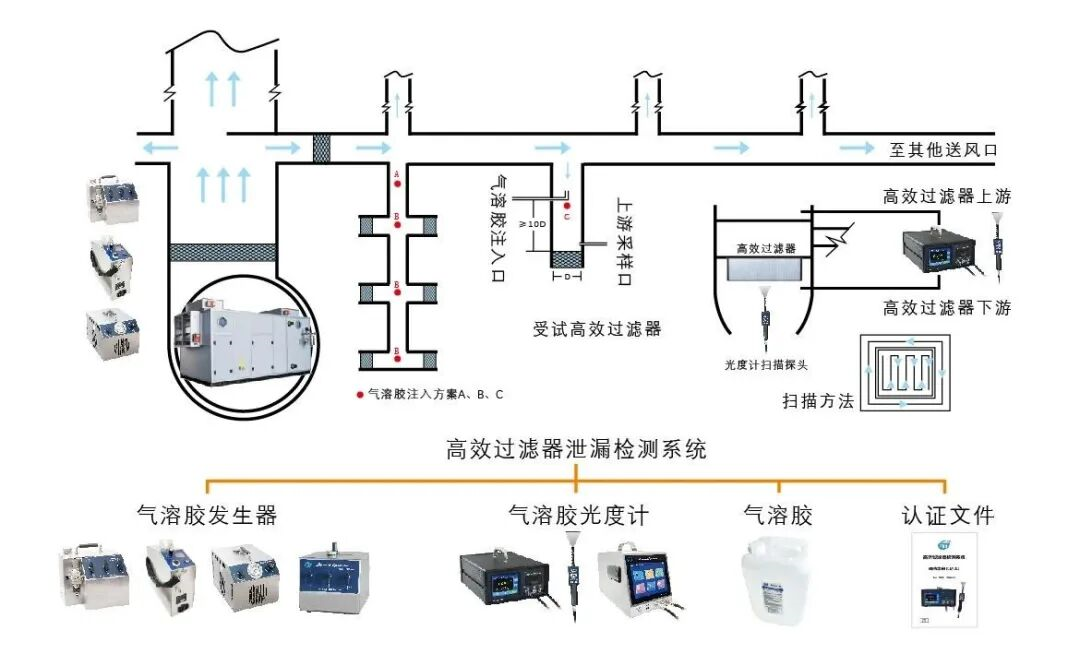
Operation steps: Add PAO oil to the hot smoking equipment, heat it to about 400 ℃, and then introduce nitrogen gas. Place the equipment in the air conditioning unit and adjust the nitrogen pressure and smoke volume. After detecting that the upstream concentration meets the requirements, scan the high-efficiency air outlet surface and frame.
Common problems and solutions:
Frequent leakage alarms of high-efficiency filter frame
Reason: Environmental particle interference or loose border fixation.
handle
Check and tighten the frame bolts;
Use a thin film curtain to isolate environmental interference and retest.
High smoke output but low upstream concentration
Reason:
If the equipment is in the positive pressure section, smoke may leak from the maintenance door or be trapped by the medium efficiency filter;
If in the negative pressure section, it may be intercepted by the intermediate efficiency filter.
handle
When the positive pressure section emits smoke, try to close the maintenance door as much as possible and place the equipment away from the door;
The smoke generation in the negative pressure section needs to consider the interception effect of the intermediate efficiency filter.
Continuous low upstream concentration
handle
Check if the smoking equipment is functioning properly, observe if there are any oil droplets spraying out, and repair the equipment if necessary;
Calculate the smoke output per unit time of the smoking equipment and the air supply volume of the air conditioner, and verify the theoretical concentration;
According to GB50591-2010, the leak detection air volume can be adjusted to 80% -120% of the design air volume. It is recommended to use a lower air volume for testing within the allowable range.
3、 Scanning problems and quality control of aerosol photometer
Scanning requirements: The probe should cover the entire area of the filter element, frame, and interface, with a scanning line overlap of about 1 centimeter and a distance of 1 centimeter from the filter surface. The speed should not exceed 5 cm/s.
common problem:
Differences in personnel operations result in inconsistent scanning times, affecting the reliability of leak detection.
Quality control measures:
Use a stopwatch to time, assist personnel in real-time reminders, and control scanning speed;
Calculate the minimum theoretical scanning time for high-efficiency filters of different specifications as a reference for operation.
4、 Leakage statistics and daily maintenance suggestions
According to actual leak detection data, high-efficiency filter leaks are mostly distributed at the connection between the frame and the installation framework. Suggestions are as follows:
Regularly maintain high-efficiency filters, check and tighten bolts;
Reserve spare parts of commonly used high-efficiency filter models for timely replacement;
Reasonably set the replacement cycle of junior high efficiency filters to extend the service life of high-efficiency filters.
Efficient filter leak detection is a key link in the maintenance of clean areas in pharmaceutical companies, and specific issues need to be flexibly addressed based on the actual system. The above experience is for reference only, and we hope it can be helpful to you. If you have a need for high-efficiency filter leak detection equipment, or any questions related to leak detection verification, you can consult with Beijing Zhongbang Xingye engineers at any time to provide you with professional one-on-one answers.