-
E-mail
info@gti-test.com
-
Phone
17640053769
-
Address
Room 7 # 2212, COFCO Plaza, No. 56-39 Huanghe North Street, Huanggu District, Shenyang City
Jitai Precision Instrument (Shenyang) Co., Ltd
Duct air leakage tester: simplifies the operation process and improves the accuracy of leak detection data
Date: 2025-10-24Read: 11
In ventilation and air conditioning systems, the sealing of ducts is one of the key factors to ensure efficient operation of the system. Air duct leakage not only leads to energy waste, but also reduces the ventilation efficiency of the system, affects indoor air quality, and may even cause safety hazards. Therefore, detecting air leakage in ducts is an essential step in the installation, commissioning, and maintenance of ventilation systems. As a professional detection equipment, the air duct leakage tester provides an efficient and reliable solution for the sealing detection of air ducts by simplifying the operation process and improving data accuracy.
Traditional methods for detecting air leaks in ducts often rely on manual inspection and simple pressure testing. This method is not only inefficient, but also susceptible to human factors, resulting in inaccurate detection results. In contrast, the air duct leakage tester adopts advanced technological means and can quickly and accurately detect the air duct leakage. It calculates the amount of air leakage by applying a certain pressure inside the air duct and using high-precision sensors to measure changes in pressure. This detection method can not only quantitatively evaluate the sealing of air ducts, but also quickly locate air leakage points, providing a basis for maintenance and improvement.
The air duct leakage meter performs well in simplifying the operation process. Modern testers are typically equipped with user-friendly interfaces and automated testing programs. The operator only needs to connect the tester to the air duct system and follow the prompts of the equipment to make simple settings, and the instrument will automatically complete the detection of air leakage. This automated operation not only reduces manual intervention and lowers operational difficulty, but also greatly shortens detection time and improves work efficiency. For example, in the installation process of ventilation systems in large buildings, traditional air leakage detection may take several hours or even days. However, using an air duct leakage meter can complete the entire system detection in a short period of time, significantly accelerating the project progress.
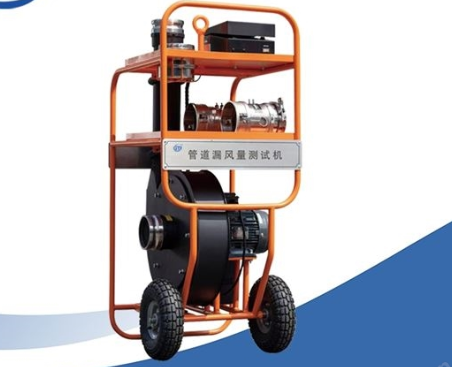
Meanwhile, the air duct leakage meter has also played an important role in improving the accuracy of detection data. Traditional air leakage detection methods are often difficult to obtain accurate data due to environmental factors, human operational errors, and other factors. The air duct leakage meter adopts high-precision sensors and advanced data processing algorithms, which can effectively reduce measurement errors and provide reliable detection results. For example, the tester can eliminate accidental errors and ensure accurate measurement values of air leakage through multiple measurements and data averaging processing. In addition, the tester can also record detection data in real time, generate detailed detection reports, and provide strong support for subsequent analysis and decision-making.
In practical applications, the air duct leakage meter has brought significant benefits to the construction and maintenance of ventilation systems. During the construction phase, the use of testing equipment can promptly detect sealing issues that may arise during the installation of air ducts, such as inadequate sealing at flange connections or damage to duct materials. This enables repairs to be made before the system is put into use, avoiding energy waste and system efficiency decline caused by air leakage in the later stages. During the operation and maintenance phase of the system, regularly using an air duct leakage meter for detection can promptly identify and repair air leakage points, extend the service life of the air duct system, and reduce operating costs.
The use of the air duct leakage tester also meets the requirements of modern energy conservation and environmental protection. By accurately detecting the amount of air leakage in the duct, it is possible to promptly detect and repair the air leakage points, reducing energy waste caused by air leakage. In large commercial buildings, industrial plants, and data centers, the energy consumption of ventilation systems is relatively high. By optimizing the sealing of air ducts, the energy consumption of fans can be significantly reduced, carbon emissions can be reduced, and the goal of energy conservation and emission reduction can be achieved.
In addition, the maintenance and usage costs of the air duct leakage meter are relatively low. Modern testers usually have high reliability and stability, and can work normally in harsh environments. The operation of the equipment is simple, and operators who have undergone simple training can proficiently use it. At the same time, the maintenance requirements for the tester are not high, and only regular simple cleaning and calibration are needed to ensure the long-term stable operation of the equipment.
With the continuous advancement of technology, the air duct leakage meter is also constantly developing and upgrading. In the future, testers may integrate more intelligent functions such as wireless data transmission, remote monitoring, and automatic diagnosis, further improving the efficiency and convenience of testing. At the same time, with the continuous improvement of sealing requirements for ventilation systems, air duct leakage meters will be applied in more fields, providing strong support for the efficient operation, energy conservation and environmental protection of ventilation systems.
In short, the air duct leakage tester provides an efficient and reliable solution for the sealing detection of air ducts by simplifying the operation process and improving the accuracy of detection data. It can not only quickly detect air duct leakage problems, but also provide scientific basis for system maintenance and optimization. In the construction and operation of modern ventilation systems, the application of air duct leakage meters will help improve the operational efficiency of the system, reduce energy consumption, ensure indoor air quality, and provide important guarantees for the sustainable development of buildings.