-
E-mail
info@gti-test.com
-
Phone
17640053769
-
Address
Room 7 # 2212, COFCO Plaza, No. 56-39 Huanghe North Street, Huanggu District, Shenyang City
Jitai Precision Instrument (Shenyang) Co., Ltd
Dry sharing | Five key steps in the leak detection process of HEPA high-efficiency filters
Date: 2025-12-08Read: 6
1、 Standard process for leak detection of high-efficiency filters
Efficient filter leak detection is a systematic task that requires strict adherence to standard procedures to ensure the accuracy and reliability of the test results.
1.1 Aerosol Introduction Stage
Introducing PAO aerosol on the upstream side of the HEPA to be tested is the primary step in the entire leak detection process. The aerosol introduction method varies depending on the application scenario:
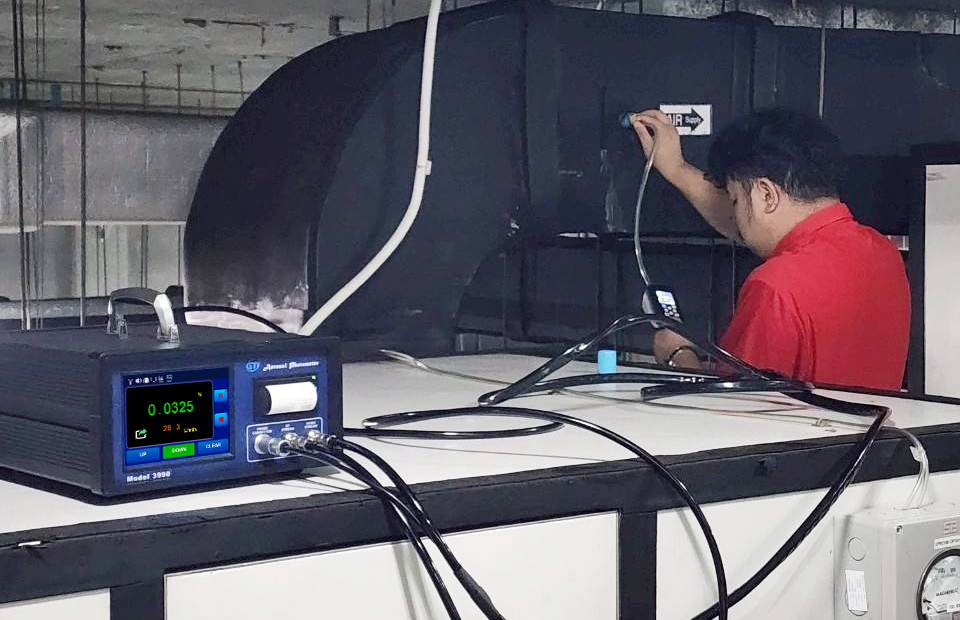
HEPA in HVAC systems: In order to achieve uniform concentration of aerosols when they reach HEPA, aerosols are usually introduced directly from the negative pressure side of the system fan. If it is necessary to introduce from the air duct, an introduction point should be set at least 10 times the diameter of the air duct from the HEPA, and pipe bends should be minimized as much as possible (according to the recommendations of the American Society for Environmental Science and Technology). In practical operation, it is only necessary to maintain the upstream aerosol concentration stable within the required range.
Laminar flow hood and HEPA on ultra clean bench: The leak detection of such equipment is relatively simple, and aerosols can be directly introduced from the negative pressure side of the system fan, without considering the concentration unevenness caused by long-distance transportation.
1.2 Preparation of testing equipment
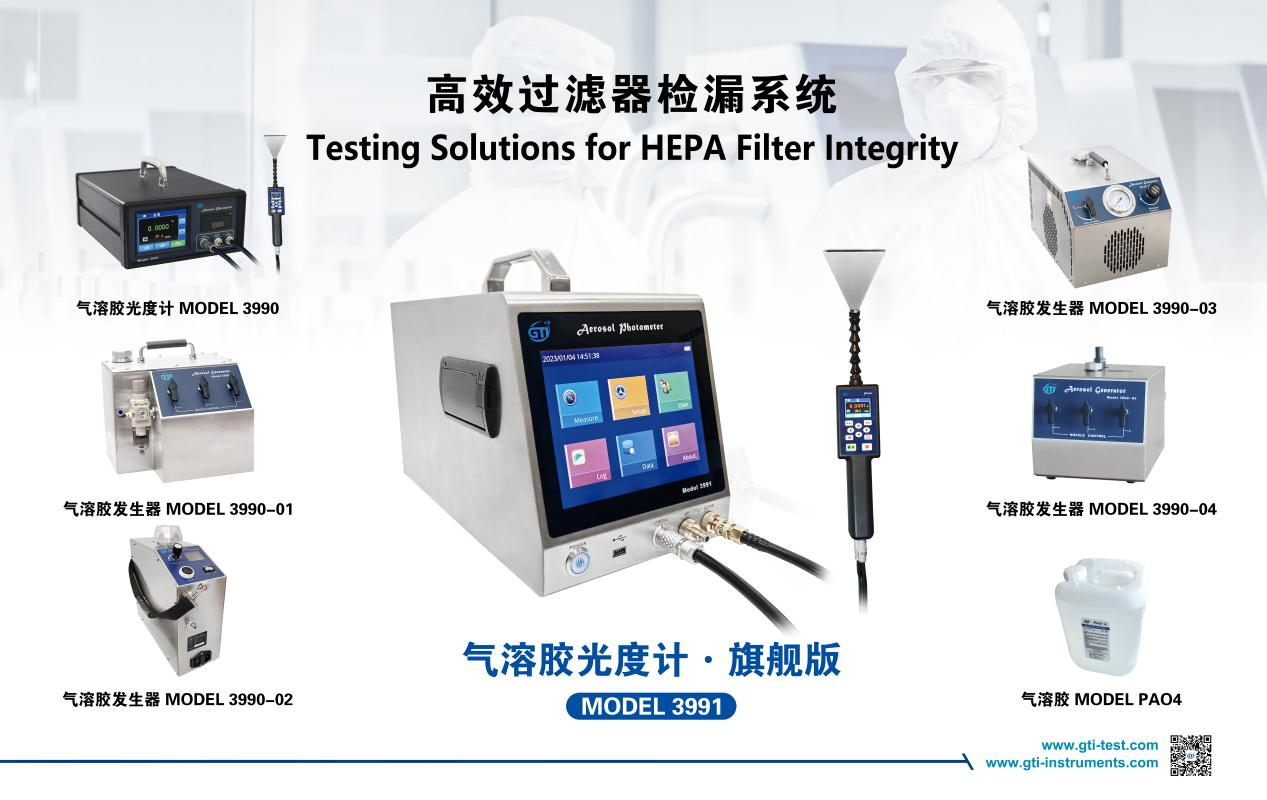
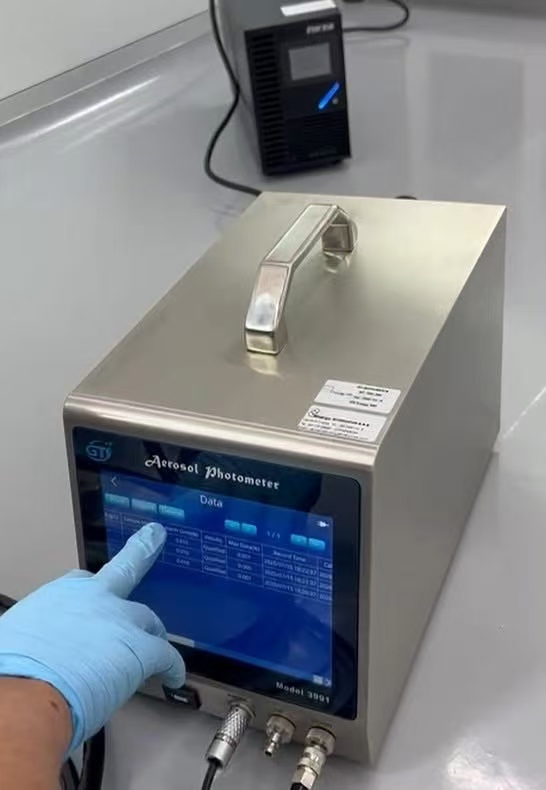
The initialization and calibration of aerosol photometer are key steps to ensure detection accuracy:
Follow the equipment operation manual to initialize the program
Configure alarm threshold (usually set to 0.01% leakage rate)
Connect the UPR sampling tube to the upstream sampling port
Measure and adjust the upstream aerosol concentration to the ideal range of 10-20 μ g/mL
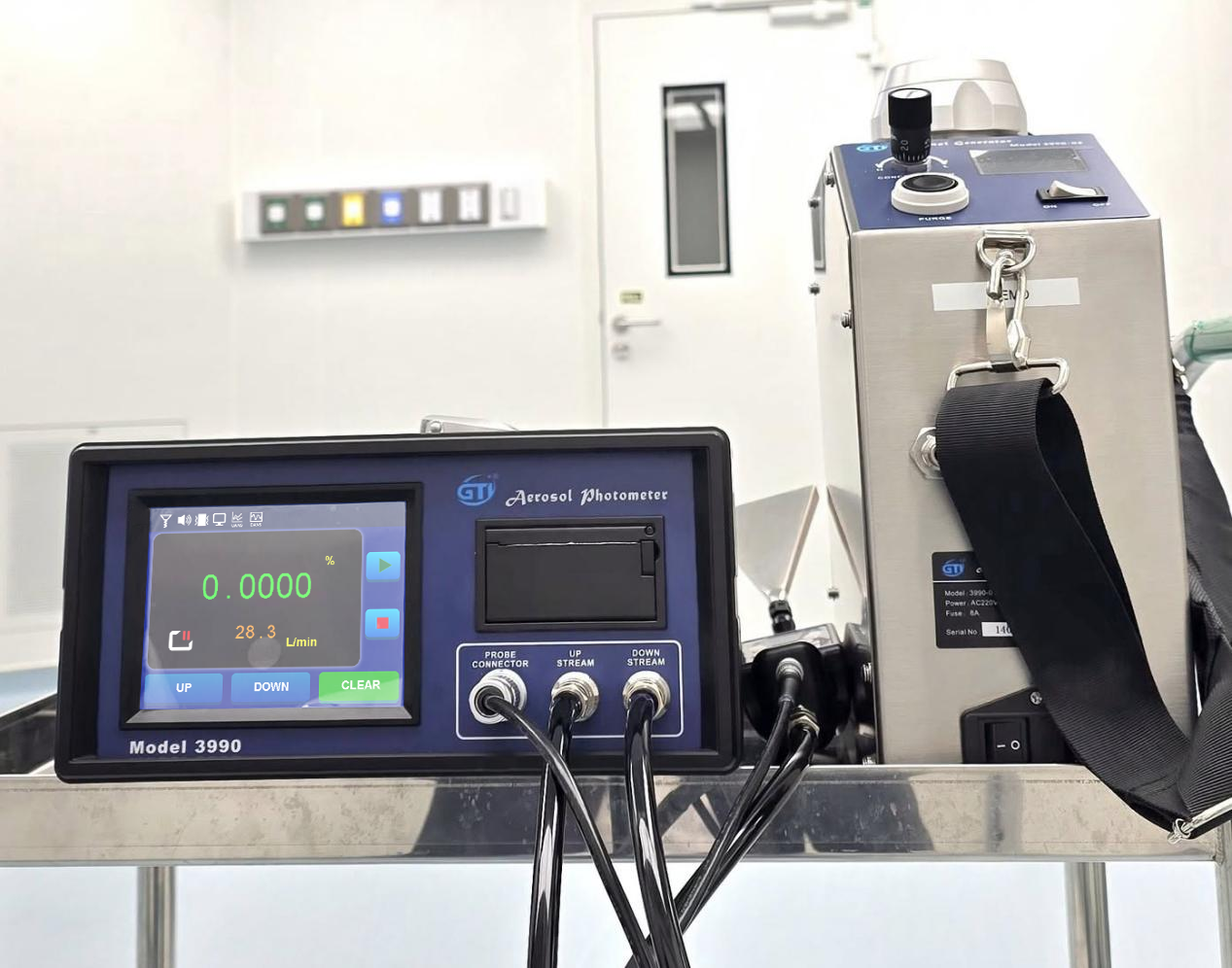
At this stage, special attention should be paid to the operating specifications of the aerosol generator to ensure that the particle size distribution of the generated aerosol meets the testing requirements.
1.3 Scanning leak detection operation
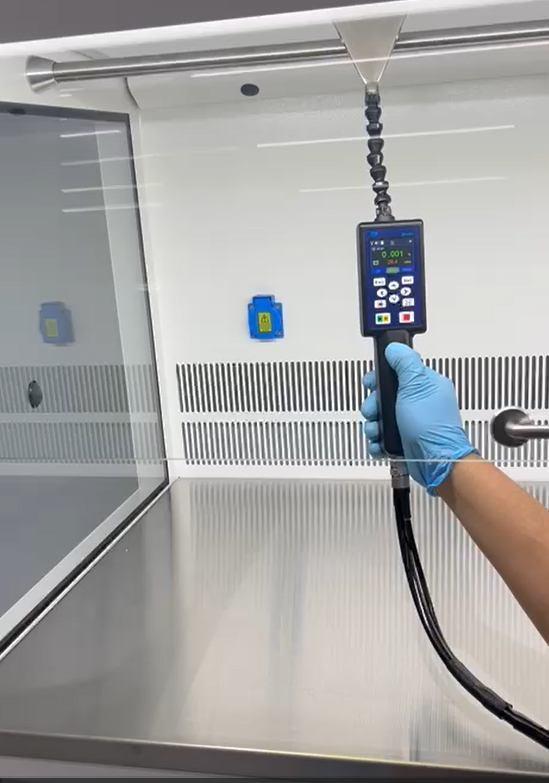
Scanning leak detection is the core process of leak detection, and it is necessary to strictly follow the following operating procedures:
Preparation: Remove the HEPA diffuser plate and expose the entire filter surface and surrounding sealing structure. The inspection area should include all sealing parts between the filter surface, filter and frame, frame and frame, and frame and static pressure box.
Scanning parameters:
Maintain a distance of approximately 3cm between the sampling head and the filter surface
Control the scanning speed to no more than 5cm/s
Adopting a linear reciprocating scanning path
Adjacent scanning lines should have appropriate overlap (usually 50% of the sampling head diameter)
Leakage determination: When the detection instrument emits an alarm sound (i.e.% LEAKAGE exceeds the threshold of 0.01%), it indicates that there is a leak at that location. After discovering a leak, it should be marked and temporarily sealed or fastened with silicone gel, and then scanned again to confirm the repair effect.
Safety protection: Operators must wear protective masks throughout the entire process to prevent exposure to aerosols. At the same time, the stability of the upstream aerosol concentration should be regularly confirmed, and the complete testing time for each filter is usually about 5 minutes.
2、 Criteria for Judging and Handling Leak Detection Results
There are clear standards and processing specifications for determining the results of leak detection of high-efficiency filters, ensuring the safe and reliable operation of the filtration system.
2.1 Qualification Standards
The qualified standard for leakage rate of high-efficiency filters is ≤ 0.01%. The specific judgment rules are as follows:
Qualification assessment: If the leakage rate of HEPA at all detection points during the testing process does not exceed 0.01%, the filter is deemed qualified and can continue to be used.
Unqualified judgment: If the leakage rate of any point exceeds 0.01%, the filter is judged as unqualified and immediate measures need to be taken.
2.2 Leakage Handling Standards
For filters that fail the inspection, there are the following handling methods:
Marking and positioning: Use non shedding markers to accurately mark the locations of all leakage points and record the leakage rate values.
Repair standard:
Allow the use of specialized adhesive to repair leaks in filter media
The repair area of a single leak shall not exceed 1% of the total area of the filter
The cumulative repair area of all leaks shall not exceed 5% of the total area
When exceeding any of the above standards, the entire filter must be replaced
Re inspection requirement: After all repairs are completed, a complete scan for leak detection must be conducted again to ensure that the repaired area no longer leaks and the overall leak rate meets the standard.
3、 Suggested leak detection cycle for high-efficiency filters
Different institutions and standards have different suggestions for the leak detection cycle of high-efficiency filters, and users should choose the appropriate testing frequency according to their own industry characteristics.
| Standards/Institutions | Suggested leak detection cycle | Applicable scenarios |
| FDA Aseptic Drug Production Guidelines | Once every six months | Aseptic preparation production workshop |
| Guidelines for GMP Inspection in China | Usually once a year | Good Manufacturing Practice Environment for Drugs |
| ISO14644 standard | Not exceeding 24 months | Routine testing of HEPA installed |
In addition to the regular inspections mentioned above, the following special circumstances also require leak detection:
After installation or replacement: All newly installed or replaced HEPAs should immediately undergo DOP leak detection to confirm installation quality.
Abnormal situation:
Environmental monitoring shows abnormal deterioration of air quality
The product's sterility test is not qualified
Simulation filling test of culture medium failed
As a component of deviation investigation
Special equipment: HEPA used in drying tunnels, drying ovens, and other equipment also need to be included in the leak detection plan, and their detection cycle can refer to the main system standards.
4、 Analysis of Reasons for Non Compliance of High Efficiency Filters
The failure of high-efficiency filters to meet standards may occur during factory or on-site testing, and the reasons can be summarized into the following categories:
4.1 Visually identifiable reasons
Problems that can be identified through visual inspection or simple testing:
Surface damage of filter material:
Obvious rupture or mechanical damage (easily observable to the naked eye)
Minor damage may require testing on a test bench to detect
Minor damage can be professionally repaired at the production factory
Damage during the production process:
The filter material is subjected to excessive pressure during the manufacturing process
Accidental damage caused by improper human operation
Partially repairable, but must meet standard requirements
Sealing defects:
Air leakage at the junction of filter material and filter frame
Air leakage caused by improper joint treatment of sealing strips
Using on-site foamed polyurethane sealing strips can avoid seam problems
Rubber strips with joints should adopt a labyrinth interface design
4.2 Issues related to raw materials
Defects related to the quality of the filter material itself:
Insufficient efficiency of filter material:
Not meeting the high-efficiency filter material standard (filtration efficiency ≥ 99.97% for 0.3 μ m particles at a wind speed of 5.3cm/s)
Fundamental defects that cannot be remedied through post-processing
Material dust problem:
Poor control of paper partition materials in traditional partition filters
Insufficient cleanliness in the production environment of filter materials leads to self generated dust
Some inspection methods are difficult to detect such potential dust generation issues
4.3 Testing process issues
Misjudgment caused by improper detection methods or operations:
Eddy current interference:
During scanning and detection, the eddy current on the air outlet carries surrounding dust into the scanning area
Difficult to distinguish between true leakage and false positives caused by eddy current interference
Foreign manufacturers solve this problem by setting up inspection tables in clean rooms
Downstream concentration misjudgment:
Judging filter performance based solely on downstream dust concentration after installation
Possible misjudgment of qualified filters due to other sources of pollution
Need to combine multi-point detection and trend analysis for comprehensive judgment
5、 Comparison of mainstream leak detection methods
At present, there are two main methods for leak detection of high-efficiency filters, each with its own characteristics but with consistent detection results.
5.1 Scanning method of photometer
Technical features:
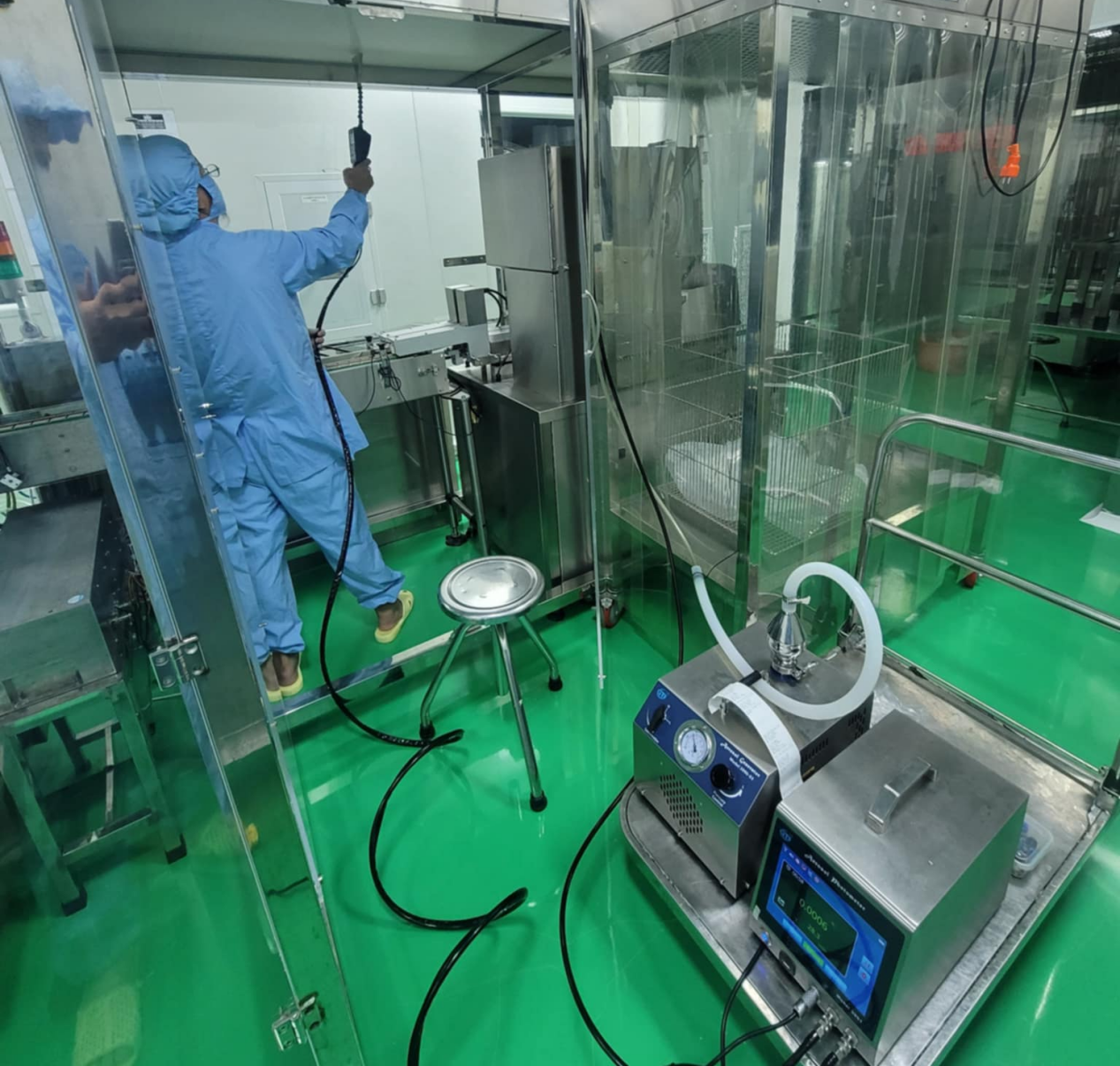
Detecting particle source: Multi dispersed phase droplets (such as DOP smoke generated by Laskin nozzle)
Detection principle: Perform photometric scanning on the entire plane of the filter
Advantages: Quickly and accurately locate the leakage point
Limitations: Unable to distinguish dust particle size, reported 'filtration efficiency' for reference only
Operation points:
Need to be used in conjunction with PAO aerosol generator
The scanning path and parameters must strictly follow the standards
Suitable for rapid screening and large-scale testing
5.2 Particle Counting Method
Technical features:
The common method in Europe and the testing of ultra high efficiency filters in the United States also adopt similar methods
Dust source: Multi dispersed phase droplets or solid dust with specific particle sizes
Core equipment: High flow laser particle counter
Advantages: It can measure the specific number of particles at each point and compare local efficiency
Special requirements:
When using a condensation nucleus counter, a monodisperse phase dust source is required
Customized testing of dust types according to user needs
Provide more detailed particle size distribution data
5.3 Conclusion of Method Comparison
Experimental studies have shown that:
For the same leakage point, the local filtering efficiency measured by the two methods is basically the same
The photometer method is easier and faster to operate
Particle counting method provides richer data information
The choice depends on the specific application scenario and data requirements
6、 Summary and Suggestions
Efficient filter leak detection is a key link in ensuring clean air quality, and a systematic testing and maintenance plan needs to be established
Standardization of processes: Strictly follow the leak detection process, and every step from aerosol introduction to scanning detection must be operated in a standardized manner.
Rationalization of cycle: Develop testing frequency based on industry standards and actual needs, and shorten testing intervals in sterile environments.
Scientific judgment of the results: correctly distinguish between real leaks and false detections, and comprehensively evaluate the filter status using multiple methods.
Problem tracing: When non-compliance is discovered, the root cause should be analyzed from multiple aspects such as materials, manufacturing, installation, and maintenance.
Method selection: Choose the appropriate method based on the detection purpose and resource conditions. Two methods can be combined for important areas.
Complete record: Detailed record of each leak detection data and identified issues, establish a filter lifecycle archive.
Through systematic leak detection management, efficient filters can be ensured to be in working condition at all times, providing reliable protection for clean environments.