-
E-mail
info@gti-test.com
-
Phone
17640053769
-
Address
Room 7 # 2212, COFCO Plaza, No. 56-39 Huanghe North Street, Huanggu District, Shenyang City
Jitai Precision Instrument (Shenyang) Co., Ltd
How to control the "air pressure barrier" in the cleanroom? GTI differential pressure series products provide you with precise protection!
Date: 2025-12-08Read: 5
Preface
In a dust-free workshop, differential pressure control is not only the core of the purification system, but also the "invisible guardian" to ensure clean environment and process safety. Reasonable pressure difference control is crucial for ensuring cleanliness levels and preventing cross contamination in electronic factories, pharmaceutical workshops, and biosafety laboratories.
Why is differential pressure control so important?
Only by controlling the pressure difference in the purification area and ensuring reasonable airflow organization can the requirements of purification and process be achieved. For example, a cleanroom must maintain a certain positive pressure to prevent unpurified air from entering the purification area, ensuring the cleanliness level; And by controlling the pressure difference of each purification zone, the effect of purification zoning can be achieved. In GMP, it is required that the pressure difference of different purification level zones should be controlled to be no less than+5Pa.
In biosafety cleanrooms, pressure difference control is a key indicator to ensure safety protection barriers. The "Technical Code for Building Biosafety Laboratories" states that it is necessary to ensure stable and reliable control of the negative pressure gradient in the laboratory. Therefore, for dust-free workshops, pressure difference control is very important.
What are the two commonly used pressure difference control methods?
For differential pressure control systems, the actual result achieved is the control of air infiltration or leakage, which can be divided into passive and active control strategies.
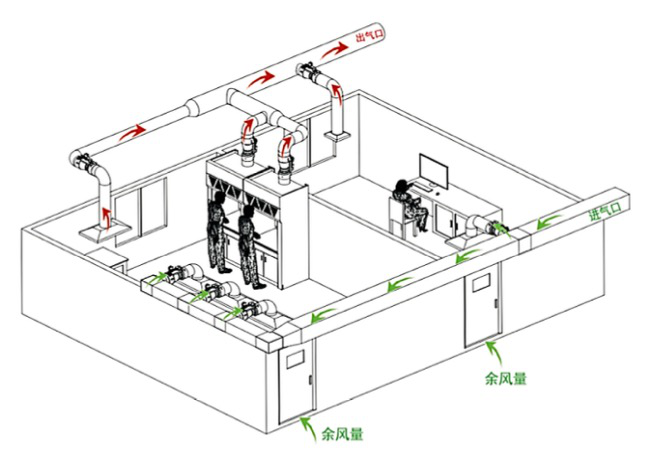
Constant Air Volume (CAV) is a passive control method that uses a manual air volume control valve to achieve the desired pressure difference by simply balancing the supply and exhaust air, with a certain amount of supply air being less (or more) than the exhaust air (residual air volume). When choosing a control strategy such as constant air volume, careful consideration must be given because constant air volume systems have prominent limitations.
① Pure pressure difference control method
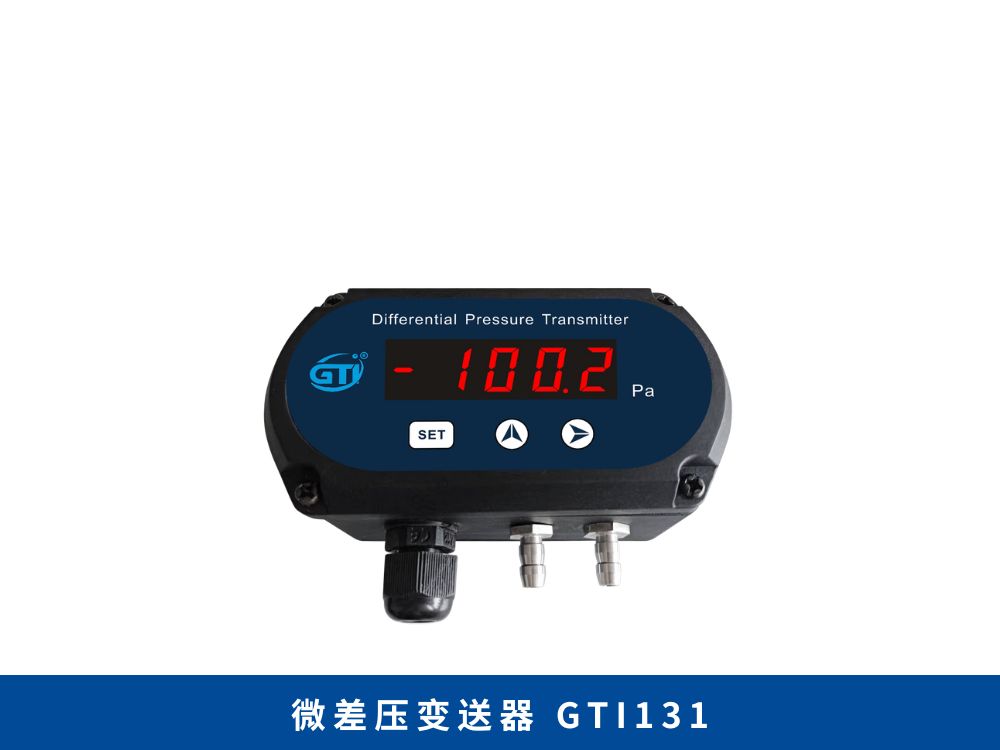
Real time monitoring of the pressure difference between the indoor area and the reference zone is achieved through a pressure difference sensor, and the controller adjusts the air supply or exhaust volume according to the PID algorithm to achieve precise control.GTI brand precision micro differential pressure transmitter GTI131Featuring high precision, fast response, and ultra-low range, it fully meets the requirements of industry applications and is an ideal choice for pharmaceutical factories, infectious disease wards, electronic clean rooms, and dust-free laboratories. There is also a "pseudo pressure difference control method" that uses a wind speed probe to measure airflow and indirectly converts pressure difference for control.
② Residual airflow (airflow tracking) control method
By monitoring the supply and exhaust air volume in real-time, dynamically adjusting the air volume, and maintaining a constant residual air volume, the pressure difference can be stabilized. This method belongs to open-loop control and requires regular calibration.
③ Hybrid control system
In high-level biosafety laboratories (such as BSL-3/4), residual air flow control is often combined with pure pressure difference control to form a "double insurance".
3 Other factors affecting pressure difference control
Building technology has a significant impact on the performance and effectiveness of pressure differential control, and it is difficult to establish a stable pressure gradient in an unsealed enclosure structure. It requires a large amount of residual air to compensate for many leaks. When using a large amount of residual air, a large amount of secondary air will be extracted (or discharged) into adjacent spaces, which may cause problems with temperature and humidity control. Therefore, it is necessary to have a sealed enclosure structure in the clean room to ensure the corresponding pressure difference and reasonable airflow direction.

The leakage of air ducts can also affect the accuracy and performance of residual air flow control. If there is air leakage from the outlet duct or inlet duct between the flow measurement device and the cleanroom enclosure structure, it will cause errors in flow measurement and result in significant deviations in pressure control. If it is in a constant pressure system, this error is relatively constant; But if the static pressure of the cleanroom cleaning system fluctuates, this error will also fluctuate, so it is very difficult for the control system to take technical measures to eliminate such errors, resulting in a deterioration of control performance.
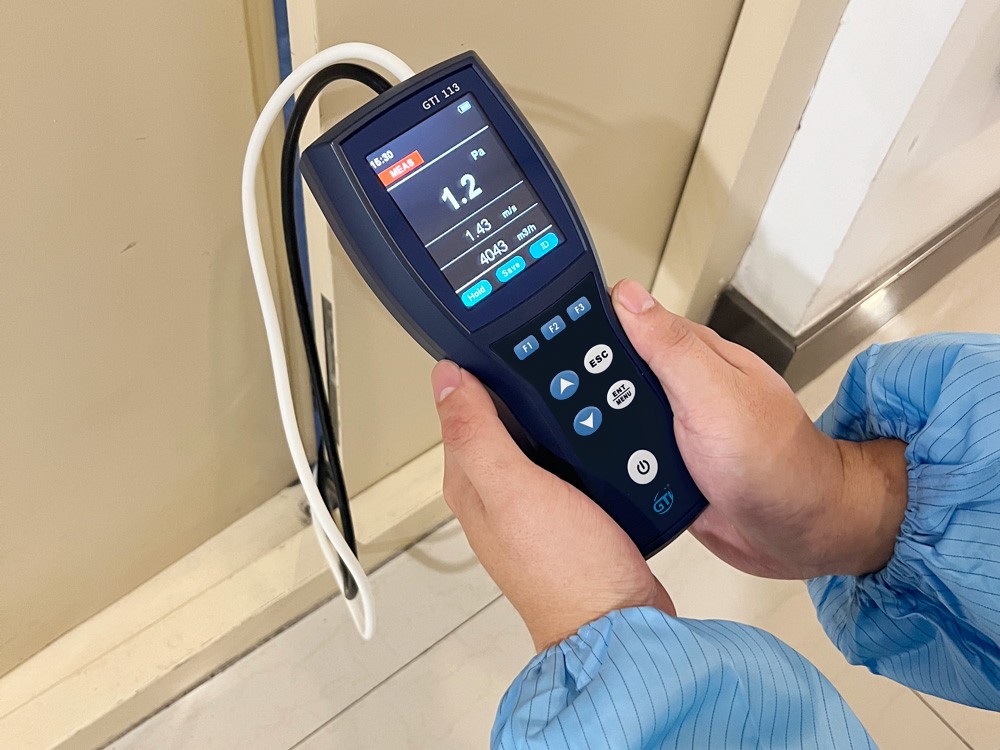
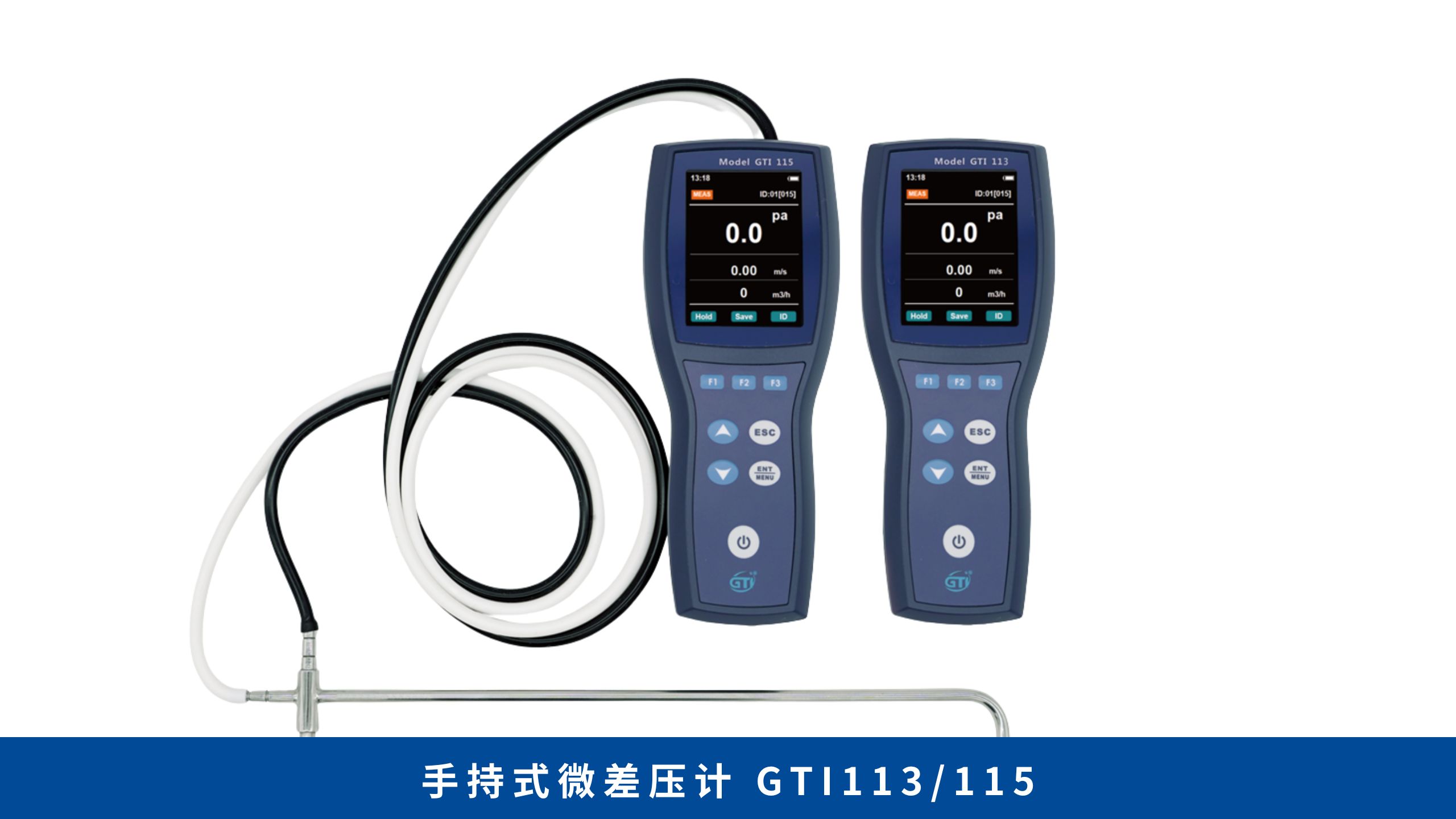
The GTI brand handheld micro differential pressure gauge GTI113/115 is two portable micro differential pressure gauges with high measurement accuracy, which can be used for non corrosive gas pitot tube anemometers. Suitable for measuring wind speed values such as high-efficiency air outlets and pipeline air outlets, it is an ideal instrument for gas pressure testing or calibration in hospitals, clean rooms, laboratories, HVAC systems, and wall mounted boilers.
Conclusion
The pressure difference control in a cleanroom is a system engineering that integrates fluid mechanics, automatic control, and building science. The GTI brand differential pressure series products provide users with a full cycle solution from design, installation to maintenance, helping to create a stable, reliable, and energy-efficient clean environment.