-
E-mail
853639270@qq.com
-
Phone
19905366737
-
Address
Room 202, 2nd Floor, Workshop 3, Oulong Technology Park, No.1 Jinma Road, Yuqing Community, Xincheng Street, Weifang High tech Zone, Shandong Province
Shandong Horde Electronic Technology Co., Ltd
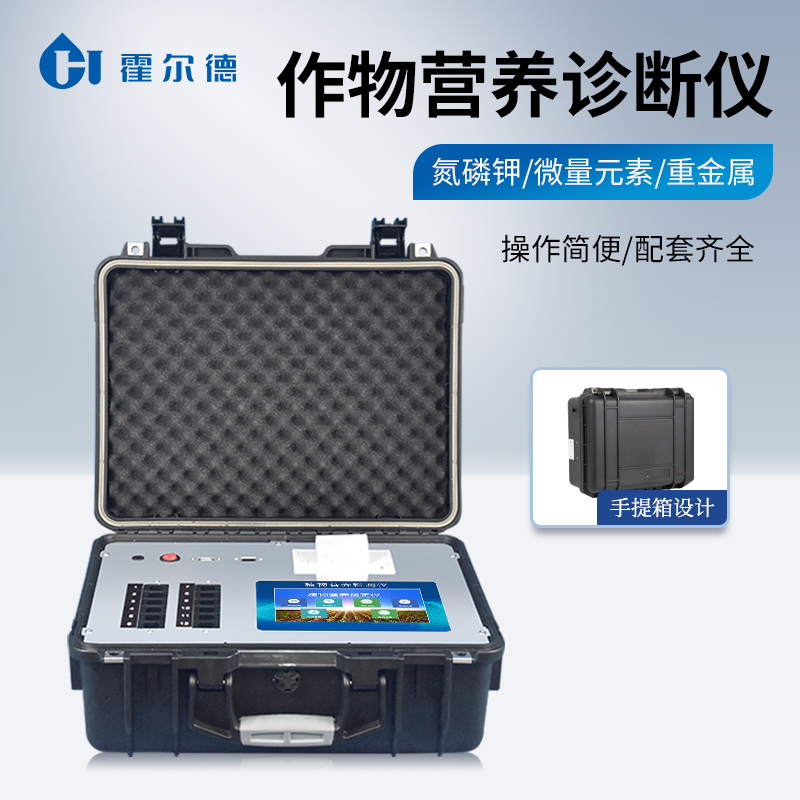
Crop nutrient detector: fully functional, capable of detecting various trace elements [Holder]
Date: 2025-10-30Read: 8
In traditional agriculture, fertilization often relies on experience, and the concept of "more is better than less" is widely present. This not only causes resource waste, but also easily leads to environmental problems such as soil compaction and eutrophication of water bodies. Nowadays, with the advancement of technology, plant nutrition detectors are quietly changing this situation. It is like a "plant doctor" who quickly and non destructively "understands" the nutritional status of crops, moving agricultural production from "experience based" to "data based", truly achieving scientific fertilization and precise management.
Are crops lacking in nutrients? Let the leaves' tell you '
The core principle of a plant nutrition detector is to scan plant leaves through optical sensors (such as visible light and near-infrared spectroscopy technology) and analyze their reflected or transmitted spectral characteristics. These unique 'spectral fingerprints' are closely related to key nutritional indicators such as chlorophyll content, nitrogen levels, and water status in leaves. The algorithm model built into the instrument can quickly convert these light signals into intuitive values, helping users determine whether crops lack essential elements such as nitrogen, phosphorus, and potassium.
Nitrogen detection: Nitrogen is the main component of chlorophyll, which directly affects the growth rate and leaf color of plants. The instrument can indirectly reflect the nitrogen nutrition level of plants and guide the timing and amount of topdressing by measuring the relative chlorophyll content (SPAD value).
Water and stress monitoring: Some instruments can also evaluate leaf moisture content, help identify drought or waterlogging stress, and adjust irrigation strategies in a timely manner.
Health status assessment: Comprehensive nutritional data can reflect the overall health status of crops and provide early warning of potential nutrient deficiencies or disease risks.
3-second rapid testing, a "handheld laboratory" in the field
Unlike the traditional cumbersome process of picking leaves and sending them back to the laboratory for chemical analysis, the plant nutrition detector is extremely easy to operate:
Open the instrument and calibrate to zero;
Insert the blade into the detection probe;
Press the measurement button and the results will be obtained within 3-5 seconds.
The high efficiency of this "instant measurement" allows agricultural technicians to quickly patrol different areas in the field, draw "nutrient distribution maps", and discover "shortcomings" in crop growth. Whether it is vast farmland, facility greenhouses, orchards, or tea gardens, it can be easily applied.
Empowering smart agriculture, saving costs, increasing efficiency, and promoting environmental protection
Precision fertilization: Avoid blind fertilization, reduce fertilizer usage by 20% -30%, and significantly reduce production costs.
Improving quality: Supplementing nutrients according to the actual needs of crops can help increase the yield, taste, and nutritional value of agricultural products.
Protecting the environment: reducing fertilizer loss, lowering pollution to soil and water bodies, and promoting green and sustainable agricultural development.
Guiding agricultural work: providing data support for irrigation, pest control, and other agricultural operations, optimizing overall management plans.