-
E-mail
853639270@qq.com
-
Phone
19905366737
-
Address
Room 202, 2nd Floor, Workshop 3, Oulong Technology Park, No.1 Jinma Road, Yuqing Community, Xincheng Street, Weifang High tech Zone, Shandong Province
Shandong Horde Electronic Technology Co., Ltd
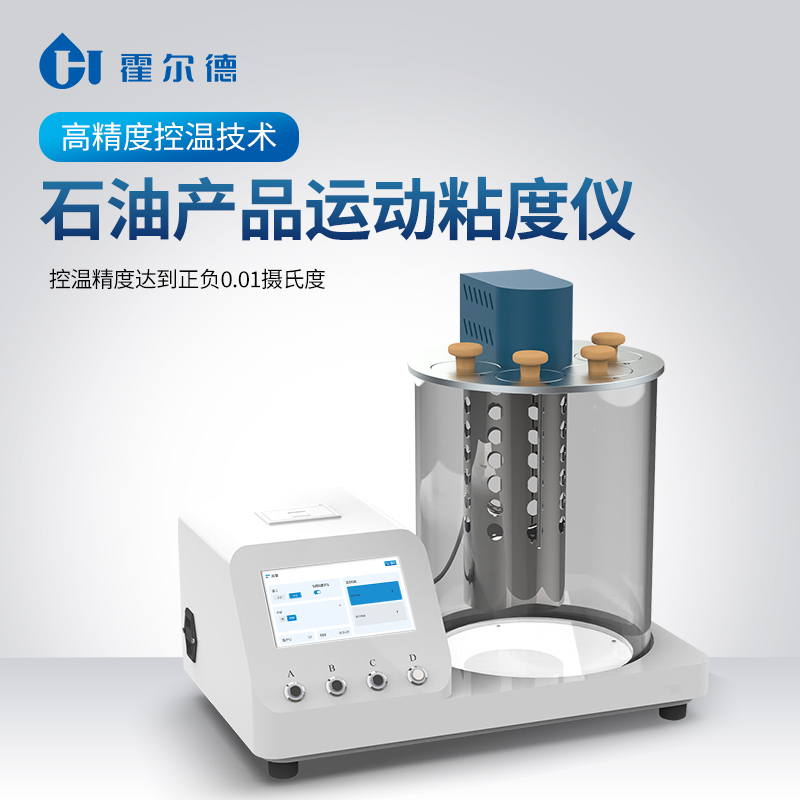
Kinematic viscosity tester: Accurately measure the kinematic viscosity of petroleum products
Date: 2025-10-30Read: 12
The kinematic viscosity tester is a crucial laboratory analytical instrument in the fields of petroleum, chemical, energy, and quality inspection, specifically designed to accurately measure the kinematic viscosity of petroleum products such as lubricants, fuel oils, diesel, hydraulic oils, asphalt, etc. Its high precision, automation, and strong repeatability make it the "gatekeeper" for ensuring the quality of petroleum products, optimizing production processes, and ensuring the safe operation of equipment.
What is kinematic viscosity?
Kinematic viscosity is a physical quantity that measures the flow resistance of a liquid under the action of gravity, measured in square millimeters per second (mm ²/s) or centimeters per second (cSt). It directly affects petroleum products:
Lubrication performance: Low viscosity, easy rupture of oil film, exacerbating mechanical wear; Excessive viscosity, high flow resistance, and increased energy consumption.
Transportation performance: affects pipeline transportation efficiency and pumping energy consumption.
Atomization and combustion efficiency: The atomization quality of fuel oil (such as diesel) is crucial, which in turn affects combustion efficiency and emissions.
Low temperature start-up performance: The viscosity change at low temperatures directly affects the engine start-up performance.
Automation and Intelligence:
Automatic timing: using photoelectric sensors to accurately detect the time when the liquid level passes through the scale line of the viscosity meter, eliminating human error.
Automatic calculation: The built-in software automatically calculates and displays the kinematic viscosity value based on the flow time and viscometer constant.
Reduce human error: Automated operations reduce subjective errors caused by traditional manual timing and reading, significantly improving data repeatability and reproducibility.
Key applications in the petroleum industry
Product quality control: Before leaving the factory, the refinery must test the kinematic viscosity to ensure that the product meets national standards or customer specifications.
Fuel quality assessment: The kinematic viscosity of diesel and heavy oil affects the atomization effect of fuel injectors, directly affecting combustion efficiency and emissions.
Oil degradation monitoring: The viscosity change (too high or too low) of in-service lubricating oil is an important indicator to determine whether it is oxidized, contaminated, or degraded, and is used for equipment lubrication status monitoring and oil change cycle determination.
Trade settlement: In petroleum product trade, viscosity is one of the important pricing and acceptance parameters.