-
E-mail
puchuang8028@163.com
-
Phone
18615268674
-
Address
D2-105, Phase III, Times Headquarters Base, No. 15 Lanxiang Road, Tianqiao District, Jinan City, Shandong Province (1st Floor)
Shandong Puchuang Industrial Technology Co., Ltd
Container sealing integrity test
Date: 2025-09-10Read: 11
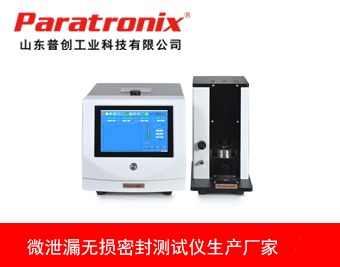
Container Seal Integrity Testing (CCIT) is a critical assessment of the ability of container sealing systems to maintain sterile barriers to prevent contamination, ensuring the safety and stability of pharmaceutical, biological, and vaccine products. Implementing CCIT is crucial for preventing drug issues. Defects in container sealing integrity may alter the active pharmaceutical ingredient (API) due to reduced vacuum, oxidation, hydrolysis, or bacterial contamination. This will reduce the efficacy of the medication, cause unexpected side effects, and harm the patient's health. Paratronix provides vacuum attenuation and pressure attenuation solutions.
What is container seal integrity testing?
In the past 20 years, the entire industry has developed around detecting pinholes with diameters less than 1000 millimeters in drug and medical device containers. These holes may be small, but in the eyes of regulatory agencies such as the US Food and Drug Administration (FDA), they represent critical defects that may compromise the sterility and stability of the product. It's not just pinholes that bring risks; Cracks in glass ampoules, weak sealing of cartridge bottles, and improper stoppers or caps on small bottles can all pose a threat of contamination. All these defects can be identified through Container Seal Integrity Testing (CCIT), which is an analysis that evaluates whether a container sealing system is sufficient to maintain a sterile barrier to resist potential contaminants. Puchuang has long been an expert in leak detection equipment for drug blister packaging, small bags, pouches, and bottles. It also provides CCIT testing methods for hard containers such as glass and plastic vials, ampoules, pre filled syringes, cartridges, and bottles. Although the testing principle is the same, the drugs packaged in blister packs are taken orally, while many drugs packaged in hard containers are injected, making CCIT a key tool.
Container seal integrity testing evaluates the integrity of container seals to prevent leakage of contents and entry of moisture, air, or pollutants. It involves evaluating the integrity of container sealing systems to maintain a sterile barrier against potential contaminants. This test is crucial because even minor defects, such as pinholes smaller than one thousandth of a millimeter, can compromise the sterility and stability of the drug. Regulatory agencies such as China and the US Food and Drug Administration consider these defects as a serious threat to product safety. And detailed descriptions and requirements have been provided in the Chinese Pharmacopoeia 2025 edition.
What are the types of container closure integrity testing?
There are multiple CCIT methods available, some of which comply with ASTM standards, which are widely recognized as meeting regulatory requirements. Probabilistic methods including blue dye methylene, bubble emission (ASTM D3078-02 (2013)), submerged microbial challenge and tracer gas detection, and sniffing mode (ASTM F2391-05 (2016)) are still widely used and traditional methods. However, in recent years, deterministic methods have been favored due to their accuracy and reliability. Regardless of whether they comply with ASTM standards, they have advantages over probabilistic methods. Deterministic methods include vacuum attenuation method (ASTM F2338-24), pressure attenuation method, headspace gas analysis method, HVLD method, and tracer gas analysis method (vacuum mode: ASTM F2391-05 (2016)), which can provide non-destructive testing options and objective leak measurements.