-
E-mail
puchuang8028@163.com
-
Phone
18615268674
-
Address
D2-105, Phase III, Times Headquarters Base, No. 15 Lanxiang Road, Tianqiao District, Jinan City, Shandong Province (1st Floor)
Shandong Puchuang Industrial Technology Co., Ltd
GB/T 41347-2022 Test Method for Rubbing Resistance of Flexible Packaging Materials
Date: 2025-10-09Read: 11
1. Scope
This document specifies the method for testing the rub resistance of flexible packaging materials.
This document is applicable to the testing of the rub resistance of flexible packaging materials.
2. Pinhole: Penetrating through flexible packaging materials to form small holes with no fixed shape and size.
3. Rubbing resistance performance
The ability of flexible packaging materials to withstand rubbing,
Note: It is usually characterized by changes in the number of pinholes or gas barrier properties of the material before and after kneading, such as oxygen, air, carbon dioxide, water vapor, and other gases.
4. Principle
According to a certain frequency and stroke, the packaging material is rotated and compressed back and forth to simulate the possible rubbing of the packaging material during actual use. The changes in the number of pinholes or gas permeability (rate) before and after rubbing the packaging material are used to characterize it.
5. Packaging material anti rubbing performance testing instrument
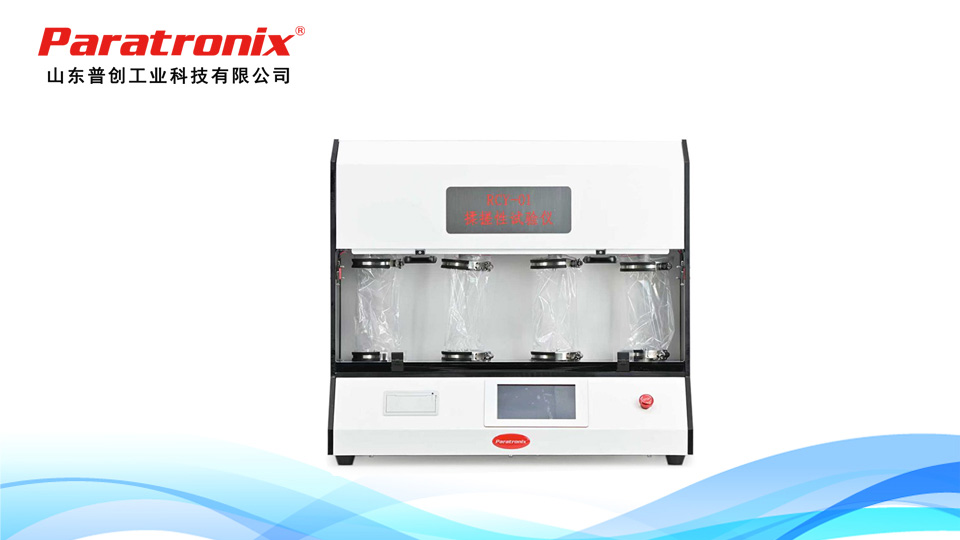
Developed independently by Puchuang TechnologyRCY-01 Rubbing TesterUsed for testing the rub resistance of flexible materials, providing methods and data references for rub resistance testing and quality control of flexible materials. The main structure of this kneading instrument includes a linear axis, a rotating axis, and a support arm. The instrument can achieve two ways of kneading: long stroke kneading and short stroke kneading.
6. Test method for rub resistance of flexible packaging materials
(1) Sample:
1. The sample should be representative, flat, uniform, and free of contamination, without defects such as holes, pinholes, creases, scratches, etc.
2. According to the testing requirements, cut 12 flat specimens (280 ± 2) mmX (200 ± 2) in a fixed testing direction, with the width direction parallel to the direction to be tested.
3. Three samples are used for pinhole counting and gas barrier testing before and after kneading, while the other six samples are not subjected to kneading testing and are only used for pinhole counting or gas barrier control testing of kneaded samples.
(2) Test Method and Operating Steps for Rubbing Resistance of Flexible Packaging Materials
6.1. Rubbing Test
A. Turn on the kneading instrument, fix the kneading frequency at 45 times/min ± 1 time/min, and return the straight axis and the rotating axis to their initial positions, keeping a distance of 180mm between the two axes
B. Set the kneading mode. The appropriate kneading mode can be selected based on the sample structure, testing method, and negotiated agreement. The commonly used kneading modes are as follows:
a) Mode A - Long stroke Rubbing 2700;
b) Mode B - Long stroke Rubbing 900;
c) Mode C - Long stroke Rubbing 270;
d) Mode D - Long stroke Rubbing 20;
e) Mode E - Short stroke Rubbing 20;
C. Use double-sided pressure-sensitive adhesive tape to wrap and attach the two sides of the 280mm length direction of the sample to the support arms outside the straight axis and the rotating axis, and use other tightening tools to assist in fixing the sample to prevent it from falling off during the kneading process. There should be no sealing or adhesive between the two sides in the 200mm width direction of the sample, and they should be allowed to separate freely.
D. Start the experiment and rub the sample.
E. After kneading, remove the sample and mark the testing area of (150 ± 2) mm X (200 ± 2) mm at the center. Both the pinhole counting method and the gas barrier testing method are used to take samples from this area.
6.2. Evaluation of Rubbing Resistance Performance
A. Pinhole counting method
a. Spread the 3 kneaded samples flat on 3 pieces of uncoated white background paper, and fix them with the upper masking tape. When pasting, avoid the testing area.
b. Brush the test area of each specimen thoroughly with a paintbrush and place the specimen for 1 minute
c. Wipe off the dye with a tissue, squeezing the sample and white background paper during wiping.
d. Move the sample away from the white background and count the number of pinholes in each sample within the (150 ± 2) mm X (200 ± 2) mm testing area. Each red transparent print on the paper is a pinhole; If there are significantly different center marks at the overlapping color spots, count them separately according to the number of center marks, and count them as pinholes regardless of the size of the through print.
e. Use the same testing method to obtain the number of pinholes in the final rubbing sample.
f. If no pinholes are detected in at least one sample after rubbing, further gas barrier testing method should be used to verify the rubbing resistance of the sample.
B. Gas barrier testing method
a. When there are no visible penetrating pinholes or pinholes detected by the pinhole counting method after kneading, the gas permeability of the sample before and after kneading can be tested separately.
b. According to relevant requirements, take 3 pieces of kneaded samples for gas barrier testing.
c. Determine which gas to test for its barrier properties based on the actual situation, and follow the gas barrier testing method standards used in the test steps.
d. According to the same gas barrier testing method standard, complete the gas barrier test of the sample before and after kneading on the same testing equipment with good performance.
7. Experimental results
Count the total number of pinholes in the sample before and after kneading, calculate the average number of pinholes in the testing area of each sample, and keep the results as integers; If the gas barrier test method is used for testing, record the arithmetic mean of the gas permeability of the sample before and after kneading, and keep the results to two decimal places.
8. Test report
The test report should include at least the following contents:
a) This document number;
b) Name and model of experimental instrument;
c) Sample state adjustment and testing environment temperature and relative humidity;
d) Sample information, including sample name, material, and other descriptions;
e) Sampling direction of the sample;
f) Rubbing mode;
g) If pinholes appear during kneading, record the total number of pinholes in the sample before and after kneading, as well as the average number of pinholes in each sample before and after kneading;
h) If conducting gas barrier testing, record the gas barrier test results and units of the sample before and after kneading, including the corresponding testing methods
Standard document number and gas name for testing;
i) Record abnormal rubbing and damage phenomena, such as tearing;
J) Test personnel and date;
K) Any differences from this document.
Last Article: Container sealing integrity test
Next Article: Disposable sterile syringe sliding performance tester