-
E-mail
m-excel@foxmail.com
-
Phone
17501618807
-
Address
Area A, 4th Floor, Building 1, Industrial Park, No. 65, Lane 1398, Xinzhu Road, Minhang District, Shanghai
Shanghai Maiyue Environmental Technology Co., Ltd
Analysis and Application of Measurement Points for Waste Sulfuric Acid Production in Refineries
Date: 2025-11-03Read: 7
Solution Overview
1、 Overall
The sulfuric acid alkylation unit in our country's refineries produces 80-100kg of waste sulfuric acid with a concentration of 80-85% for every ton of alkylated oil produced, and contains 8% -14% organic matter (polymers) and water.
Measurement point:
1. Sulfuric acid concentration
2. Hydrochloric acid concentration
3. Organic compound concentration
4. Turbidity of oil products
5. Concentration of ammonia water
6. Ammonium sulfateparticle concentration
2、 Phase separation (oil-water separation)
The polymer oil separated from waste sulfuric acid is washed with water and saponified. The color changes from black to red, and after standing still, a double oil layer is formed. The upper layer is a light polymerized yellow red oil, accounting for 20-30%,
The lower layer is composed of red reunion oil, accounting for 70-80%.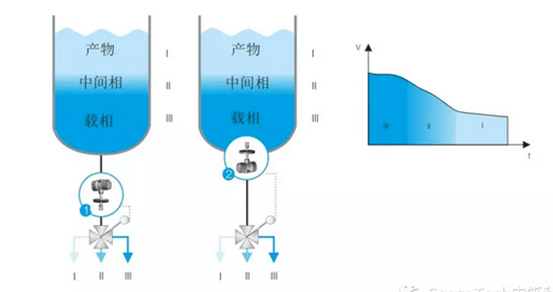
Interface measurement
Phase separation
Extraction process interface layering
Phase separation of different products in pipelines
Distribution control of different products
Interface monitoring of different oil products in long-distance pipelines
Control water/phenol extraction
Separation control of organic/aqueous phases
CPL and ammonium sulfate phase separation
3、 Gas scrubber (SO2 gas absorption)
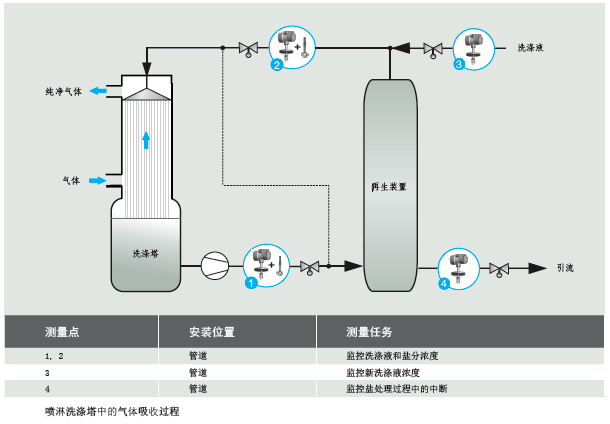
4、 Ammonium sulfate crystallization concentration
Using waste sulfuric acid and liquid ammonia as raw materials, a gas lift flotation device is used to separate the reaction products from the polymerized oil. An activated carbon adsorption tower is used for decolorization and deodorization, and an evaporation crystallization system is employed
crystal.
Fertilization in foreign countries is automated, with high requirements for the concentration and size of ammonium sulfate particles, resulting in high economic benefits. Our company has successfully applied it to Nanjing Fubont Oriental Chemical and
The measurement of ammonium sulfate concentration by Fujian Shenyuan New Materials Co., Ltd. has generated significant economic benefits for the other party. Currently, the two companies are using 18 units.
5、 Chemical application scenarios (metal ion concentration)
Typical applications:
Measurement of metal concentrations, such as iron (II, III), nickel (II), cobalt (II), copper (II), etc
Determination of chromate content (ppb, g/L)
Determination of iron content in hydrochloric acid (ppm)
Refining equipment Fe3+detection to determine if the equipment is in good condition
Iron ppm in organic solvents, such as DCE
Steel mills conduct metal ion detection on wastewater discharge
Concentration detection of electrolytic metal ion solution in electroplating and chemical plating processes
Recovery of expensive metal particle (ion) catalyst support (rhodium, molybdenum)
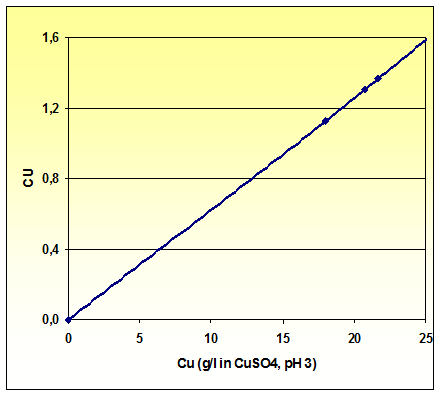
Cu ions are green in color
Cr ion display is yellow
Sensor: AF26, compensating for background turbidity
6、 Trace water
Trace water in liquefied natural gas
Trace water in rubber production process
Trace water in organic matter
Trace amounts of water in alcohol
Acrylonitrile (ACN) moisture
Analysis of water content in methanol, ethanol, formic acid, acetic acid, formaldehyde, acetaldehyde, toluene, and MTB
Acetic acid water content
Medium water content
Analysis of water content in extraction, organic phase, intermediate phase, and polymerization production processes
Analysis of water content in inorganic acids (hydrochloric acid, nitric acid, phosphoric acid, etc.)
Analysis of Water Content in Inorganic Salts (NACL, KCL, CaCO2)
Nitrochlorobenzene trace water
Aniline contains water