-
E-mail
m-excel@foxmail.com
-
Phone
17501618807
-
Address
Area A, 4th Floor, Building 1, Industrial Park, No. 65, Lane 1398, Xinzhu Road, Minhang District, Shanghai
Shanghai Maiyue Environmental Technology Co., Ltd
Analysis and application of process optimization in chlor alkali chemical industry
Date: 2025-11-03Read: 8
Solution Overview
1 Detection of free chlorine
Before and after the secondary brine refining, the free chlorine in the brine should be 0. When the brine enters the electrolytic cell for electrolysis, CL2 is generated. Part of the wet CL2 enters the chlorine gas treatment process through pipelines, while another part exists in the form of gas or CLO - in the dilute brine. After vacuum dechlorination and sodium sulfite dechlorination by the dilute brine dechlorination device, only trace amounts of free chlorine remain in the dilute brine. And then it was not discharged and recycled for salt production. The strong corrosiveness of free chlorine can corrode equipment and pipelines, hinder the formation of primary brine refined sediment, and damage the resin in the secondary brine resin tower. Therefore, it is necessary to monitor the free chlorine in dilute brine, and the monitoring point should be selected behind the dilute brine dechlorination device.
At the same time, sodium hypochlorite and hypochlorite concentrations can also be monitored.
The benefits of monitoring:
Provide qualified diluted salt water for salt conversion
Extend the lifespan of ion exchange resin
Reduce the corrosion of pipelines from free chlorine
Real time monitoring of free chlorine content, optimization of sodium sulfite solution addition process, cost savings
Note: In some cases, it is necessary to retain some free chlorine in diluted saline water to utilize its strong oxidizing properties for sterilization and algae removal, decompose large organic molecules, and prevent organic matter from blocking the filter (Kai membrane or Jiusi membrane). At this time, a sodium sulfite dechlorination device should be installed after filtration to monitor the free chlorine content.
II Detection of turbidity in saltwater
Due to its ability to perform filtration at room temperature, without chemical reactions or phase changes, good selectivity, strong adaptability, stable operation, high degree of automation, and high-quality refined saltwater, most manufacturers use it. Any filtration has a service life. If the filtration device is damaged and the primary brine containing a large amount of particles is subjected to secondary brine refining, it will inevitably block the ion exchange resin, causing equipment damage or even shutdown. If the filter membrane is replaced at a fixed time, if its service life is not yet reached, it will cause waste. Therefore, real-time monitoring of the turbidity value of the filter can accurately grasp its condition. Crude salt water SS ≤ 10ppm, refined salt SS ≤ 1ppm.
The benefits of monitoring:
Timely detection of filter damage
Reduce downtime and save costs
Extend the service life of the filtration membrane
III Monitoring of hypochlorite concentration
As an intermediate for producing chlorine gas, accurately controlling the concentration of hypochlorite can increase chlorine gas production and save electrolysis costs. It is commonly used in the Asahi Kasei process in Japan, but it has been discontinued in China.
The benefits of monitoring:
● Improve the efficiency of voltage or current usage in the electrolytic cell
● Increase output and save costs
4 Monitoring of saltwater concentration
The concentration and purity of saltwater are crucial for subsequent electrolysis. The concentration of saltwater is generally between 300-315g/l (30-31.5), and the temperature is between 60-65 degrees Celsius (outlet).
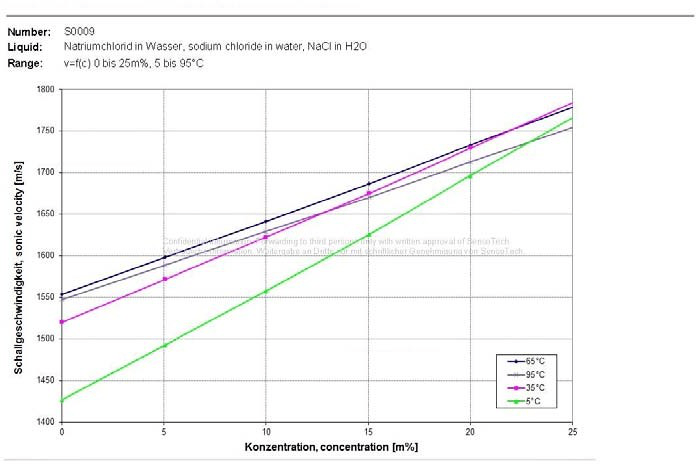
5 Testing of caustic soda concentration
The typical concentration of caustic soda NaOH in the market is between 48% (48.1-50wt%) and the temperature is 40-50 degrees. Due to the concentration of caustic soda obtained in the electrolytic cell being only between 12-33wt%, it needs to be concentrated in a series evaporator.
Continuous concentration monitoring of NaOH concentration
Reduce energy costs during the evaporation process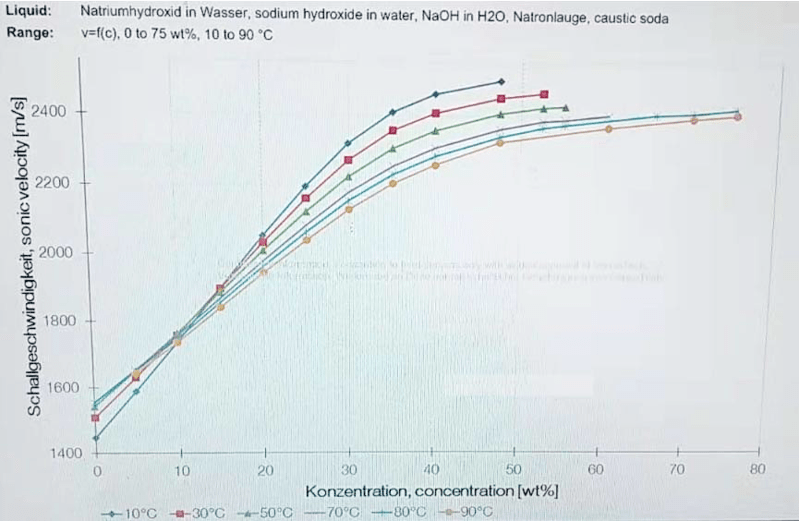
VI Detection of chlorine gas drying
Chlorine gas needs to be dehydrated, and its corrosiveness will increase when the moisture content is higher than 30ppm. It cannot exceed 400ppm. During drying, chlorine gas enters the absorption tower and absorbs moisture through highly concentrated sulfuric acid (88-100wt).
Continuous monitoring of sulfuric acid concentration
Chlorine concentration monitoring
7 Detection of exhaust gas washing
Chlorine gas emissions must be treated by accident chlorine devices to ensure that the concentration of chlorine gas emissions meets environmental requirements of less than 10ppm, and some places even require 1ppm. We use 18% caustic soda absorption based on the concentration of tail chlorine. Excessive use leads to increased costs, while insufficient use does not meet environmental requirements. So it is necessary to detect the concentration of tail chlorine to save costs.
Hydrogen emissions are absorbed using alkaline solution.
Continuous monitoring of tail chlorine concentration
Monitoring of caustic soda concentration
● Concentration monitoring of by-products such as NaCl, NaOCL, NaNOx.Na2CO3, etc
8 Testing of hydrochloric acid production
The chlorine gas produced by the anode of the electrolyzer and the added hydrogen gas are the substrates for synthesizing hydrochloric acid. Injecting two gases into a burner, these two gases will react inside the burner to form, and the resulting mixture will evaporate from the combustion chamber and enter the integrated isothermal falling film absorber. Here, concentrated hydrochloric acid (37 HCl) is formed by absorption with water and dilute sulfuric acid solution
Continuous monitoring of hydrochloric acid (20-40 ) concentration
Sulfuric acid concentration monitoring