-
E-mail
shwury@163.com
-
Phone
15800608246
-
Address
Lane 868, Xinge Road, Xinqiao Town, Songjiang District, Shanghai
Shanghai Wurui Automation Equipment Co., Ltd
Experimental analysis on the influence of installation method of double flange differential pressure transmitter on measurement accuracy
Date: 2025-12-12Read: 14
Double flange differential pressure transmitters are widely used for continuous measurement of liquid level, interface, and density in closed containers. Their measurement principle is based on the linear relationship between static pressure difference and liquid column height. However, in practical engineering, the installation method (including the position of the transmitter body, the direction of the capillary tube, the orientation of the flange pressure port, etc.) has a significant impact on measurement accuracy. This article analyzes the impact mechanism of different installation methods on output errors through comparative experiments.
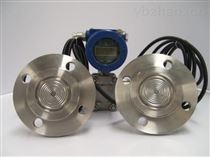
Select the same model for the experimentDouble flange differential pressure transmitter(Range 0-10 kPa, filled with silicone oil), perform liquid level measurement testing in a standard water tank system. Set up three typical installation plans:
Option A: The transmitter body is horizontally installed below the positive pressure side flange (low position installation);
Option B: The transmitter body is higher than two flanges (high-level installation);
Option C: The transmitter and the two flanges are on the same horizontal plane (ideal flat installation).
Record the output signals of each scheme at 0%, 50%, and 100% liquid levels under the conditions of ambient temperature of 25 ℃ and normal temperature water medium, and compare them with the theoretical values.
The experimental results show that:
Scheme C has the smallest error (≤± 0.2% FS) and meets the factory precision indicators;
Option A shows a negative offset (up to -1.8% FS) at low liquid levels, due to the superposition of static pressure of silicone oil in the positive pressure side capillary tube, resulting in a "rise" of the zero point;
Option B results in a lower output at high liquid levels (with a maximum deviation of -2.1% FS), as the transmitter is above the pressure point, causing a reverse pressure difference in the capillary column and offsetting some of the process pressure.
Further analysis shows that differences in capillary length and vertical height can introduce additional static pressure errors. Especially when the ambient temperature fluctuates, the change in silicone oil density exacerbates this effect. In addition, excessive bending or external compression of capillaries can also lead to response hysteresis and nonlinearity.
Therefore, to ensure measurement accuracy, flat installation should be used as much as possible; If high or low installation is required due to site conditions, zero point migration compensation should be carried out during the debugging phase, and temperature correction parameters should be set inside the DCS or transmitter. For high-precision applications, it is recommended to use intelligent dual flange transmitters with environmental temperature compensation function and standardize the capillary tube laying path to avoid heat source interference and mechanical damage.
Overall, reasonable selection and optimizationDouble flange differential pressure transmitterThe installation method is a prerequisite for ensuring accurate and reliable liquid level measurement, and is of great significance for improving the overall control performance of automation systems.