-
E-mail
shenyanbo@kanomax.com.cn
-
Phone
18840065038
-
Address
No. 56-39 Huanghe North Street, Huanggu District, Shenyang City
Shenyang Jiaye Scientific Instrument Co., Ltd
Overview of the working principle and application of portable anemometer
Date: 2025-11-19Read: 104
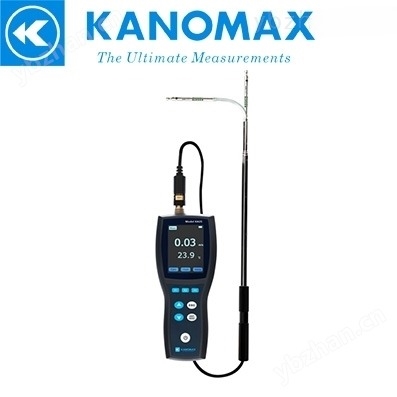
Portable anemometer is an instrument used for fast and accurate measurement of wind speed, widely used in meteorological monitoring, environmental assessment, industrial production and other fields. Due to its simple structure, convenient use, and high measurement accuracy, it plays an important role in many places that require real-time wind speed monitoring. This article will provide a detailed introduction to its working principle and application fields.
1、 Working principle
Portable anemometerThe working principle of wind speed sensors can be divided into several main methods based on their different types, including hot wire wind speed sensors, rotary wind speed sensors, ultrasonic wind speed sensors, etc.
1. Hot wire wind speed sensor: measures wind speed by utilizing the cooling effect of air flow on heating elements (usually metal wires or thin films). When wind passes through the heating element, heat is carried away from the surface of the element, causing its temperature to decrease. Sensors measure temperature changes and calculate wind speed based on its relationship with air flow. The advantage of this sensor is its fast response speed, making it suitable for measuring low wind speeds.
2. Rotating wind speed sensor: mainly driven by wind to rotate blades or rotors, the speed of the blades is proportional to the wind speed. The magnetic components or photoelectric sensors inside the sensor measure the rotational speed of the rotor to calculate the wind speed. The advantage of this method is its simple structure, high reliability, and suitability for measurement in the medium to high wind speed range.
3. Ultrasonic wind speed sensor: calculates wind speed by measuring the time difference of ultrasonic propagation in the air. When ultrasonic signals propagate in air, air flow affects the speed of signal propagation. By calculating the difference in propagation speed, the change in wind speed can be obtained. The advantage of ultrasonic sensors is that they have high measurement accuracy and are not affected by mechanical wear, making them suitable for long-term use.
2、 Application Fields
1. Meteorological monitoring: Portable anemometers are widely used in the field of meteorological monitoring. Accurate wind speed data is crucial for weather forecasting, climate research, and disaster warning in meteorological stations and research. Easy to deploy quickly in the field, able to obtain real-time data and transmit it back in a timely manner. Especially in the event of sudden meteorological disasters such as typhoons, storms, etc., important real-time data support can be provided.
2. Environmental assessment: It is also commonly used for environmental assessment, especially for wind speed measurement in air pollutant diffusion models. Understanding changes in wind speed helps to study the diffusion direction and range of pollutants, providing scientific basis for pollution prevention and environmental protection.
3. Industrial monitoring: used in some industrial applications to check the performance of ventilation and air conditioning systems. For example, low wind speed in ventilation equipment may result in poor indoor air circulation, while high wind speed may cause noise pollution. By using them, the operating status of these devices can be checked at any time to ensure the comfort and safety of the production environment.
4. Architecture and Construction: Wind speed is crucial for the safety of construction personnel and equipment, especially in high-rise building construction. It can also help construction workers monitor wind speed in real time to ensure construction safety. For example, during the construction of high-rise exterior walls, strong winds may cause equipment to tilt or personal injury, which can be used as a safety warning tool.
Portable anemometers, with their compact, convenient, and accurate features, have been widely used in various fields such as meteorological monitoring, environmental assessment, industrial production, and agriculture. Different types have their own applicable scenarios, which can provide real-time and accurate wind speed data support for various industries, ensuring the smooth progress of work. With the development of technology, it will continue to evolve to better meet various measurement needs.