-
E-mail
Sales@senther.com.cn
-
Phone
13430557816
-
Address
Shiyan Street, Bao'an District, Shenzhen
Shenzhen Sense Technology Development Co., Ltd
Explanation on dB Noise of Acceleration Sensor
Date: 2025-10-21Read: 11
A certain customerA requires noise: ≤ 60dB @ 1 µ g @ (10-10000) Hz
How to interpret the noise requirement above?
The explanation of noise testing and calculation is a bit complicated, but you can simplify it as follows: when we test the noise of an accelerometer, what we measure is anSet the frequency band rangeThe equivalent voltage value of, the wider the frequency band is set, the larger the voltage value, that is to say, the larger the noise value. However, overall, this value is very small, belonging to the millivolt or even microvolt level. Following the principle of enlarging small numbers and reducing large numbers, compare this value with a smaller reference value and take20 times the logarithmic value is the noise dB value, and the formula is as follows:

Here are examples to further explain.
We have an accelerometer, model number310A-10-LF, The sensitivity was measured to be 505.5mV/g. In a very quiet environment, the noise value within the bandwidth range of 10-10000Hz was measured to be 0.055mV. We converted this value into the corresponding acceleration value: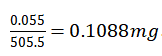 At this point, we can say that the broadband noise of this sensor is0.055mV, It can also be said that the broadband noise of this sensor is 0.108mg. In order to describe and process the noise more scientifically and effectively, the noise of the acceleration sensor is usually described in decibels. According to the above customer requirements, the noise value of 0.1088mg is compared with 1 µ g, and expressed in dB according to formula (1):
 This value is less than 60dB, so it meets the above customer requirements.
Assuming another customerRequirement B: ≤ 60dB @ 1 µ m/s2 @What about (10-10000) Hz? Does this sensor still meet the requirements? Let's calculate, 1 µ m/s2 = 0.1 µ g, expressed in dB value according to formula (1): This value is greater than60, so it does not meet the requirements.
Overall, acceleration sensorsDB noise is a comparative value, and when expressing it, it is necessary to specify the reference amount and indicate the bandwidth range. The expressions of the two customers' requirements for noise as mentioned above are both complete, but the severity of their requirements is different. Customer B has much stricter requirements.