-
E-mail
2537020894@qq.com
-
Phone
18962116539
-
Address
6th Floor, Building B, Tengfei Xinsu Industrial Park, No. 5 Xinghan Street, Suzhou Industrial Park
Suzhou Xunpeng Instrument Co., Ltd
The difference between active and passive signal isolators
Date: 2025-11-13Read: 100
Signal isolators play a role in transmitting, converting, isolating, distributing, and transmitting industrial signals in industrial control systems. Sometimes, the active or passive signals we refer to are the power supply methods of the signal isolators. Active signal isolators require a separate power source to supply power to the signal isolators. Common power sources includeDC24VThere are alsoAC220VAs shown in the picture below, we have chosenDC24VThe power supply method is equipped with a dip switch, which provides arbitrary switching of active and passive signals for different needs to adapt to changes in the on-site environment.
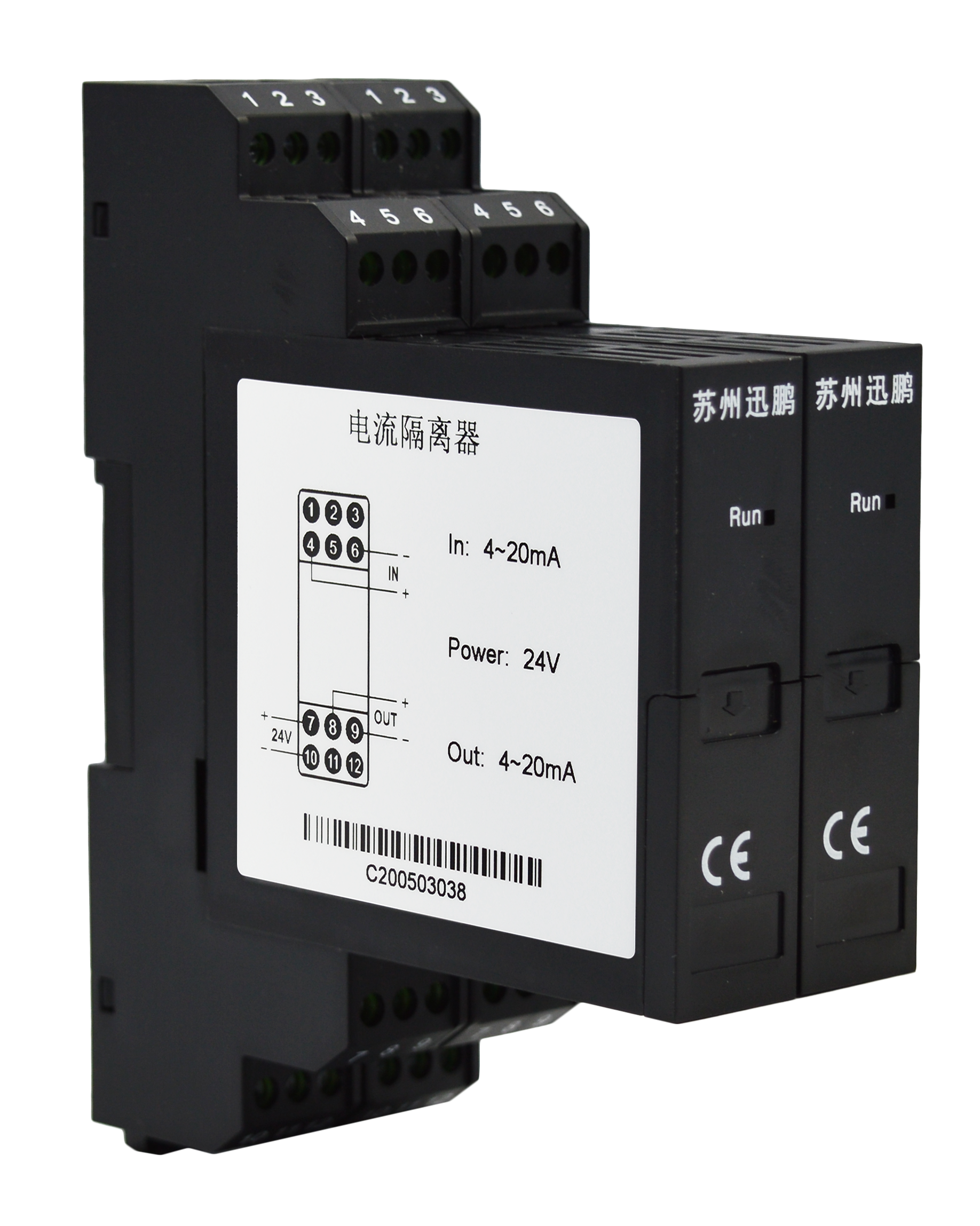
The following green shell signal isolator uses AC220VThe power supply method is used to provide power.

Passive signal isolator refers to a device that does not require separate power supply to the signal isolator. The power supply and signal are in the same circuit, so it is divided into two types: input circuit power supply and output circuit power supply. Input circuit power supply isolators refer to devices where the working power is obtained from the input terminal and the input signal is active4-20mASignal. Isolator with output circuit power supply, output signal is passive4-20mAThe output circuit is required to provide power, and the range of power supply provided is16-30VThis is a passive signal isolator.
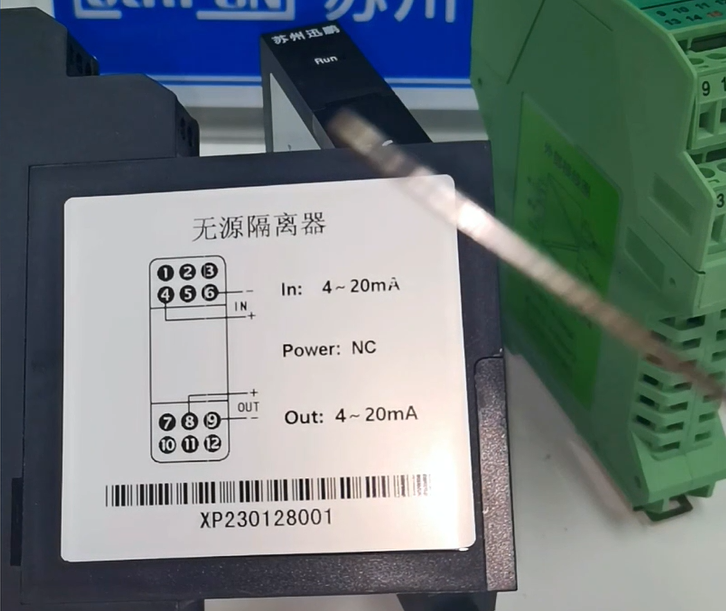
It does not have a separate power supply to power it, and its energy comes from the input or output terminals. Passive signal isolators do not require a separate working power supply, reducing the possibility of interference caused by the power supply. So in practical applications, passive signal isolators have better resistance to common mode interference.
Last Article: Introduction and Function of Ampere Hour Meter
Next Article: What is the small signal cutoff of a flow integrator?