-
E-mail
2853816151@qq.com
-
Phone
13812123680
-
Address
No. 9 Furun Road, Hudai Industrial Park South District, Binhu District, Wuxi City
Wuxi Xingzhou Instrument Co., Ltd
Installation guide for wind speed and air flow meter: the foundation of accurate measurement
Date: 2025-09-20Read: 165
Wind speed and air flow meter is a key equipment used in industrial measurement for precise monitoring of gas or liquid flow velocity and flow rate. The installation quality directly determines the accuracy and reliability of measurement data, as well as the long-term stable operation of the equipment itself. Standardized installation can effectively avoid measurement errors, equipment damage, and production interruptions.
1、 Key preparations before installation
Adequate preparation is the first step towards successful installation, and the core is to ensure the compatibility between the environment and the equipment.
1. Familiarity with technical documents: Before installation, it is necessary to carefully read and understand the operation manual provided by the manufacturer, master the technical parameters, installation requirements, and precautions of the equipment.
2. On site and pipeline inspection: Confirm that the interior of the process pipeline is clean and free of welding slag, iron filings, or other residues, which can seriously damage the sensor or cause measurement distortion. At the same time, check the condition of the pipeline at the planned opening.
3. Preparation of tools and accessories: Prepare all necessary tools for installation and check whether the installation base, bolts, seals, and other accessories provided by the manufacturer are complete and intact.
2、 Core installation steps
The installation process needs to be gradual to ensure the accuracy of each step.
1. Base welding and positioning
Accurately measure and open a hole with a diameter of 100mm on the pipeline. The centerline of this hole must intersect perpendicular to the centerline of the pipeline, which is the basis for ensuring accurate measurement direction in the future.
Weld the specialized base provided by the manufacturer to the opening position. During the welding process, it is necessary to strictly control the process to ensure that the base height is 95mm and provide stable support for the sensor.
2. Sensor installation and orientation calibration
Carefully place the sensor measuring head into the welded base. The most crucial step is to check the direction of the arrow marked on the sensor housing, which must be consistent with the flow direction of the medium in the pipeline, and reverse installation is strictly prohibited.
Use matching bolts to securely fasten the sensor to the base, preventing displacement or leakage of the equipment due to vibration during operation.
3. Insertion depth confirmation
For uninterrupted plug-in sensors, their insertion depth is usually adjusted before leaving the factory. Before installation, it is necessary to double check to ensure that it meets the specified error range (± 0.05D), which is the key to ensuring that the measurement point is at the average flow velocity of the pipeline.
3、 Continuous disassembly and assembly of special operations
For working conditions that require maintenance or replacement without production stoppage, the continuous flow insertion sensor is designed with a special operating procedure:
When disassembling, first cut off the power supply of the amplifier. Then loosen the two lower locking nuts of the screw, rotate the screw to lift the measuring head into the cavity above the ball valve, and then close the ball valve to remove the sensor.
2. During installation, first tighten the flange bolts on the upper end of the ball valve, then rotate the screw to slowly lower the measuring head to the center position of the pipeline, and finally tighten the locking nut of the screw.
4、 Verification and debugging after installation
Installation completion is not the end, final validation is crucial.
1. Sealing inspection: Before applying pressure, check all connection points and sealing surfaces to ensure there are no potential leakage points.
2. System power on debugging: After connecting the power and signal lines, conduct a power on test. By observing the readings under air traffic control conditions or comparing them with standard instruments, the correctness of installation and system stability can be preliminarily verified.
5、 Safety precautions
1. Welding operation: Operated by professional welders to ensure that the base is welded firmly and not deformed.
2. Electrical safety: All wiring operations should be carried out in a power-off state to prevent the risk of electric shock.
3. Personal protection: Throughout the installation process, operators should wear safety helmets, protective gloves, and goggles as appropriate.
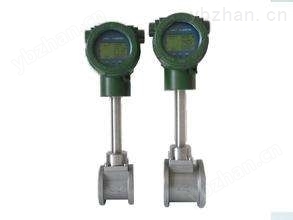
summary
Following the installation methods specified above is the cornerstone of ensuring optimal performance and providing long-term reliable service for wind speed and air flow meters. Rigorous installation is not only about protecting the equipment, but also responsible for measuring the quality of the entire production system. When encountering complex situations or uncertainties, it is essential to consult the manufacturer or professional technical personnel.