-
E-mail
winzoner@winzoner.com
-
Phone
18202125770
-
Address
Room 408, Building 2, No. 508 Chundong Road, Minhang District, Shanghai
Yingzhou Technology (Shanghai) Co., Ltd
Olympus handheld cultural and archaeological analyzer reveals the mysterious veil of historical relics - Trust Yingzhou Technology
Date: 2025-11-13Read: 12
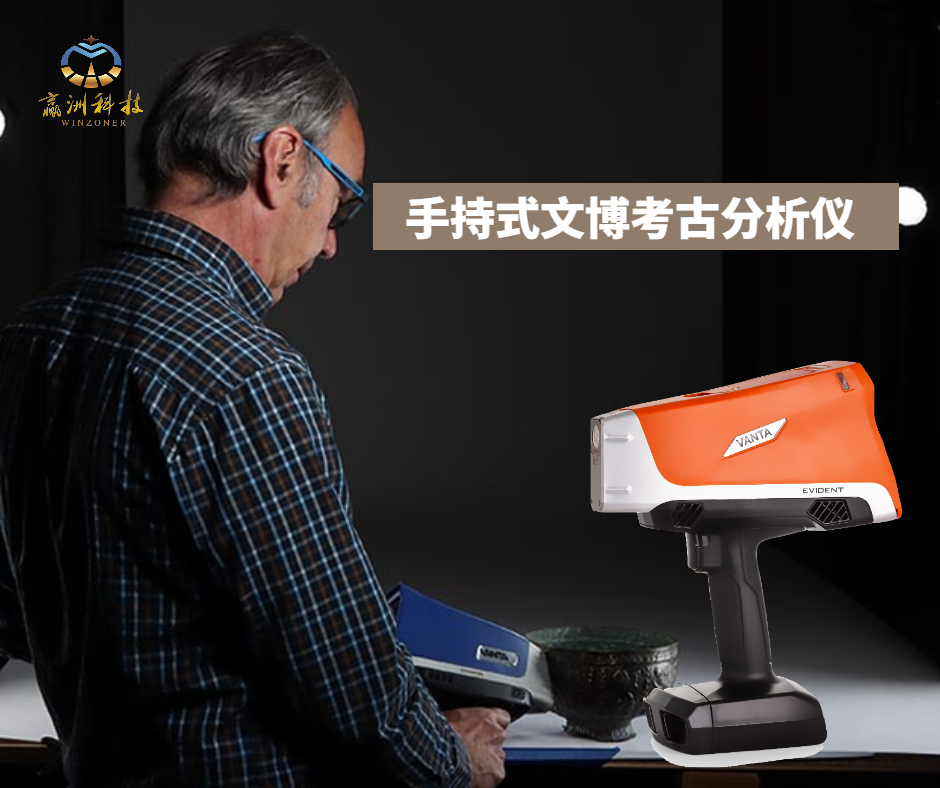
Among numerous archaeological tools, the Olympus handheld cultural and archaeological analyzer is like a magical key that can help us unlock the secrets behind historical artifacts.
Working principle: Use X-rays to 'see through' history
The handheld cultural and archaeological analyzer mainly works based on the principle of X-ray fluorescence spectroscopy (XRF). The X-ray tube inside the instrument produces high-energy X-rays. When these rays are irradiated onto the surface of cultural relics, various elemental atoms in the relics absorb energy and are in an excited state. Subsequently, these atoms will quickly return to a stable state and release X-ray fluorescence of specific energy. The atomic structures of different elements vary, and the fluorescence emitted is unique.
The detector in the instrument can accurately capture these characteristic X-ray fluorescence, and through complex signal processing systems and built-in databases for comparative analysis, quickly and accurately identify the types and relative contents of elements contained in cultural relics. The entire process only takes a few seconds and will not cause any damage to the cultural relics.
The 'golden eyes' of cultural relic appraisal
In the field of cultural relics and archaeology, material identification is the most fundamental and important work. Many cultural relics have similar appearances and textures, but their actual materials are completely different. The handheld cultural and archaeological analyzer can quickly distinguish various materials, providing strong basis for cultural relic identification and archaeological research.
Chronological research: Let cultural relics speak up
The same type of cultural relics may exist in different historical periods, but the production techniques and usage requirements of each period are different, and the items produced also vary greatly. The handheld cultural and archaeological analyzer can detect and analyze cultural relics to determine the ratio of various chemical elements in the relics. Combined with historical materials, it can be used to date cultural relics.
For example, for bronze ware, by analyzing the proportion of lead, tin, copper and other elements in it, the production age and regional information of bronze ware can be inferred. This method is not only accurate and reliable, but also avoids the subjectivity and uncertainty in traditional identification methods.
Cultural relic protection: Technology safeguards historical heritage
The first step in cultural relic protection is to analyze the composition of cultural relics and determine their materials. Scientific protection and restoration measures can only be formulated after identifying the process and mechanism of cultural relic damage. The handheld cultural and archaeological analyzer can quickly detect the elemental composition and content changes in cultural relics materials on site, helping researchers understand the preservation status and disease mechanism of cultural relics.
Corresponding protection and restoration measures can be formulated for different types of cultural relic diseases, such as corrosion, oxidation, etc. Compared with traditional destructive testing methods, the non-destructive testing characteristics of XRF analyzer can maximize the protection of the original state and integrity of cultural relics.
On site Archaeology: Mobile Laboratory
Archaeological excavation sites often have complex environments, and traditional large-scale analytical equipment is difficult to transport. The Olympus Vanta series handheld cultural and archaeological analyzer has dustproof and waterproof characteristics, and can work normally in the temperature range of -10 ° C to 50 ° C.
This means that archaeologists can move their laboratories to the excavation site, conduct real-time analysis of newly unearthed cultural relics, quickly obtain key information, and provide guidance for subsequent excavation strategies and research directions.
Yingzhou Technology (Shanghai) Co., Ltd. is a high-tech enterprise that focuses on the combination of X-ray fluorescence analysis technology, diffraction analysis technology, and automation technology. We specialize in the research, development, production, and sales of automated testing equipment such as solid waste analysis systems, platinum loading detection systems, online steel separation systems, and core analysis systems.
The copyright belongs to the author. The above content is sourced from Yingzhou Technology. Please contact Yingzhou Technology for authorization when reprinting. For non-commercial reprinting, please indicate the source.