-
E-mail
3280337593@qq.com
-
Phone
156-8541-1118
-
Address
Baiyun District, Guiyang City, Guizhou Province
Product Categories
Guizhou Zhongcheng Water Supply and Drainage Equipment Co., Ltd
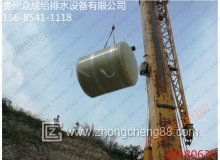
30m ³ tempered glass septic tank
NegotiableUpdate on 03/25
- Model
- Nature of the Manufacturer
- Producers
- Product Category
- Place of Origin
Overview
[Manufacturer]: Zhongcheng Water Supply and Drainage [Material/Process]: Glass Fiber Reinforced Material - Winding Forming Process : [Special Sizes Can be Customized] : Light weight, high strength, good toughness, etc.
Product Details
Septic tank refers to the separation and sedimentation of domestic sewage into compartments, as well as anaerobic treatment of sludgenitrificationSmall processing structures. Septic tanks originated in 19th century Europe and have a history of over 100 years. It is a device that processes feces and filters and settles them. Its principle is that the solidified material decomposes at the bottom of the pool, and the hydrated material in the upper layer flows away into the pipeline, preventing pipeline blockage and giving sufficient time for the solidified material (feces and other garbage) to hydrolyze.
Septic tank is a treatment facility that uses the principles of sedimentation and anaerobic fermentation to remove suspended organic matter from domestic sewage. It is a primary transitional living treatment structure. Domestic sewage contains a large amount of feces, paper scraps, and pathogenic insects. The suspended solids concentration is 100-350mg/L, and the organic matter concentration BOD5 is between 100-400mg/L. Among them, the suspended organic matter concentration BOD5 is 50-200mg/L. Wastewater entering the septic tank can remove 50% to 60% of suspended solids after 12 to 24 hours of sedimentation. The settled sludge undergoes anaerobic digestion for more than 3 months, which decomposes the organic matter in the sludge into stable inorganic substances, and converts the perishable raw sludge into stable mature sludge, changing the structure of the sludge and reducing its moisture content. Regularly remove sludge for transportation, landfilling, or use as fertilizer.
Due to various issues in design, construction, use, and management, over 95% of brick and concrete septic tanks begin to experience severe leakage after 1-2 years of use. Due to lack of attention, septic tank leakage seriously pollutes underground drinking water sources and urban underground water supply pipelines, and in more severe cases, causes buildings to tilt to varying degrees. In addition, traditional brick and concrete septic tanks lack technological content, have poor water quality treatment, and discharge sewage that seriously exceeds the standard, greatly increasing the workload of sewage treatment plants. In a few areas without municipal pipeline networks, the sewage treated by traditional septic tanks is directly discharged into rivers and lakes, causing serious damage to the water environment of surrounding rivers and lakes. Traditional septic tanks have low technological content, poor decay function, and short cleaning cycles. If daily maintenance and management are not in place, there may be safety hazards such as biogas poisoning and explosions.
FRP septic tank
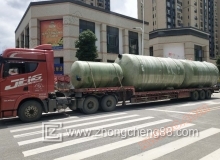
Fiberglass reinforced septic tank refers to a specialized equipment made of synthetic resin as the matrix and glass fiber reinforced material for treating domestic sewage. Mainly suitable for domestic sewage purification and treatment equipment in industrial enterprise living areas, urban residential areas, rural housing and other civil buildings. Glass reinforced plastic septic tank is a composite material environmentally friendly product actively promoted by the country,All the septic tanks produced by the company are designed in accordance with the technical requirements of CJ/T409-2012 glass reinforced plastic septic tanks and the 03S702 atlas, usingnew generationcomputer controlOverall moldProduction of winding equipmentThe product has the advantages of light weight, high strength, good toughness, acid and alkali corrosion resistance, bright colors, high smoothness, and short production cycle, which far exceeds similar products made of ceramics, steel, hard plastics, concrete and other materials.
Glass reinforced plastic septic tank product performanceExcellentpoint
1、 Will not leak:The product is formed using high-strength acid and alkali resistant materials such as glass fiber and organic resin, and has good sealing performanceStable chemical propertiesSolved the problem of brick septic tanksNot resistant to acid and alkali, prone to crackingThe problem of polluting groundwater ensures that septic tanks cansustainSexual function and aversion to oxidized feces.
2、 High compressive strength:The product structure design is reasonable, and the pressure is uniform,Horizontal cylindrical shape, with several times higher compressive strength than polygonal and square shapes.
3、 Easy installation and construction:Dig the foundation pit according to the drawings,Translate into EnglishLift the fiberglass septic tank into a suitable position in the foundation pit within one dayjustInstallation completed and construction unaffected by climateGreatly eliminating safety hazards such as long construction periods and collapse of pit foundations in traditional septic tanks.
4、 Good processing effectLong cleaning cycle: Our company's product compartment board adopts a staggered design with upper and lower layers, replacing the traditional straight flashing with a circulating flashing, ensuring smooth substrate transmission. moreThe application of anaerobic biological packing and membrane packing systems in sedimentation tanks has resulted in more interceptionslightThe biomass and sewage treatment capacity have increased by more than twice compared to traditional septic tanks of the same volume.
5. FiveLong service life:The product is made of high-quality fiberglass composite material, which has the advantages of acid resistance, alkali resistance, compression resistance, impact resistance, and high strength. Its service life can be synchronized with the building life, and it can last for up toOver 50 years.
6、 Small footprint: The size of the foundation pit layout shall be determined according tocanbodystraightAdd 300mm on each side of the diameter, which saves 50% compared to traditional septic tanks of the same modelthe aboveThe venue.
7、 Economical and practical:fiberglassThe septic tank adoptsNew technology, industrialization, mechanization, and mass productionBy reducing production costs, the price is more than 20% lower than traditional reinforced concrete septic tanksIt is an environmentally friendly product vigorously promoted by the urban construction department.
8environment protectionproductmechanicalmoldForming, seamless, non leaking, non blocking, good sealing, no odor, no overflow, no breeding of mosquitoes and flies, and no pollution of groundwater quality. Exquisite workmanship, innovative design, beautiful appearance, unique shape, small size, light weight, can choose different shapes according to different geographical locations.
Scope of application of tempered glass septic tank
Residential communitieswineshophotelSchools, office buildings, hospitals, public toilets, municipal renovation of residential areas, industrial buildings, andcountrysidePartial treatment of domestic sewage in construction.
Installation process flow:
Laying out and excavating foundation pit → foundation base treatment → hoisting and positioning of septic tank → irrigation of septic tanksimultaneouslybackfillsoil→ Layered backfilling → Pipeline connection → Clearing and digging wells, connecting wells → Covering soil for ground, road or greening.
Excavation and treatment of pit foundation:
The positioning and layout of fiberglass septic tank products should be determined according to the engineering design drawings. The selected model can refer to the fiberglass finished septic tank installation pit size list for excavation pit foundation. When excavating the pit foundation to the measured elevation, the base ash soil cushion layer should be compacted, and the foundation bearing capacity should not be less than 100KN/㎡. Then, a 100mm-200mm sand or gravel cushion layer should be laid, and large bricks, stones, and other hard debris carried in the sand should be removed, leveled and compacted, and the septic tank should be prepared for installation in place.
In areas with high groundwater levelsThe specific method is as follows:
①. When there is a small amount of groundwater without mud, the bottom of the pool must first be paved with pebbles and compacted with sand, and then C should be used2Grade 0 concrete is used for foundation treatment, followed by filling with a 100-200mm sand cushion layer.
②. If there is mud in the pit, the silt should be removed and excavated to a depth of 200-300mm. Then, 200mm thick pebbles and sand should be added and compacted. Dry concrete should be laid to level it and ensure consistent settlement after product installation. Concrete foundation treatment must meet the standard of C2Level 0 strength requirement,Fill in 100-200mm sand cushion layer afterwards, and if necessary, pile driving treatment should be carried out around the foundation pit to prevent collapse.
Septic tank irrigation:After the septic tank is lifted into place in accordance with the engineering design requirements, 1/3 of the water must be poured into the tank to stabilize it, and then manually backfilled and compacted. After backfilling, the septic tank body must also be filled with water.
Layered backfilling:After the glass reinforced plastic septic tank is lifted into place, the lower part of the tank is filled with sand or crushed stones around it (including crushed stones)Okay, the height should not be less than the diameter of the tank body1/2) It is prohibited to use construction waste for backfilling. Hard objects such as stones in the backfill soil must be removed. The backfill soil should be compacted layer by layer, with each layer connected by 50mm. It is recommended to use manual compaction, and compaction should avoid strong local impacts (such as pneumatic compaction, excavator compaction, etc.). The backfill soil around the tank must be compacted.
List of Structural Dimensions and Self Weight of Glass Tempered Septic Tanks
|
model |
Volume V |
Diameter D |
Length L (mm) |
wall thickness |
self-respect |
Remarks |
|||
|
M³ |
mm |
L |
L1 |
L2 |
L3 |
mm |
Kg |
||
|
ZC-1 |
2 |
1200 |
1800 |
1200 |
600 |
----- |
5 |
110 |
commonly used |
|
ZC-2 |
4 |
1800 |
1700 |
1000 |
650 |
----- |
5 |
200 |
commonly used |
|
ZC-3 |
6 |
1800 |
2350 |
1500 |
820 |
----- |
6 |
300 |
commonly used |
|
ZC-4 |
9 |
1800 |
3540 |
2200 |
1300 |
----- |
6 |
400 |
commonly used |
|
ZC-5 |
12 |
1800 |
4700 |
2500 |
1400 |
700 |
6 |
500 |
commonly used |
|
ZC-6 |
16 |
2500 |
3250 |
2100 |
1100 |
----- |
8 |
700 |
commonly used |
|
ZC-7 |
20 |
2500 |
4050 |
2100 |
1200 |
700 |
8 |
800 |
commonly used |
|
ZC-8 |
25 |
2500 |
5100 |
2800 |
1500 |
700 |
8 |
1000 |
commonly used |
|
ZC-9 |
30 |
3000 |
4200 |
1900 |
1200 |
1000 |
10 |
1250 |
commonly used |
|
ZC-10 |
40 |
3000 |
5660 |
3000 |
1550 |
1050 |
10 |
1700 |
commonly used |
|
ZC-11 |
50 |
3100 |
6630 |
3500 |
1600 |
1450 |
12 |
2000 |
commonly used |
|
ZC-12 |
75 |
3100 |
9950 |
5200 |
2350 |
2350 |
12 |
2600 |
commonly used |
|
ZC-13 |
100 |
3100 |
13260 |
7100 |
3000 |
3000 |
12 |
3300 |
commonly used |
List of Excavation Dimensions for Finished Septic Tank Installation
|
model |
Volume V |
Diameter D |
Excavation width |
Excavation length |
Excavation depth H (mm) for inlet pipes of different sizes |
Remarks |
||
|
M³ |
mm |
mm |
mm |
D200 |
D300 |
D400 |
||
|
ZC-1 |
2 |
1200 |
1800 |
2500 |
900 |
|
|
commonly used |
|
ZC-2 |
4 |
1800 |
2500 |
2400 |
1500 |
|
|
commonly used |
|
ZC-3 |
6 |
1800 |
2500 |
3000 |
1500 |
1400 |
|
commonly used |
|
ZC-4 |
9 |
1800 |
2500 |
4200 |
1500 |
1400 |
|
commonly used |
|
ZC-5 |
12 |
1800 |
2500 |
5500 |
1500 |
1400 |
|
commonly used |
|
ZC-6 |
16 |
2500 |
3300 |
4000 |
2200 |
2100 |
|
commonly used |
|
ZC-7 |
20 |
2500 |
3300 |
5000 |
2200 |
2100 |
|
commonly used |
|
ZC-8 |
25 |
2500 |
3300 |
6000 |
2200 |
2100 |
|
commonly used |
|
ZC-9 |
30 |
3000 |
4000 |
5000 |
2700 |
2600 |
2500 |
commonly used |
|
ZC-10 |
40 |
3000 |
4000 |
6500 |
2700 |
2600 |
2500 |
commonly used |
|
ZC-11 |
50 |
3100 |
4000 |
7500 |
2800 |
2700 |
2600 |
commonly used |
|
ZC-12 |
75 |
3100 |
4000 |
11000 |
2800 |
2700 |
2600 |
commonly used |
|
ZC-13 |
100 |
3100 |
4000 |
14200 |
2800 |
2700 |
2600 |
commonly used |
|
Note: The depth of excavation is based on the bottom of the building's drainage pipe and then excavated downwards to a depth of H. The above depth is the elevation dimension, and the actual depth is ≥ 20+H. 20 is the thickness of the base cushion layer |
||||||||
List of Structural Dimensions and Self Weight of Glass Tempered Septic Tanks
|
model |
Volume V |
Diameter D |
Length L (mm) |
wall thickness |
self-respect |
Remarks |
|||
|
M³ |
mm |
L |
L1 |
L2 |
L3 |
mm |
Kg |
||
|
ZC-1 |
2 |
1200 |
1800 |
1200 |
600 |
----- |
5 |
110 |
commonly used |
|
ZC-2 |
4 |
1800 |
1700 |
1000 |
650 |
----- |
5 |
200 |
commonly used |
|
ZC-3 |
6 |
1800 |
2350 |
1500 |
820 |
----- |
6 |
300 |
commonly used |
|
ZC-4 |
9 |
1800 |
3540 |
2200 |
1300 |
----- |
6 |
400 |
commonly used |
|
ZC-5 |
12 |
1800 |
4700 |
2500 |
1400 |
700 |
6 |
500 |
commonly used |
|
ZC-6 |
16 |
2500 |
3250 |
2100 |
1100 |
----- |
8 |
700 |
commonly used |
|
ZC-7 |
20 |
2500 |
4050 |
2100 |
1200 |
700 |
8 |
800 |
commonly used |
|
ZC-8 |
25 |
2500 |
5100 |
2800 |
1500 |
700 |
8 |
1000 |
commonly used |
|
ZC-9 |
30 |
3000 |
4200 |
1900 |
1200 |
1000 |
10 |
1250 |
commonly used |
|
ZC-10 |
40 |
3000 |
5660 |
3000 |
1550 |
1050 |
10 |
1700 |
commonly used |
|
ZC-11 |
50 |
3100 |
6630 |
3500 |
1600 |
1450 |
12 |
2000 |
commonly used |
|
ZC-12 |
75 |
3100 |
9950 |
5200 |
2350 |
2350 |
12 |
2600 |
commonly used |
|
ZC-13 |
100 |
3100 |
13260 |
7100 |
3000 |
3000 |
12 |
3300 |
commonly used |
Mainly applicable to the purification and treatment of domestic sewage in new construction, expansion, and renovation projects (such as industrial enterprise living areas and urban residential areas).
This product is covered by nationwide warranty and enjoys three guarantee services.
Similar Product Recommend