-
E-mail
zjdj0575@126.com
-
Phone
15205758189
-
Address
No. 1-6, North First Floor, National Highway 104, Taoyan Town
Product Categories
Shaoxing Dongjing Machinery Instrument Equipment Co., Ltd
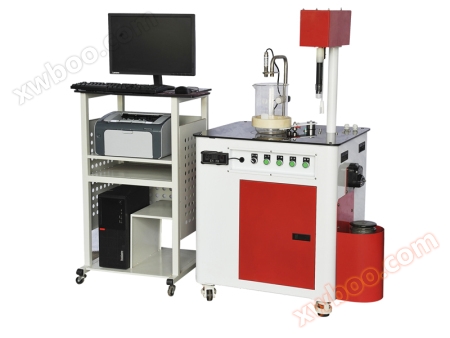
A6-LA105 Fully Automatic Lime Activity Tester
NegotiableUpdate on 01/02
- Model
- Nature of the Manufacturer
- Producers
- Product Category
- Place of Origin
Overview
1. The reactivity of simple lime refers to its ability to react with other substances in slag
Product Details
-
1. Simple Price
The reactivity of lime refers to its ability to react with other substances in slag. Expressed as the melting rate of lime in slag. Usually expressed as the reaction rate between lime and water. Specifically, the number of milliliters of 4N HCl aqueous solution consumed to dissolve 50 grams of lime in 40 degree Celsius constant temperature water within 10 minutes at standard atmospheric pressure is defined as the activity level of lime. At present, the average activity level of lime can generally exceed 300 ml/4N HCl, which can significantly shorten the initial slagging time of steelmaking converters, reduce the consumption of lime per ton of steel, and be extremely beneficial for early phosphorus removal.
Steelmaking practice has shown that this type of lime can improve the efficiency of dephosphorization and desulfurization by 80%, while shortening the smelting time. It can completely react with acidic substances in the molten steel within 3-5 minutes, while the typical reaction time for lime is at least 6-10 minutes. In addition, increasing the furnace age by more than 40% also reduces the consumption of furnace materials by 5-8kg/ton of steel. Calculated at 10 million tons, it saves about 15 million yuan per year and has significant production benefits (the above data is for reference only). The activity of lime is generally determined by acid-base titration method. In response to customer needs and in compliance with the industry standard YB/T 105-2014 (replacing the old standard YB/T105-2005), the research and development of the limestone activity tester is carried out
At present, the activity of limestone in China is still manually titrated, and there are the following problems:
1) The detection process is cumbersome and inconvenient to clean.
2) The detection data values and accuracy are difficult to guarantee, and at the same time, it is prone to human bias.
3) Cannot perform historical data queries.
The automatic activity titrator adopts a combination of computer and PLC, which is easy to operate, stable in operation, and has minimal measurement result deviation. At the same time, it has a user-friendly interface and functions such as data file storage and query.
The equipment also draws on new technologies from similar domestic and foreign product measuring instruments. Based on the years of experience of our company's consulting experts in the chemical inspection industry, a new generation of products has been developed. The characteristics of this equipment are: 1. reduced volume and light weight; 2. The overall electrical design is simple and reasonable, with a clear hierarchy of device layout and simple and clear circuits, which brings a lot of convenience to maintenance and debugging work; 3. Optimization of mechanical motion actions greatly reduces the frequency of failures and improves the reliability of long-term normal operation of equipment; 4. The degree of automation has increased, opening up a large number of user windows, which not only meets the automatic testing needs of users but also reduces the tedious maintenance work of maintenance personnel, greatly reducing maintenance costs.
2. Technical parameters
human-machine interface
The human-machine interface is a window for users to directly participate in control and understand the detailed resources inside the device. Through this human-machine interface, users can perform rich parameter configuration, function execution, automatic calibration and other personalized functions on the device. Please refer to the following chapters for details.
Basic working principle
This device is based on the program design of the upper computer and PLC. The computer, as a window for human-machine dialogue, reflects the basic working status of the device in a rich way, and can perform basic settings and other functions according to the user's needs. As the core component of the equipment control, PLC is mainly responsible for controlling the lifting, stirring, titration, and other functions of the equipment. This device has two working modes: automatic and manual. Users can choose the automatic mode to automatically follow the pre programmed working mode; Users can manually tap and debug the working conditions of various components by selecting the manual mode.
1. PH value detector, 0-14.00PH, resolution 0.01PH, industrial type;
2. Measurement accuracy: 0.5mL
3. Blender speed: 250-300 r/min;
Mixing rod: Φ 6 × -250mm;
Mixing blade: 0.5 × 10 × 60mm;
Material: PTFE
4. Power: 500W;
5. Working voltage AC220V ± 10% 50HZ ± 5%;
Working environment: 5 ℃ ≤ ambient temperature ≤ 40 ℃, humidity ≤ 85%, no strong magnetic field, no severe vibration.
6. Equipped with a constant temperature water outlet: 42 ℃;
7. Beaker water temperature constant temperature device: 42 ℃± 1 ℃
3. Equipment structure and working principle
3.1 Structure and Components
3.1.1 Mixing motor: The output speed of the mixing motor is 270 revolutions per minute, which meets the national standard requirements of 250 revolutions per minute to 300 revolutions per minute. The output shaft of the stirring motor is connected to a stirring rod, which can penetrate deep into the solution below for stirring, and can fully stir substances such as limestone dissolved in the beaker.
3.1.2 Acid injection port: The acid injection port is made of acid and alkali resistant materials and has corrosion resistance to acid or alkali liquids. The hose for titrating acid can be inserted into the acid injection port, and the acid flows into the beaker below through the port.
3.1.3 PH meter: The PH meter is an electrode sensor that measures the pH value of the solution in the beaker below. It can be connected to the instrument to test the pH value of the solution in real time. The PH meter is equipped with a protective cover. When not in use for a long time, please cover it with a protective cover to keep the PH meter moist. The use of pH/ORP meters largely depends on the maintenance of the electrodes. Firstly, the electrodes should be cleaned regularly to ensure they are not contaminated, and recalibrated periodically to correct slope errors that may occur after use. Please refer to the relevant sections for calibration procedures. Secondly, whether during the reaction process or after discharging, it is necessary to ensure that the electrode is immersed in the tested solution, otherwise its lifespan will be shortened; At the same time, the cable connectors must be kept clean and free from moisture or water.
Activation: If the electrode is stored in a dry environment, it must be soaked in distilled water for 24 hours before use to activate it, otherwise calibration and measurement will result in significant errors.
Cleaning: When the electrode is found to be contaminated and affecting the measurement accuracy, a soft brush can be used to gently brush the electrode head, and then clean it with clean water.
Similar Product Recommend